










This blog is written by Devahuti Choudhury, Senior Private Sector and Impact Advisor, at the UNDP Sustainable Finance Hub.
Growth-stage enterprises across Southeast Asia are already delivering results—diverting waste, expanding health care access and educating young people. The bottleneck is not performance. It is proof. Without structured systems to measure and communicate impact, even high-performing ventures struggle to attract the capital they need to scale. The broader financing landscape reflects the cost of that divide.
The global financing gap for the UN Sustainable Development Goals (SDGs) is estimated at US$4.3 trillion annually. Global wealth exceeds $600 trillion. The challenge is not the availability of capital, but how effectively it is aligned with enterprises capable of delivering measurable and sustainable outcomes.
Even where impact is evident in practice, it is not always supported by structured Impact Measurement and Management (IMM) systems that meet investor expectations for governance, data and reporting. For capital to reach enterprises that deliver both financial returns and development outcomes, investors need a structured basis for assessment. Investor-grade impact frameworks must sit at the centre of decision-making for both sides of the deal.
Achieving the SDGs could unlock up to $12 trillion in market opportunities globally, as estimated by the Business and Sustainable Development Commission. Yet, the United Nations Sustainable Development Goals Report 2025 finds that only 35 percent of SDG targets are on track or making moderate progress. Strengthening the alignment between capital and SDG outcomes remains essential.
For many founders, adopting structured IMM practices is becoming part of building a resilient enterprise. Moving beyond informal narratives toward more consistent impact management can strengthen engagement with capital providers, reinforce stakeholder value and respond to evolving compliance and reporting requirements.
To support this transition, the United Nations Development Programme (UNDP), in partnership with the Centre for Impact Investing Practices (CIIP), implemented the SDG Venture Scaler programme in Indonesia, the Philippines and Viet Nam beginning in March 2025. The programme supported 28 growth-stage ventures working in climate action, health care and education (read more about the ventures here).
The programme builds on market intelligence work that CIIP previously supported UNDP to develop for the ASEAN region. As part of this initiative, seven SDG Investor Maps were developed across ASEAN markets to identify SDG-aligned and commercially viable investment opportunities. The maps help address information gaps by clarifying sectors where business growth and development outcomes can be pursued together.
Building on this market intelligence, SDG Venture Scaler focused on strengthening enterprise-level readiness. Rather than orienting the programme only around short-term fundraising outcomes, it supported ventures to strengthen systems that enable ongoing engagement with investors, partners and stakeholders who directly experience the impacts of decisions made by businesses.
Over several months, participating ventures worked with 13 business mentors and eight IMM coaches to clarify their impact models, establish baseline data systems and strengthen internal governance and reporting processes. By completing their impact management roadmaps—supported by UNDP tools and guidance—ventures strengthened the documentation and data foundations needed for long-term reporting.
The growth-stage ventures entered the programme with a proven foundation, having collectively generated $78.4 million in revenue while diverting more than 525,000 tonnes of waste and removing 11 million tonnes of carbon dioxide equivalent in 2024 (source: baseline surveys of SDG Venture Scaler cohort, 2025). The SDG Venture Scaler has since focused on refining these impact narratives, ensuring these figures serve as a baseline for even greater, more transparent contributions to the SDGs.
Before the programme, one quarter of participating ventures reported having no understanding of IMM. After completion, nearly 80 percent of post-programme survey respondents reported improved clarity in their impact models, and 73 percent cited improved fundraising readiness as a primary area of progress. Since the programme began in March 2025, 36 percent of ventures have raised funds. By the end of the programme, 59 percent reported feeling fully prepared to execute fundraising and partnership plans.
Linh Hoang, Founder of participating venture TeenCare Viet Nam, reflected on the value of structured approaches to impact reporting: “After the programme, we learned the structural way of measuring impact, carrying with us the readiness of investor-grade reporting.” TeenCare is an AI-powered go-to wellness platform for teens and families, offering trusted education, emotional support, and care in Viet Nam.
Meanwhile, Marcha Adiwara Prawita, Business Development Manager at Forestwise, highlighted the networking value of the initiative: “Through this programme, we have opened our network and gained vital opportunities to connect with one another, whether as organizations, businesses, founders or ventures.” Forestwise works with local communities in Borneo to bring 100 percent natural, sustainably sourced rainforest ingredients for cosmetics and food to the region.
Troyss Pilapil, Co-founder and CEO of CP Health Innovations, affirmed how industry-specific examples bridged the gap between theory and practice in the IMM training sessions: “Seeing examples tailored to our industry made it much clearer how to complete our IMM roadmaps. I now see how these sessions will help me more effectively communicate the tangible impact of CP Health Innovations.” CP Health Innovations has created a clinic management platform that improves patient engagement, vaccination rates, and health programme management in underserved areas of the Philippines.
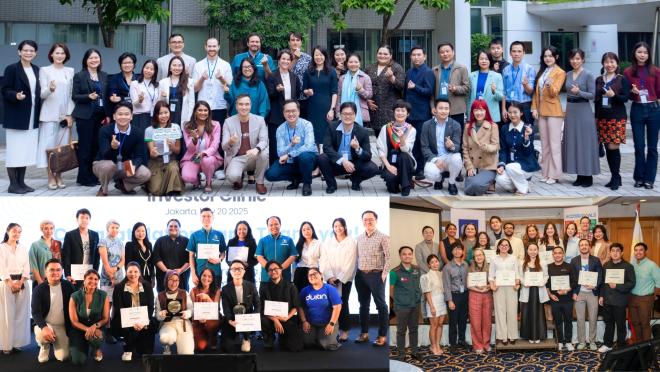
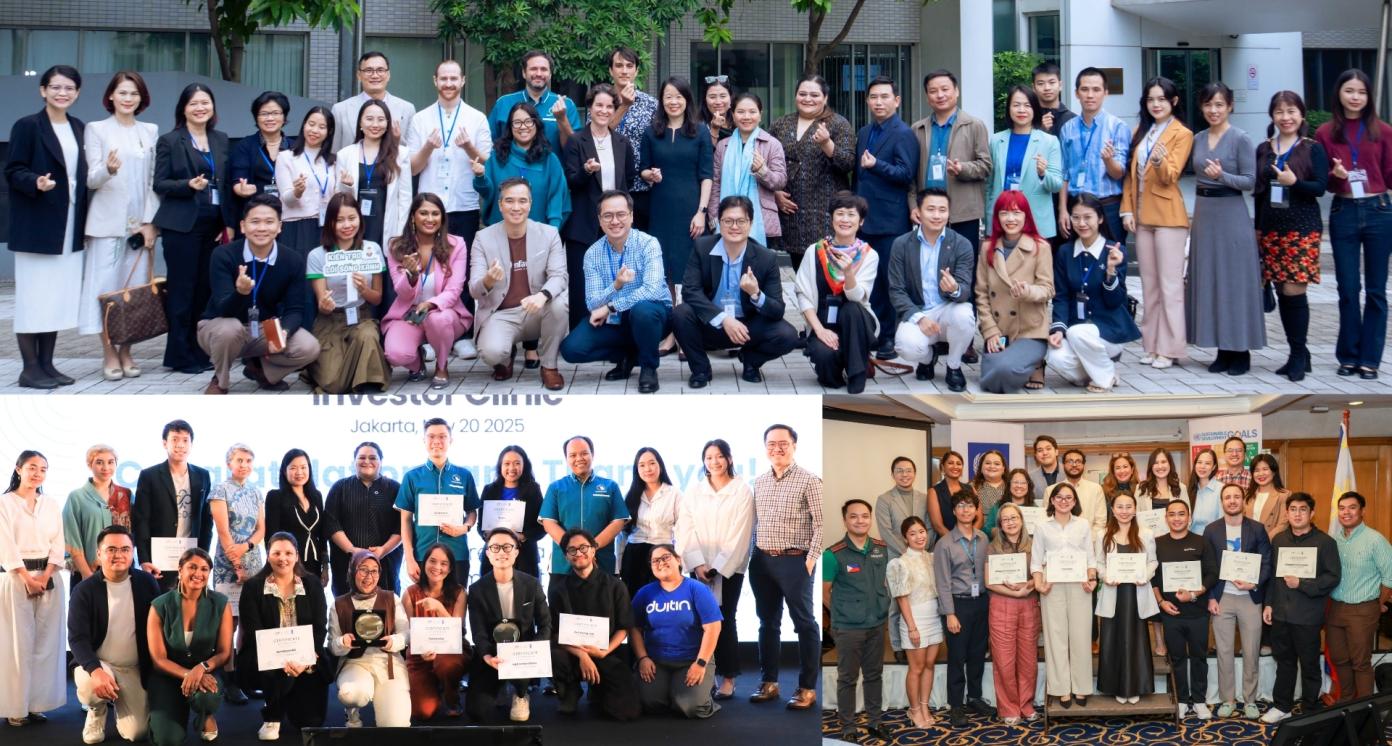
The programme concluded with three in-person investor clinics in November and December 2025, held in Hanoi, Jakarta and Manila. The clinics provided ventures with opportunities to present updated impact metrics, growth targets and partnership and investment needs, and to receive feedback from attending investors and ecosystem partners.
The SDG Venture Scaler experience suggests that strengthening impact management systems can reduce information gaps between enterprises and investors and strengthen the overall business model through a double-materiality lens. Clear documentation, transparent metrics and stronger governance processes contribute to credibility and investor confidence.
This enterprise-level work complements UNDP's broader sustainable finance support to countries. Since 2022, countries supported by UNDP have catalysed more than $900 billion in SDG-aligned finance. Strengthening investment pipelines depends on multiple factors, including policy and market conditions, and the readiness of enterprises to demonstrate performance in ways that investors can assess. Programmes like the SDG Venture Scaler demonstrate that financial and impact performance reinforce one another—and that strong management systems are what make both legible to investors. The forthcoming Management System Standard (ISO 53001) developed by the International Organization for Standardization (ISO), with support from UNDP, will codify these practices, making today's preparatory work tomorrow's benchmark.
About The SDG Venture Scaler was supported by a consortium of partners. UNDP provided strategic framing, IMM expertise and network mobilization. CIIP contributed funding, technical insights and regional networks. Creatella Impact served as the lead technical partner, managing execution, mentorship, business curriculum delivery and investment matchmaking. Country-level partners included the Social Innovation Acceleration Program in Indonesia, Women’s Initiative for Startups and Entrepreneurship in Viet Nam and Villgro Philippines. The Erasmus Centre for Entrepreneurship served as the academic partner.
As a next step, UNDP and CIIP will continue supporting selected ventures to showcase their business models at events such as the Philanthropy Asia Summit in Singapore in May 2026.