









Utility-Scale Wind Plants
Utility-Scale Wind Plants
Business Model Description
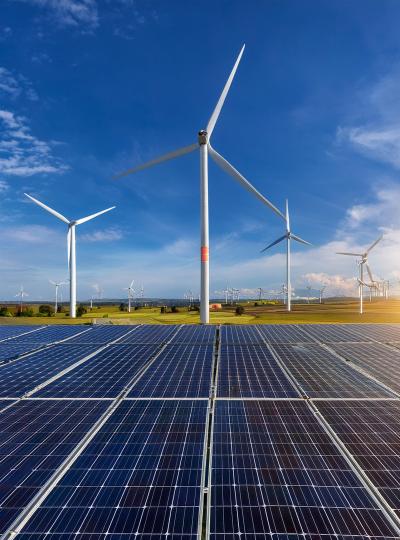
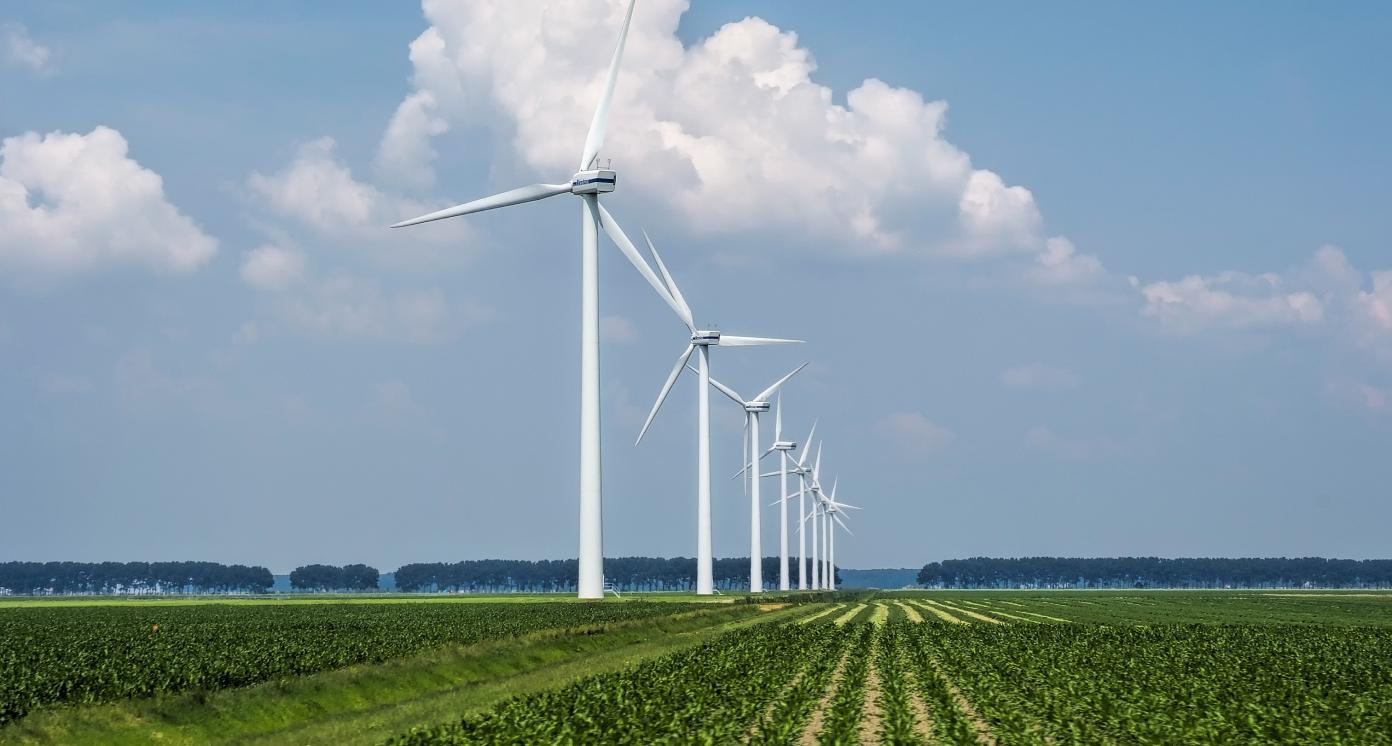
Develop, finance, construct, and operate large-scale wind farms (typically above 50 MW) connected to the national transmission grid, securing long-term power purchase agreements with utilities or industrial off-takers. Investors are responsible for site identification, conducting feasibility and environmental impact assessments, obtaining permits, arranging grid connections, and mobilizing equity and debt financing. The model creates value through reliable renewable power generation, leveraging declining turbine costs and high wind potential, while also enabling local job creation and supply chain participation in manufacturing, installation, and maintenance services.
Expected Impact
Utility-scale wind farms expand clean domestic power, reduce fossil imports and emissions, while creating rural jobs and improving equitable access to reliable energy.
How is this information gathered?
Investment opportunities with potential to contribute to sustainable development are based on country-level SDG Investor Maps.
Disclaimer
UNDP, the Private Finance for the SDGs, and their affiliates (collectively “UNDP”) do not seek or solicit investment for programmes, projects, or opportunities described on this site (collectively “Programmes”) or any other Programmes, and nothing on this page should constitute a solicitation for investment. The actors listed on this site are not partners of UNDP, and their inclusion should not be construed as an endorsement or recommendation by UNDP for any relationship or investment.
The descriptions on this page are provided for informational purposes only. Only companies and enterprises that appear under the case study tab have been validated and vetted through UNDP programmes such as the Growth Stage Impact Ventures (GSIV), Business Call to Action (BCtA), or through other UN agencies. Even then, under no circumstances should their appearance on this website be construed as an endorsement for any relationship or investment. UNDP assumes no liability for investment losses directly or indirectly resulting from recommendations made, implied, or inferred by its research. Likewise, UNDP assumes no claim to investment gains directly or indirectly resulting from trading profits, investment management, or advisory fees obtained by following investment recommendations made, implied, or inferred by its research.
Investment involves risk, and all investments should be made with the supervision of a professional investment manager or advisor. The materials on the website are not an offer to sell or a solicitation of an offer to buy any investment, security, or commodity, nor shall any security be offered or sold to any person, in any jurisdiction in which such offer would be unlawful under the securities laws of such jurisdiction.
Country & Regions
- Republic of Moldova: Northern Development Region
- Republic of Moldova: Southern Development Region
Sector Classification
Renewable Resources and Alternative Energy
Development need
Moldova is highly dependent on energy imports, with at least 80% of its energy demand met through gas and electricity imports, undermining energy security and the cost of living. The country’s energy generation is concentrated in the Transnistria region, which is prone to political uncertainties, further threatening energy security. (1, 2, 3)
Policy priority
Moldova has set ambitious goals to be reached in the remaning of the decade. 2025 target: 410 MW new renewables through tenders of which some have already been announced and some are in the process. Overall RES target 27%, Electricity RES target 30%, Limit greenhouse gas emissions to 68.6% of 1990 levels by 2030. (4, 5)
Gender and marginalization
Women in rural areas formally employed just 50%, vs >90% in cities face heavier energy burdens. They spend more time collecting firewood, suffer greater health risks from indoor smoke, and lack stable income or credit access to adopt clean energy.(13, 14, 15)
Investment opportunities introduction
Gov of Moldova has accelerated its clean energy agenda through its first competitive tenders, offering 60 MW of solar capacity and 105 MW of wind capacity, estimated to be valued at a total of $200 million. Electricity from these projects can be sold to the national grid under long-term feed-in tariffs established by Law No. 10/2016 and overseen by ANRE. (6)
Key bottlenecks introduction
Due to insufficient balancing reserves, Moldova may face constraints in integrating additional renewable energy. Renewables could be curtailed or deployment limited unless balancing capacity improves. (7)
Alternative Energy
Development need
Wind power in Moldova has an estimated technical potential of around 3 GW. Despite a high renewable energy potential, almost 90% of electricity is generated from fossil gas and oil resources, where the share of renewables in the energy mix (solar and wind energy) stood at 4.5% in 2022. (1, 2, 3)
Policy priority
New legislative measures have been put in place to allow for the installation of solar and wind power plants on agricultural land without requiring a land-use change, further easing renewable energy adoption (Land Code No. 22/2024). (8)
Gender and marginalization
Women in Moldova face structural barriers to benefit from the alternative energy transition. Rural women, with far lower formal employment and limited land or credit access, are less able to invest in clean energy. Reliance on biomass exposes them to health risks, while community energy decisions often exclude women, reinforcing gender and regional inequalities. (9,11,12)
Investment opportunities introduction
Moldova’s alternative energy subsector offers strong potential driven by high import dependence and EU-aligned climate goals. Recent auctions illustrate this: in 2025, 165 MW of solar and wind were awarded via 15-year PPAs, mobilizing €190m, creating 400 jobs. A second auction will add 173 MW wind and 246 MW battery storage.(13,14,15)
Key bottlenecks introduction
Despite strong investor interest, there are bottlenecks in limited grid capacity and balancing reserves, which could constrain integration of new solar and wind. Regulatory reforms are still maturing, while storage frameworks remain nascent highlighted by the launch of the 2025 auction for renewables with battery systems.(10,13,14,15)
Wind Technology and Project Developers
Pipeline Opportunity
Utility-Scale Wind Plants
Develop, finance, construct, and operate large-scale wind farms (typically above 50 MW) connected to the national transmission grid, securing long-term power purchase agreements with utilities or industrial off-takers. Investors are responsible for site identification, conducting feasibility and environmental impact assessments, obtaining permits, arranging grid connections, and mobilizing equity and debt financing. The model creates value through reliable renewable power generation, leveraging declining turbine costs and high wind potential, while also enabling local job creation and supply chain participation in manufacturing, installation, and maintenance services.
Business Case
Market Size and Environment
20.8 GW wind generation capacity
According to IRENA, the maximum wind generation capacity in Moldova is estimated at 20.8 GW, able to produce 50.2 TWh annually, which is 12 times more than the current country’s electricity consumption. (21)
Indicative Return
10% - 15%
The winners of the renewable energy tenders are in contract to sell each kWh at an average price of 1.28 MDL which is around $0.077 (22) This generates annual revenue of $2M. For utility scale CAPEX is around €1.3M/MW ($1.52M/MW) with 1.5% O&M.
Looking at 15 years for horizon, a IRR of 1.14% is estimated which is in line with industry benchmarks. An interview with a representative of one of the winning companies in the RE tender informed us that investors are looking for an IRR of 8-10% in 15 years.(23)
Investment Timeframe
Long Term (10+ years)
The FIT contracts are for 15 years but the industry usually looks at each investment for 20 years or more (23)
Ticket Size
> USD 10 million
Market Risks & Scale Obstacles
Capital - CapEx Intensive
Business - Supply Chain Constraints
Market - Highly Regulated
Impact Case
Sustainable Development Need
Frequent power outages and reliance on imported fossil-based electricity undermine energy security. Moldova needs clean, locally generated power to reduce import dependence and meet climate goals. (24)
Gender & Marginalisation
Women and rural households face higher energy poverty and limited economic opportunities. Vulnerable communities in remote regions often lack reliable, affordable electricity, reinforcing inequality.(25)
Expected Development Outcome
Increased renewable capacity improves energy independence, stabilizes supply, and cuts emissions. Large-scale wind creates jobs and reduces reliance on imported electricity, contributing to climate targets.
Gender & Marginalisation
Rural households benefit from more reliable and affordable electricity, narrowing inequality gaps in energy access.
Primary SDGs addressed
7.2.1 Renewable energy share in the total final energy consumption
7.b.1 Installed renewable energy-generating capacity in developing countries (in watts per capita)
Moldova’s state agency report indicates renewables reached 16.7% in 2024, up from 9.2% in 2023. (17)
As of July 2025: Installed renewable energy capacity reached 784.09 MW. (18)
30% share by 2030, as outlined in Moldova’s Integrated National Energy and Climate Plan.(18)
As of early 2025, Moldova’s installed renewable capacity reached 618 MW (238 W per capita), driven mainly by solar and wind. Under NDC 3.0 and the Integrated National Energy and Climate Plan, total capacity is targeted to exceed 1,200 MW by 2030 equal to 470 W per capita supporting the 30% renewables share goal.(19)
13.2.2 Total greenhouse gas emissions per year
Moldova emitted approximately 4.4 t CO₂e per capita, based on NDC data. (19)
Moldova commits to reduce economy-wide net GHG emissions by 75% below 1990 levels by 2030. Conditional on international support, Moldova also aims for net-zero emissions by 2050. (19)
9.4.1 CO2 emission per unit of value added
As of 2023, Moldova’s carbon intensity is approximately 0.25 kg CO₂ per USD of GDP.(26)
Moldova’s NDC commits to significant emissions reduction, suggesting an implicit target of continuing to reduce carbon intensity as part of its climate commitments. (19)
Secondary SDGs addressed
Directly impacted stakeholders
People
Gender inequality and/or marginalization
Planet
Corporates
Public sector
Indirectly impacted stakeholders
People
Planet
Corporates
Public sector
Outcome Risks
Visual and noise pollution may trigger opposition from nearby communities.
Wind turbines may impact local bird and bat populations if not properly sited.
Land use conflicts may arise with agriculture or rural communities.
Grid instability risks if renewable integration is not well managed.
Gender inequality and/or marginalization risk: Rural communities near wind farms may not directly benefit from improved access or jobs, if inclusion measures are absent.
Impact Risks
Limited local data on wind resource quality and long-term performance may reduce investor confidence and affect accurate impact measurement.
Regional energy market volatility or political instability could disrupt delivery of expected benefits from new wind projects.
Grid connection delays or policy bottlenecks could prevent projects from achieving intended renewable energy and climate outcomes.
Positive impacts like job creation may fade after construction, with limited long-term employment opportunities in rural areas.
Gender inequality and/or marginalization risk: Local community concerns (e.g., land use, noise) may be overlooked, leading to opposition and reduced project acceptance.
Impact Classification
What
Utility-scale wind farms boost domestic clean power, cut fossil imports, and advance Moldova’s renewable and climate targets.
Who
Rural communities in high-wind areas gain more reliable energy, jobs, and local infrastructure improvements.
Risk
Grid delays or poor siting may limit benefits; turbines could impact biodiversity or face community resistance.
Contribution
Large-scale wind is additional and depends on policy auctions, concessional finance, and private sector investment.
Impact Thesis
Utility-scale wind farms expand clean domestic power, reduce fossil imports and emissions, while creating rural jobs and improving equitable access to reliable energy.
Enabling Environment
Policy Environment
Energy security under the Moldova Growth Plan focuses on completing one new electricity transmission line and starting two more, strengthening interconnections with the EU grid to enhance reliability and reduce dependence on limited regional sources. (28)
Integrated National Energy and Climate Plan (INECP, 2025–2030). Lays out EU-aligned, detailed policy pathways for renewables, efficiency, and climate goals. (32)
Environmental Strategy 2024–2030 (Green Economy Promotion) Framework for green and circular economy development, supporting energy transition and clean growth. (20)
National Energy and Climate Plan (NECP, 2025–2030). Moldova’s newest energy transition framework: 30% renewables by 2030, primary energy ≤2,949 ktoe, GHG cuts of 68.5–88% vs 1990. (21)
EU–Moldova Association Agreement (2014, ongoing). Drives alignment with EU energy acquis, requiring renewable support, prosumer rules, and market reform. (33)
Financial Environment
Financial incentives: MoSEFF (€42m) credit lines through local banks finance large renewable projects, backed by EBRD/EU technical support, improving affordability of wind investment. (30)
Fiscal incentives: Land Code Amendment No. 22/2024 exempts solar/wind projects on agricultural land from requiring land-use change, easing site acquisition and reducing transaction costs for utility-scale wind. (27)
Other incentives: Auction-based PPAs provide predictable 15-year revenues, reducing market risks. EU programs offer subsidized infrastructure, technical assistance, and grid-connection support for large-scale wind plants. (29,30)
Regulatory Environment
Law No. 10/2016 on Promotion of Renewable Energy. Establishes RES support schemes, prosumer rights, and ANRE oversight. Foundation for Moldova’s wind deployment. (27)
Land Code Amendment No. 22/2024. Allows solar and wind projects on agricultural land without land-use change, easing site acquisition for wind projects. (28)
Government Decision on Renewable Auctions (2023–25). Framework for competitive tenders, e.g., 2025 auction awarding 165 MW solar/wind under 15-year PPAs. Expands utility-scale wind investment. (29)
Marketplace Participants
Private Sector
Alliance for Energy Efficiency and Renewables (AEER), Chamber of Commerce and Industry of Moldova (CCI), Association of Wind and Solar Energy Producers of Moldova (APEM), Association of Banks of Moldova / Moldovan Banking Sector
Government
Ministry of Energy, ANRE (National Energy Regulatory Agency) regulates tariffs and licenses. CNED (National Centre for Sustainable Energy Development) coordinates incentives for renewable adoption.
Multilaterals
EBRD / EU Delegation to Moldova – Provide concessional financing, technical assistance, and credit lines for wind. World Bank, IFC. (30)
Target Locations

Republic of Moldova: Northern Development Region
Republic of Moldova: Southern Development Region
References
- (1) International Energy Agency (IEA). 2022. Moldova 2022 Energy Policy Review. https://iea.blob.core.windows.net/assets/dc881e93-9f82-4072-b8b4-a0d00a487f59/Moldova2022.pdf
- (2) Government of the Republic of Moldova. 2022. National Development Strategy Moldova 2030. https://faolex.fao.org/docs/pdf/mol223409.pdf
- (3) World Bank. 2023. Country Private Sector Diagnostic – Moldova. https://www.ifc.org/content/dam/ifc/doc/2023-delta/cpsd-moldova-en.pdf
- (4) Ministry of Energy of the Republic of Moldova. 2024. The integrated national energy and climate plan (PNIEC) of the Republic of Moldova for the period 2025-2030 https://particip.gov.md/ro/document/stages/*/11984
- (5) Ministry of Energy of the Republic of Moldova. Empowering Citizens to Go Green with Renewables Self-Consumption (Presentation) https://www.energy-community.org/dam/jcr:a0b0b6e9-732b-4357-b854-e8cbe82d6762/Ministry%20of%20Energy,%20Government%20of%20the%20Republic%20of%20Moldova,%20Empowering%20citizens%20to%20go%20green%20with%20renewables%20self-consumption.pdf
- (6) PV Europe. 2025. Moldova pushes investment in renewables – first tender launched https://www.pveurope.eu/markets/eastern-europe-moldova-pushes-investment-renewables-first-tender-launched
- (7) United States Agency for International Development (USAID). 2023. PV Integration in the Moldovan Power System: Moldova Energy Security Activity https://energie.gov.md/sites/default/files/report_on_res_self-consumption_in_md_final.pdf
- (8) CNED. 2024. Moldova introduces Facturarea Netă: New support for prosumers and green energy. https://cned.gov.md/ro/content/nou-mecanism-de-sprijin-pentru-prosumatori-facturarea-neta-stimuleaza-utilizarea-energiei
- (9) UNDP Moldova. 2024. Women in rural Moldova seek equal income opportunities. https://www.undp.org/moldova/blog/women-rural-moldova-seek-equal-income-opportunities
- (10) RenewablesNow. 2025. Moldova to launch next renewables auction in Oct 2025. https://renewablesnow.com/news/moldova-to-launch-next-renewables-auction-in-oct-2025-1278349/
- (11) UNDP. 2023. The Impact Assessment of the Energy Vulnerability Reduction Fund in the Winter of 2022–2023 https://www.undp.org/moldova/publications/impact-assessment-energy-vulnerability-reduction-fund-winter-2022-2023
- (12) UN Women Moldova. 2021. Republic of Moldova Gender Equality Brief. https://eca.unwomen.org/sites/default/files/Field%20Office%20ECA/Attachments/Publications/2021/12/GEB_Moldova-min.pdf.
- (13) PV Magazine. 2025. Moldova’s solar, wind auction oversubscribed by 42 bids. https://www.pv-magazine.com/2025/04/03/moldovas-solar-wind-auction-oversubscribed-by-42-bids/.
- (14) WindTech International. 2025. Moldova selects five wind projects in first large-scale renewable energy tender. https://www.windtech-international.com/industry-news/moldova-selects-five-wind-projects-in-first-large-scale-renewable-energy-tender
- (15) Ministry of Energy of the Republic of Moldova. 2025. A Tender for Large Renewable Parks with Energy Storage Batteries to Be Launched This Fall. https://energie.gov.md/en/content/tender-large-renewable-parks-energy-storage-batteries-be-launched-fall
- (16) Invest Moldova. 2025. Moldova’s Green Turn: How Crisis Sparked a Renewable Energy Revolution. https://invest.gov.md/en/moldovas-green-turn-how-crisis-sparked-a-renewable-energy-revolution/
- (17) Infotag. 2025. Republic of Moldova Achieves New Record in Renewable Energy Production. https://www.infotag.md/economics-en/324232/
- (18) CNED. 2025. Installed Capacities. https://cned.gov.md/ro/content/capacitati-instalate
- (19) Government of the Republic of Moldova. 2025. Nationally Determined Contribution 3.0 https://unfccc.int/sites/default/files/2025-05/MD_NDC_3.pdf
- (20) Rachier, V. et al. 2014. “Assessment of Wind Energy Resource of Moldova.” https://repository.utm.md/bitstream/handle/5014/1898/MI_2014_2_pg_23_29.pdf
- (21) Invest Moldova Agency. 2022. Renewable Energy Sector Overview. https://invest.gov.md/attached_files/2022/01/25/Renewable%20Energy%20Sector%202021%20small.pdf
- (22) Invest Moldova. 2025. Record €190 Million in Moldova’s Debut Green Energy Tender. https://invest.gov.md/en/record-e190-million-in-moldovas-debut-green-energy-tender/
- (23) UNDP SDG Investor Map technical team consultations and discussions with Moldovan private sector stakeholders on 09/09/2025
- (24) IPS. 2025. ‘Ultimately, it’s about keeping Moldova bound to Moscow’ https://www.ips-journal.eu/interviews/ultimately-its-about-keeping-moldova-bound-to-moscow-8035/
- (25) World Bank. 2024. Moldova Country Climate and Development Report. https://openknowledge.worldbank.org/server/api/core/bitstreams/268abc8d-8e0e-437b-9615-3fe8aa395693/content
- (26) The Global Economy. 2025. Moldova: Carbon intensity. https://www.theglobaleconomy.com/Moldova/carbon_intensity/
- (27) Ministry of Energy of the Republic of Moldova. 2025. Wind Farms, Energy Storage Batteries, and Biogas Facilities to Be Installed on Agricultural Land. https://www.energie.gov.md/en/content/wind-farms-energy-storage-batteries-and-biogas-facilities-be-installed-agricultural-land
- (28) European Commission. 2024. Commission adopts €1.8 billion support package to underpin Moldova's economic growth plan on its path to the EU. https://ec.europa.eu/commission/presscorner/detail/it/ip_24_5124
- (29) Renewables Now. 2025. Moldova picks winners in 165-MW wind, solar auction. https://renewablesnow.com/news/moldova-picks-winners-in-165-mw-wind-solar-auction-1277440/
- (30) European Commission. 2025. Publication of the Call for expressions of interest for EU/EEA/Moldova-based businesses to invest in the Republic of Moldova. https://enlargement.ec.europa.eu/funding-technical-assistance/business-opportunities/publication-call-expressions-interest-eueeamoldova-based-businesses-invest-republic-moldova_en
- (31) UNCTAD “Investment policies for the energy transition” (2023) https://unctad.org/system/files/official-document/diaepcbinf2023d8_en.pdf
- (32) Ministry of Energy of the Republic of Moldova. 2024. The integrated national energy and climate plan (PNIEC) of the Republic of Moldova for the period 2025-2030 https://particip.gov.md/ro/document/stages/*/11984
- (33) EU Lex. 2023. Association Agreement with Moldova. https://eur-lex.europa.eu/EN/legal-content/summary/association-agreement-with-moldova.html