







Sustainable cocoa production under agroforestry practices
Business Model Description
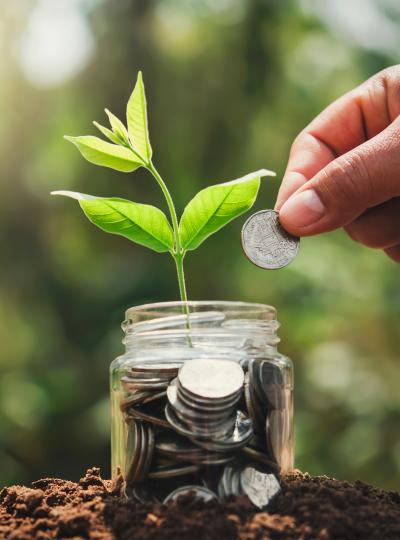
Production of export oriented cash crops, such as cocoa, following agroforestry practices, including in savannah areas contributing to afforestation. Revenues flow from the sell of production to exporters or cocoa processors locally or internationally.
Expected Impact
Agroforestry for cocoa production reduces carbon emissions, increases protection of forest areas, national agricultural production, and the sector's revenues.
How is this information gathered?
Investment opportunities with potential to contribute to sustainable development are based on country-level SDG Investor Maps.
Disclaimer
UNDP, the Private Finance for the SDGs, and their affiliates (collectively “UNDP”) do not seek or solicit investment for programmes, projects, or opportunities described on this site (collectively “Programmes”) or any other Programmes, and nothing on this page should constitute a solicitation for investment. The actors listed on this site are not partners of UNDP, and their inclusion should not be construed as an endorsement or recommendation by UNDP for any relationship or investment.
The descriptions on this page are provided for informational purposes only. Only companies and enterprises that appear under the case study tab have been validated and vetted through UNDP programmes such as the Growth Stage Impact Ventures (GSIV), Business Call to Action (BCtA), or through other UN agencies. Even then, under no circumstances should their appearance on this website be construed as an endorsement for any relationship or investment. UNDP assumes no liability for investment losses directly or indirectly resulting from recommendations made, implied, or inferred by its research. Likewise, UNDP assumes no claim to investment gains directly or indirectly resulting from trading profits, investment management, or advisory fees obtained by following investment recommendations made, implied, or inferred by its research.
Investment involves risk, and all investments should be made with the supervision of a professional investment manager or advisor. The materials on the website are not an offer to sell or a solicitation of an offer to buy any investment, security, or commodity, nor shall any security be offered or sold to any person, in any jurisdiction in which such offer would be unlawful under the securities laws of such jurisdiction.
Country & Regions
- Congo (Republic of): Brazzaville
- Congo (Republic of): Pointe Noire/Kouilou
- Congo (Republic of): South Zone
- Congo (Republic of): Centre Zone
- Congo (Republic of): North Zone
Sector Classification
Food and Beverage
Policy priority
In the National Development Plan 2022-2026, agriculture is a strategic pillar for economic diversification. The National Seed Policy aims at ensuring seed security though greater involvement of the private sector. The National Roadmap for the Transformation of Food Systems aims at achieving nutrition and food security while create sustainable employments (1, 2, 8).
Gender inequalities and marginalization issues
While 89.4% of women are in vulnerable employment, they represent 70% of the agricultural workforce. Women experience a more difficult access to production means such as access to land or credit, with only 15.1% owning land. In 2023, the national under-nutrition rate was of 33%, with chronic malnutrition at 19.6% among children under 5. Most affected households are urban and female led (1, 2, 18, 19, 20).
Investment opportunities introduction
Opportunities lie in local production of livestock with a reported potential of 3 to 4 million and aquaculture with a fishery potential estimated at 180,000 tonnes. Additionally, cooperation agreements in the sector were signed with Rwanda and Ivory Coast. Moreover, the Government established Protected Agricultural Zones (2, 3, 5, 6, 20).
Key bottlenecks introduction
Lack of appropriate food chain logistics network including cold chain, low rate of mechanisation, poor development support from public authorities, unreliable electricity, limited access to finance, a rural exodus and unsuitable land tenure system for agricultural production are all major sectoral challenges (2, 3, 4, 17).
Food and Agriculture
Development need
Agricultural production is mostly small scale and subsistence based, with a mechanisation rate of 1%. It is facing a lack of adapted preservation solutions and the processing units are outdated, affecting the sector's productivity and value-added. It is also highly vulnerable to climate change, with foreseen agricultural output losses of 5% by 2030 and 10% by 2050 (1, 7).
Policy priority
The NDP 2022-2026 aims at improving the productivity of the sector. The National Roadmap for the Transformation of Food Systems foster an inclusive transformation of the national food systems. The National Strategy for Industrialisation aims at increasing the share of agro-industry to 20% of GDP and reduce food imports by 50% by 2030 (1, 8, 55).
Gender inequalities and marginalization issues
Women involved in agricultural activities are more vulnerable to climate change than men due to the low quality of their land, their involvement in subsistence agriculture and small-scale production mostly supplying the local market and non-monetarized exchanges. Women experience difficult access to production means with 84.9% not owning land and limited access to credit. It is estimated that if women had an equal access to production means, the national agricultural production would increase of 10% (9, 10, 19).
Investment opportunities introduction
The World Bank calculated that USD 245 million investments in climate smart-agriculture could generate a Net Present Value of USD 296 million over 5 to 10 years, including the revenues from the potential 12 MtCO2e emission reduction. This could directly benefit over 20,1000 people (11).
Key bottlenecks introduction
The poor quality of agricultural land is a major challenge for productivity. The sector's emissions are partially caused by small-scale agriculture damaging forest ecosystems with 48.2% of tree cover loss linked to burning practices. Access to land, as well as to technical and financial means remain an issue for farmers (12, 56).
Agricultural Products
Pipeline Opportunity
Sustainable cocoa production under agroforestry practices
Production of export oriented cash crops, such as cocoa, following agroforestry practices, including in savannah areas contributing to afforestation. Revenues flow from the sell of production to exporters or cocoa processors locally or internationally.
Business Case
Market Size and Environment
> USD 1 billion
< 5%
In the Republic of Congo in 2024, the agricultural sector represented 9.44% of GDP (24).
In 2025, the global cocoa market was estimated at USD 11 billion and could reach USD 14.8 billion in 2032, with an estimated CAGR of 4.3% for the period (30).
Cocoa production in the Republic of Congo is estimated at 16 000 tones, out of the 3.6 million of tones produced in sub-Saharan Africa. It is mostly exported to Italy and Cameroon, with 520 tones exported to Italy in 2022 (47, 41).
Indicative Return
> 25%
20% - 25%
According to a study in Cameroon comparing certified and non-certified cocoa production, producers can expect a 36.9% IRR compared to 35.7% for uncertified production. It is calculated based on interest rates ranging from 18 to 50%, a premium of USD 0.1 (XAF 50) paid per kg of certified cocoa and the sale of agricultural produce from other trees grown under agroforestry practices (58).
In Cameroon, medium-size cocoa producers have a 9% net profit rate. According to conservative estimates, a gross profit margin of at least 20% can be expected (59).
Based on a study on certified and non-certified cocoa farming in Cameroon, the total revenue per hectare per year is averagely USD 1126 (FCFA 628.800) for certified cocoa producer and USD 962 (FCFA 537.249) for non-certified cocoa producers (58).
Based on Swiss Platform for Sustainable Cocoa's case study in Ghana, majority of farmers agreed that the level of income has increased and become more stable thanks to implementation agroforestry in cocoa production (60).
Investment Timeframe
Medium Term (5–10 years)
According to a project in Cameroun, increase in the cocoa production under agroforestry practices and other agricultural produce can be expected between 5 to 10 years (61).
Based on SUCDEN SA SD 100 million two-year corporate loan for cocoa export and value chain financing in Cameroon, Ghana and Nigeria, the loan reimbursement period is 2 years. Considering the less dynamic environment of the Republic of Congo, a medium term timeframe is considered (62).
Ticket Size
< USD 500,000
Market Risks & Scale Obstacles
Market - High Level of Competition
Business - Supply Chain Constraints
Market - Volatile
Impact Case
Sustainable Development Need
Agriculture is one of the major cause of deforestation and, therefore, one of the major contributor to national emissions. It has been recorded that over the period 2015-2020, deforestation for agricultural purposes with slash and burn practices caused 6 MtCO2eq/year of emissions. Additionally, over the period 2020-2035 absorptions from forests are expected to decrease by 6.4% (12, 25).
The Republic of Congo is presenting a total of 10 million hectares of arable land. However, currently only 2% of these lands are being used, resulting in a limited agricultural production. Additionally, 42% of the national territory are made of savannah, which can be used for agricultural purposes (1, 27).
Despite a steady increase, the added value of the agricultural sector is quite low representing around 9.4% of GDP, totalling USD 1,48 billion in 2024 (1, 14).
Gender & Marginalisation
Women's agricultural revenues are lower than men's due to yields that are 20% to 40% lower, caused by poorer land quality and limited access to production resources. Additionally, their production is often focused on local, non-monetized markets (2, 9).
Around 10% of the population in the Republic of Congo depends on forests for their livelihood, including indigenous people. Thus, deforestation threatens their subsistence, so does the industrial usage of the forest by agricultural or forestry companies (28, 29).
Expected Development Outcome
Agroforestry, specifically in savannah areas, can contribute to increase the national carbon stock through the sedentarization of agriculture, decreasing deforestation, and the increase in tree cover. Agroforestry represents an absorption potential of between 95 and 196 kgCO2eq/ha/year (30, 11, 12).
Agroforestry, especially for export oriented cash crop, contributes to the increase in agricultural production and sector's added value, contributing to the fight against poverty. The national poverty rate was estimated at 46.7% in 2024 while the objective is to reach 38.1% by 2026 (1, 12, 13, 17).
Agroforestry practices are also part of developing a climate-smart, resilient agriculture. For instance, tree crops are able to adapt to higher temperature, increase droughts and floods. This contributes to increase the sector's resilience to climate change (11).
Gender & Marginalisation
By contributing to the sedentarization of the agriculture in the Republic of Congo, agroforestry contributes to the reduction of deforestation, thus, helping to preserve indigenous and local communities livelihoods (27).
Investments in agroforestry, especially for cocoa production, can contribute to increase revenues of women farmers by giving them access to production types less demanding in agricultural input and export oriented, yielding higher revenues (26).
Primary SDGs addressed
13.2.2 Total greenhouse gas emissions per year
24.6 ktCO2e in 2024 (14).
15.1.1 Forest area as a proportion of total land area
Forest represent 64.13% of the national territory in 2023, with 0.1% permanent deforestation over the 5 past years (1, 14, 31).
1.1.1 Proportion of the population living below the international poverty line by sex, age, employment status and geographic location (urban/rural)
In 2020, 67% of the population was living with less than USD 1.90 per day, and 85.8% with less than USD 3.20 per day (1).
18.05% by 2030 (31).
Secondary SDGs addressed
Directly impacted stakeholders
People
Gender inequality and/or marginalization
Planet
Corporates
Public sector
Indirectly impacted stakeholders
People
Corporates
Public sector
Outcome Risks
If not developed taking into account the rights of indigenous people and local communities, there is a risk that expansion of agroforestry results in forced evictions and human rights violations (29).
If agroforestry do not follow sustainable practices, there is a risk that it increases damages to forest or savannah ecosystems.
Limited transport networks, their high prices and low regional integration might cause risks to exportations (8).
The anticipated revenue from the production might be impacted by possible issues related to tax collection compliance (8).
Gender inequality and/or marginalization risk: Women and local communities should be associated to agroforestry development, otherwise, they might remain excluded from the benefits.
Impact Risks
External risk can be caused by unpredicted climate change impacts on the cocoa production.
Stakeholder participation risk, if indigenous people and local communities are not associated in the development of agroforestry activities.
Execution risk provided that barriers to export, such as high tariffs might be in place (44).
Gender inequality and/or marginalization risk: Indigenous people and local communities must be included in agroforestry projects to avoid their loss of subsistence means.
Impact Classification
What
Decreased emissions, improved sectoral climate resilience, increased agricultural production, value added and income.
Who
People working in the agricultural sector, indigenous people, local communities, and women.
Risk
Risks linked to greenwashing, stakeholders involvement, climate change and export procedures.
Contribution
Decreases carbon emissions and increases value-added of the agricultural sector.
How Much
Agroforestry in tropical zones can absorb between 95 and 196 kg of carbon per hectare, per year (11).
Impact Thesis
Agroforestry for cocoa production reduces carbon emissions, increases protection of forest areas, national agricultural production, and the sector's revenues.
Enabling Environment
Policy Environment
NDP (2022-2026): emphasis on the need to diversify the economy with the development of agriculture, including through the expansion of agroforestry specifically for cocoa, coffee, cashew nut, sugarcane, oil palm, peanut, rubber production (1).
National Strategy for Sustainable Development (2016-2025): highlights agroforestry as a mean to diversify the national economy, and to preserve forest ecosystems (27).
Nationally Determined Contribution 3.0: identifies the development of agroforestry in degraded forest areas as a way to increase absorptions and as a climate-resilient form of agriculture. It also plans the development of agroforestry on 63,500 ha (25).
Financial Environment
Financial incentives: ABC Fund provides loans and equity investments adapted to the needs of rural SMEs, farmers organizations, agri-entrepreneurs and rural financial institutions. The FIGA supported cocoa producers in building bankable agro-pastoral projects for financing (53, 54).
Fiscal incentives: The investment charter's regimes G (above USD 180,88)2 and S (between USD 54,264-180,882) offer incentives during the first three years of operation, including reduced business registration fees, exemption from corporate income tax, and a zero VAT rate on exported products (51).
Fiscal incentives: The Tax Code exempts cooperative societies for the production, processing, preservation and sale of agricultural products form corporate income tax (39, 52).
Fiscal incentives: In addition, investments in Special Economic Zones are exempt from company income and dividend taxes for 6 years, and up to the tenth year a rate of 5% applies. The remuneration tax rate is set at 2.5% (51).
Other incentives: The government developed Protected Agricultural Zones, which are zones exclusively dedicated to agricultural purposes. They aim at ensuring food security and specifically target youth (40, 38).
Regulatory Environment
Law 9-2004 of March 26, 2004 constituting the code on the State domain and Law 10-2004 of March 26, 2004 establishing the general principles applicable to the land tenure system: set the general principles applicable to land, land tenure and State domain (32, 33).
Law No 25-2008 of September 22, 2008 on the agricultural and land regime: determines the regime for the recording, holding, use and exploitation of public and private land areas by private and public persons and determines the rules for rural land tenure (34).
Decree n°9450 of October 12, 2018 concerning orientation of agro-industrial plantations in savannah zones: regulates the mandatory move of agro-industrial farm above 5 hectares in savannah zones (35).
Law n° 21-2018 fixing the rules for occupying and acquiring land and plots of land: includes the rules for customary land tenure, as well as the rules for occupation and acquisition of rural, urban or peri-urban lands (36).
Law n°33-2020 of July 8, 2020 on the forestry code: sets the fundamental principles of organization and management of the national forest estate, as well as the commercialization applicable to forest products (37).
Marketplace Participants
Private Sector
Cofcao, Capfor, Société Plantations Forestières Batéké Brazzaville (Forêt Ressources Management), ASC Impact.
Government
Ministry of Agriculture, Livestock and Fisheries, Ministry of Environment, Sustainable Development and Congo Basin, Ministry of Commerce, Supply and Consumption, Agriculture Support Fund.
Multilaterals
World Bank, Agence Française de Développement (AFD), African Development Bank (AfDB), Central African Forest Initiative (CAFI), European Union.
Non-Profit
Non-Profit: Association Congolaise pour le Développement Agricole, Association des Femmes pour le Développement de la Bouenza, Association Routes, Agriculteurs et Éleveurs du Congo.
Target Locations

Congo (Republic of): Brazzaville
Congo (Republic of): Pointe Noire/Kouilou
Congo (Republic of): South Zone
Congo (Republic of): Centre Zone
Congo (Republic of): North Zone
References
- (1) République du Congo. 2022. Plan National de Developpement 2022-2026. https://gouvernement.cg/wp-content/uploads/2022/07/CSD-PND-2022-2026.pdf.
- (2) République du Congo. 2022. Plan de résilience sur la crise alimentaire 2022-2023. http://www.commerce.gouv.cg/sites/default/files/2023-01/Plan%20de%20r%C3%A9silience%20sur%20la%20crise%20alimentaire%202022-2023.PDF.
- (3) Ministère de la Recherche Scientifique et de l'Innovation Technologique. 2020. Politique Semenciere Nationale (PSN) de la Republique du Congo. https://faolex.fao.org/docs/pdf/con208843.pdf.
- (4) IMF. 2023. Poverty Reduction and Growth Strategy. https://www.imf.org/-/media/Files/Publications/CR/2023/English/1COGEA2023002.ashx.
- (5) Africa News. 2022. Le Rwanda et le Congo signent 8 accords de coopération. https://fr.africanews.com/2022/04/13/le-rwanda-et-le-congo-signent-8-accords-de-cooperation//.
- (6) TRT Africa. 2023. La Côte d'Ivoire et le Congo signent 13 accords de coopération. https://www.trtafrika.com/fr/africa/la-cote-divoire-et-le-congo-signent-13-accords-de-cooperation-13599941.
- (7) World Bank. 2022. Republic of Congo Economic Update: Impacts of Climate Change, Adaptation and Opportunities. https://documents1.worldbank.org/curated/en/099130001182312054/pdf/P1779950f1c16c0ee0ad360f619719a808d.pdf.
- (8) République du Congo. 2021. Feuille de route nationale de la République du Congo en vue de la transformation des systèmes alimentaires pour soutenir l'acceleration de la réalisation de l'Agenda 2030. https://www.unfoodsystemshub.org/docs/unfoodsystemslibraries/national-pathways/congo/2021-09-15-fr-feuille-de-route-nationale-de-la-republique-du-congo-preliminaire-15092021.pdf?sfvrsn=1ed5c07c_1.
- (9) PNUD République du Congo. 2023. Femmes et changements climatiques en République du Congo. https://www.undp.org/fr/congo/blog/femmes-et-changements-climatiques-en-republique-du-congo-0.
- (10) République du Congo. 2017. Politique nationale genre assortie du plan d’action national de mise en œuvre (2017-2021).
- (11) World Bank. 2023. Republic of Congo Country Climate and Development Report: Diversifying Congo's Economy: Making the Most of Climate Change. https://openknowledge.worldbank.org/entities/publication/7304e935-8400-4694-b7cf-aabe3ffa19e0.
- (12) Réublique du Congo. 2020. Plan d’Investissement Agricole Climato-résilient. https://documents1.worldbank.org/curated/en/141711591867311108/pdf/Republique-de-Congo-Plan-d-Investissement-Agricole-Climato-resilient.pdf
- (13) World Bank. 2023. Overview. https://www.worldbank.org/en/country/congo/overview.
- (14) World Bank. Republic of Congo Data. https://data.worldbank.org/country/CG.
- (15) Biodev. 2023. Diagnostic Approfondi des Secteurs Agriculture et Mines en Republique du Congo. https://www.biodev2030.org/wp-content/uploads/2023/05/Congo-Rapport-analyse-approfondie-des-secteurs-agriculture-et-mines-en-republi....pdf
- (16) AFDB. 2024. Congo Economic Outlook. https://www.afdb.org/en/countries/central-africa/congo/congo-economic-outlook
- (17) World Bank. 2025. Republic of Congo Economic Update 2025: Strengthen the management of produced, human, and natural capital to raise living standards in the Republic of Congo. https://www.worldbank.org/en/country/congo/publication/republic-congo-economic-update-2025-strengthen-management-produced-human-and-natural-capital-raise-living-sdandards
- (18) WFP Republic of Congo. 2025. Congo - Country Brief. https://www.wfp.org/countries/congo
- (19) World Bank. 2025. Republic of Congo Gender Data Landscape. https://documents1.worldbank.org/curated/en/099912106302235472/pdf/IDU0c2699d4f031850425e093e10fc8b84cfcdfb.pdf
- (20) FAO. 2023. The Republic of the Congo Hand in Hand Investment Forum. https://www.fao.org/media/docs/handinhandlibraries/countries/congo/congo-final.pdf?sfvrsn=d9c1e32_1
- (55) République du Congo. 2020. Stratégie Nationale d’Industrialisation. https://www.sgg.cg/JO/2020/congo-jo-2020-11.pdf
- (56) Global Forest Watch. 2024. https://www.globalforestwatch.org/dashboards/country/COG/.
- (63) Farmforce. 2025–2026 Cocoa Season Outlook: Challenges and Sustainability in Focus. https://farmforce.com/articles/2025-2026-cocoa-season-outlook-challenges-and-sustainability-in-focus/
- (21) Cofcao. https://www.cofcao.com/implantations/.
- (22) UNICONGO. 2019. CongoEco, Dossier RSE et Developpement Durable. https://www.unicongo.cg/wp-content/uploads/2021/11/J-ECO-16.pdf.
- (23) Agence d'Information d'Afrique Centrale. 2019. Agro-alimentaire : le café « Eric Arabica », une production signée Eric Mpassy. https://www.adiac-congo.com/content/agro-alimentaire-le-cafe-eric-arabica-une-production-signee-eric-mpassy-94215.
- (24) The Global Economy. 2024. Republic of the Congo: GDP share of agriculture. https://www.theglobaleconomy.com/Republic-of-the-Congo/share_of_agriculture/
- (25) République du Congo. 2025. Troisième Contribution Déterminée au niveau National (CDN3.0).
- (26) Agroforestry Network. 2019. How to support women’s empowerment in agroforestry projects. https://documents1.worldbank.org/curated/zh/141711591867311108/pdf/Republique-de-Congo-Plan-d-Investissement-Agricole-Climato-resilient.pdf.
- (27) République du Congo. 2014. Strategie Nationale de Developpement Durable. https://www.forestcarbonpartnership.org/sites/fcp/files/fcp-docs/2016/Aug/National%20strategy%20on%20sustinable%20development.pdf.
- (28) Banque Mondiale. 2023. Rapport National sur le Climat et le Développement. https://openknowledge.worldbank.org/entities/publication/7304e935-8400-4694-b7cf-aabe3ffa19e0.
- (29) Mouvement Mondial pour les Forêts Tropicales. 2021. La région de la Sangha en République du Congo. https://www.wrm.org.uy/fr/articles-du-bulletin/la-region-de-la-sangha-en-republique-du-congo.
- (30) Persistence Market Research. 2025. Cocoa Market Size, Growth, Share, Trends, and Forecast, 2025 - 2032 https://www.persistencemarketresearch.com/market-research/cocoa-market.asp
- (31) Trading Economics. Republic Of The Congo. https://tradingeconomics.com/republic-of-the-congo/forest-area-percent-of-land-area-wb-data.html
- (32) Gouvernement de la République du Congo. 2004. Loi n°9-2004 du 26 mars 2004 portant code de domaine de l'Etat. https://www.finances.gouv.cg/fr/loi-n%C2%B09-2004-du-26-mars-2004-portant-code-de-domaine-de-letat.
- (33) Gouvernement de la République du Congo. 2004. Loi n°10-2004 du 26 mars 2004 fixant les principes généraux applicables au régimes Domanial et foncier. https://faolex.fao.org/docs/pdf/Con174514.pdf.
- (34) Gouvernement de la République du Congo. 2008. Loi n° 25 - 2008 du 22 septembre 2008 portant regime agro-foncier. https://faolex.fao.org/docs/pdf/con83469.pdf.
- (35) Gouvernement de la République du Congo. 2005. L'Arrêté n° 9450 du 12 octobre 2018 portant orientation des plantations agro-industrielles en zones de savanes. https://www.clientearth.fr/media/kp2p3ebg/arr%C3%AAt%C3%A9-n-9450-du-12-octobre-2018-portant-orientation-des-plantations-agro-industrielles-en-zones-de-savanes.pdf.
- (36) Gouvernement de la République du Congo. 2018. Loi n° 21-2018 fixant les règles d’occupation et d’acquisition des terres et terrains. https://www.sgg.cg/JO/2018/congo-jo-2018-25.pdf.
- (37) Gouvernement de la République du Congo. 2020. Loi n° 33-2020 du 8 juillet 2020 portant code forestier. https://www.sgg.cg/JO/2020/congo-jo-2020-04-sp.pdf.
- (38) Ministère de l'Agriculture, de l'Elevage et de la Pêche. Agriculture: Deux zones agricoles protégées (ZAP) consacrées à la culture du café verront le jour sous peu dans le département de la Lékoumou. https://agriculture.gouv.cg/relance-de-la-production-de-cafe-par-la-mise-en-place-de-deux-grandes-zap-dans-le-departement-de-la-lekoumou/.
- (39) API. Opportunité et Cadre Incitatif des Investissements au Congo-Brazzaville. https://economie.gouv.cg/sites/default/files/Documentation/brochure%20sur%20les%20opportunit%C3%A9s%20d%27investissement%20-%20api.pdf.
- (40) RFI. 2022. Congo-Brazzaville: des zones agricoles protégées pour assurer l'autosuffisance alimentaire. https://www.rfi.fr/fr/podcasts/afrique-%C3%A9conomie/20220904-congo-brazzaville-des-zones-agricoles-prot%C3%A9g%C3%A9es-pour-assurer-l-autosuffisance-alimentaire.
- (41) Ministère de l'Economie et des Finances. 2023. Investir dans les 12 départements du Congo. https://www.rfi.fr/fr/podcasts/afrique-%C3%A9conomie/20220904-congo-brazzaville-des-zones-agricoles-prot%C3%A9g%C3%A9es-pour-assurer-l-autosuffisance-alimentaire.
- (42) Makanisi. 2022. La filière cacao d'Afrique centrale dominée par le Cameroun? 2/2. https://www.makanisi.org/la-filiere-cacao-dafrique-centrale-dominee-par-le-cameroun-2-2/.
- (43) Stakeholder consultation conducted on the 24 october 2023.
- (44) World Bank Group. 2023. Republic of Congo - Country Economic Memorandum : Road to Prosperity - Building Foundations for Economic Diversification : Full Report. https://documents.worldbank.org/en/publication/documents-reports/documentdetail/099194003082313541/p177056082c4ca01c08bdf0912daa5d3470.
- (45) Africa Business Pages. Africa's Coffee Industry: Investment Opportunities. https://news.africa-business.com/post/africas-coffee-industry-investment-opportunities.
- (46) EMR. 2023. Global Cocoa Market Share, Size, Growth, Analysis, Forecast: By Type: Cocoa Butter, Cocoa Powder, Cocoa Liquor; By Application: Food and Beverages, Cosmetics and Pharmaceuticals, Others; Regional Analysis; Market Dynamics; Trade Data Analysis; Competitive Landscape; Key Trends and Developments in the Market; 2024-2032. https://www.expertmarketresearch.com/reports/cocoa-market.
- (47) Makanisi. 2022. L’Afrique, leader mondial de la production de cacao. https://www.makanisi.org/lafrique-leader-mondial-de-la-production-de-cacao/.
- (48) Stakeholder consultation hold on the 28 November 2023.
- (49) Ministère de l'Economie et des Finances. 2023. Perspectives de l'Economie Congolaise, Juin 2023. https://www.finances.gouv.cg/fr/download/file/fid/7981.
- (50) FIDA. Congo. https://www.ifad.org/fr/web/operations/w/pays/republic-of-congo.
- (51) PwC. 2025. Congo, Republic of, Corporate - Tax credits and incentives. https://taxsummaries.pwc.com/republic-of-congo/corporate/tax-credits-and-incentives
- (52) Ministere de l'Economie et des Finances. 2021. Code Général des Impôt. https://www.finances.gouv.cg/fr/CGI-tome1_280321.
- (53) IFAD. Agri-Business Capital (ABC) Fund. https://www.ifad.org/en/abcfund.
- (54) RFI. 2022. Congo-Brazzaville: les cacaoculteurs de la Sangha souhaitent transformer localement leur production. https://www.rfi.fr/fr/podcasts/afrique-%C3%A9conomie/20220711-congo-brazzaville-les-cacaoculteurs-de-la-sangha-souhaitent-transformer-localement-leur-production
- (57)
- (58) JARTS. 2024. Weighing benefits in cocoa farming systems: An analysis of profitability in certified and non-certified cocoa farming schemes in Cameroon. https://www.jarts.info/index.php/jarts/article/view/2024121610772
- (59) ICCO. 2023. Value Chain And Sectoral Regulatory Analysis Country Reports Cameroon Country Report. https://www.icco.org/wp-content/uploads/5-FEASIBILITY-STUDY-ON-AFRICA-COCOA-EXCHANGE__Annex_CAMEROON.pdf
- (60) Swiss Platform for Sustainable Cocoa. 2025. Agroforestry in Cocoa - Perspectives and Solutions. https://www.kakaoplattform.ch/fileadmin/redaktion/Dokumente_SWISSCO/Studien_Themenseiten/Issue_Brief_AF_EN_v1.pdf
- (61) Media terre. 2023. Production durable de cacao : le Fonds africain pour le cacao veut améliorer les revenus de 500 ménages des cacaoculteurs à Tonga. https://www.mediaterre.org/actu,20231020090322,6.html
- (62) AFDB. 2024. Multinational - SUCDEN SA - Project Summary Note. https://www.afdb.org/en/documents/multinational-sucden-sa-project-summary-note