





Solar-Powered Smart Irrigation Systems
Solar-Powered Smart Irrigation Systems
Business Model Description
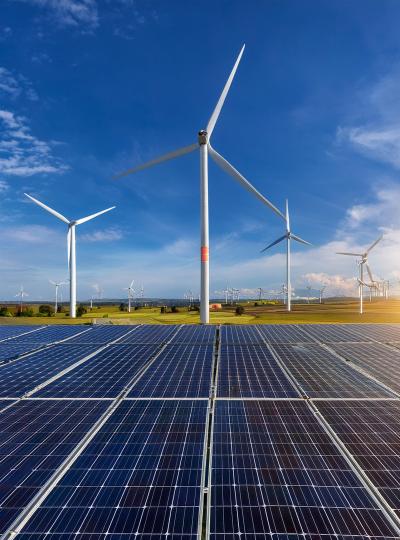
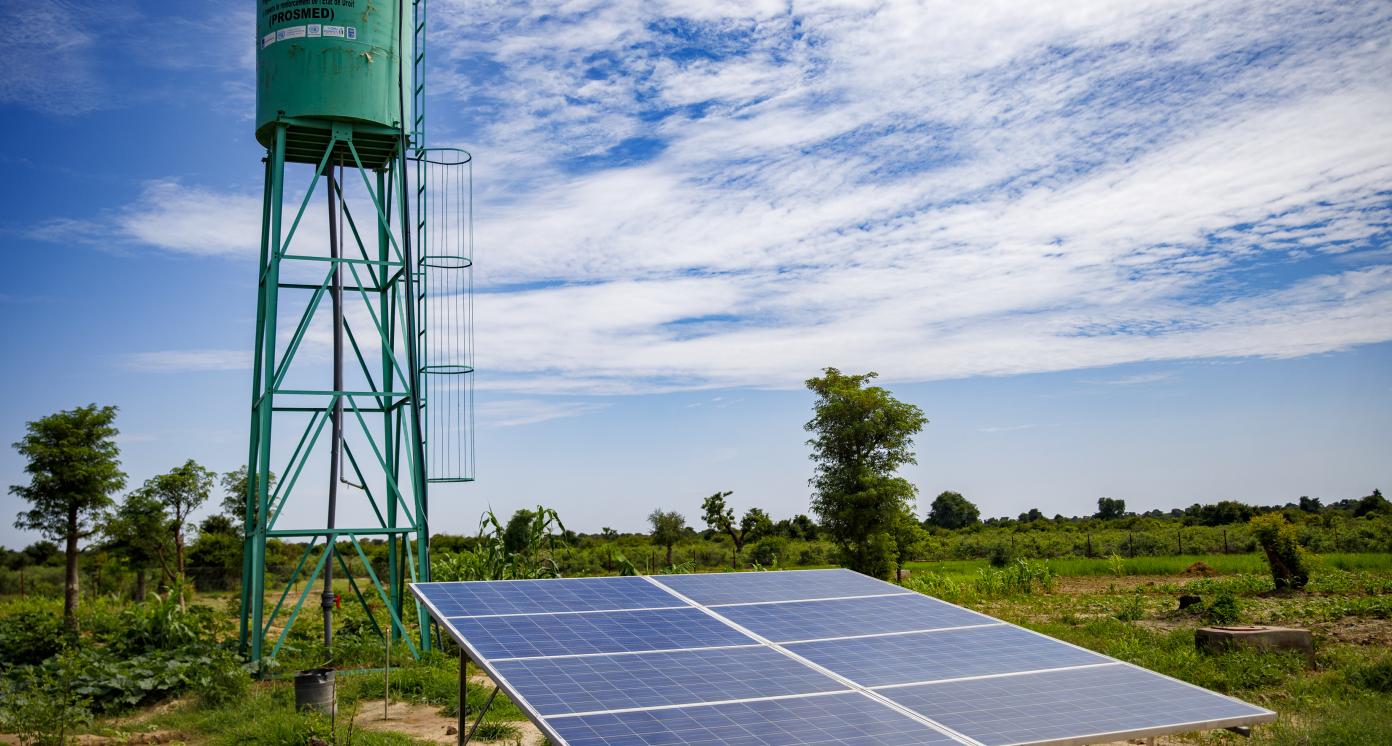
Invest in solar-powered smart irrigation systems that can be automated and remotely managed for agricultural production. The technologies include pumping systems for drip, sprinkler, and laser spray irrigation. Private operators provide after-sale services to ensure efficient technology use. Returns are generated through a B2C model, where smallholder farmers purchase products via a pay-as-you-go (PAYG) structure, reducing financial constraints and improving affordability and accessibility.
Expected Impact
Foster the dissemination of local innovations, improving irrigated agriculture value added, agricultural yields, farmers' income, and food security, while reducing pollution and production costs.
How is this information gathered?
Investment opportunities with potential to contribute to sustainable development are based on country-level SDG Investor Maps.
Disclaimer
UNDP, the Private Finance for the SDGs, and their affiliates (collectively “UNDP”) do not seek or solicit investment for programmes, projects, or opportunities described on this site (collectively “Programmes”) or any other Programmes, and nothing on this page should constitute a solicitation for investment. The actors listed on this site are not partners of UNDP, and their inclusion should not be construed as an endorsement or recommendation by UNDP for any relationship or investment.
The descriptions on this page are provided for informational purposes only. Only companies and enterprises that appear under the case study tab have been validated and vetted through UNDP programmes such as the Growth Stage Impact Ventures (GSIV), Business Call to Action (BCtA), or through other UN agencies. Even then, under no circumstances should their appearance on this website be construed as an endorsement for any relationship or investment. UNDP assumes no liability for investment losses directly or indirectly resulting from recommendations made, implied, or inferred by its research. Likewise, UNDP assumes no claim to investment gains directly or indirectly resulting from trading profits, investment management, or advisory fees obtained by following investment recommendations made, implied, or inferred by its research.
Investment involves risk, and all investments should be made with the supervision of a professional investment manager or advisor. The materials on the website are not an offer to sell or a solicitation of an offer to buy any investment, security, or commodity, nor shall any security be offered or sold to any person, in any jurisdiction in which such offer would be unlawful under the securities laws of such jurisdiction.
Country & Regions
- Mali: Sikasso
- Mali: Koulikoro
- Mali: Kayes
- Mali: Mopti
Sector Classification
Food and Beverage
Development need
In 2024, 13.2 million Malians experienced insufficient food consumption, with 1.4 million facing severe food insecurity. By 2025, 2.9 million people, including refugees and internally displaced persons, will require food security assistance. Climate change and a population expected to double by 2045 will further strain food supplies (2, 8, 12).
Policy priority
Politique Nationale de la Sécurité Alimentaire et Nutritionnelle, 2019 targets: 1) sustainable food availability to meet national demand by 2030; 2) enhanced capacity to prevent, mitigate, and reduce climate risks; 3) improved food accessibility; and 4) better nutritional status for the population (14).
Gender inequalities and marginalization issues
The 2025 INFORM Index, a global risk assessment for humanitarian crises and disasters, ranks Mali as the 14th most vulnerable country to humanitarian crises and natural disasters. As of September 2024, 378,500 people were internally displaced—57% women and girls, and 66% children—mainly due to conflict and flooding. These pressures severely impact food security, underscoring the urgent need for agricultural investment to support vulnerable populations (8, 9, 10, 11).
Investment opportunities introduction
Mali's economy relies heavily on small-scale subsistence and family agriculture, which contributes 35.1% to GDP growth. Investing in climate-resilient technologies, modernization, and market integration offers high returns and development impact, boosting food availability, value-added products, and income (18).
Key bottlenecks introduction
Transportation costs, limited road networks, lack of cold storage, and security risks pose major barriers for investors, restricting supply chain development and weakening food system resilience (16).
Food and Agriculture
Development need
Malian farmers face limited access to quality inputs and infrastructure, leading to just 4.5% of arable land being cultivated and agro-food processing contributing only 6.1% of GDP. Climate change is expected to reduce agricultural productivity by over 40% by 2040, threatening the livelihoods of 80% of Malians, or about 15.3 million people (3, 4, 5, 6, 7, 20).
Policy priority
Plan National d’Investissement dans le Secteur Agricole, 2015-2025 aims to position Mali as one of West Africa's top agricultural producers and an agro-industrial powerhouse, leveraging its agricultural raw materials. This will be achieved through modernizing production systems while preserving the environment and natural resources (15).
Gender inequalities and marginalization issues
In Mali, only 3.7% of women own agricultural land, compared to 44.8% of men, despite women making up 60% of the agricultural workforce and contributing to 80% of food production. On average, women own 0.6 hectares of land, 1.1 hectares less than men, limiting their capacity to generate income (1, 19).
Investment opportunities introduction
93% of Mali's agricultural land, or 40.64 million ha, is not yet farmed. In addition, only 15.25% of the cultivated land is equipped with irrigation equipment. With an estimated 2,720 and 11,000 billion cubic meters of renewable groundwater and surface water respectively, Mali offers a significant potential for solar-powered smart irrigation systems (16, 17).
Key bottlenecks introduction
High competition from imported goods and limited technology adoption by smallholder farmers may constrain the development and scaling up of local private sector-led initiatives in Mali's food and agriculture sector, slowing growth and innovation (15).
Agricultural Products
Pipeline Opportunity
Solar-Powered Smart Irrigation Systems
Invest in solar-powered smart irrigation systems that can be automated and remotely managed for agricultural production. The technologies include pumping systems for drip, sprinkler, and laser spray irrigation. Private operators provide after-sale services to ensure efficient technology use. Returns are generated through a B2C model, where smallholder farmers purchase products via a pay-as-you-go (PAYG) structure, reducing financial constraints and improving affordability and accessibility.
Business Case
Market Size and Environment
USD 50 million - USD 100 million
0.6 million ha of cropland area suitable for solar-powered groundwater irrigation.
Mali has an estimated 2,720 billion cubic meters of renewable groundwater surface and 11,000 billion cubic meters of renewable surface water, of which 5,000 billion are produced internally (14, 15).
International Food Policy and Research Institute estimates that out of the 2.2 million ha of irrigable cropland area in Mali, 0.6 million ha are suitable for solar-powered groundwater irrigation, based on cost-benefit analysis against diesel-powered irrigation. The regions with the highest market potential are Sikasso, Southwest Koulikoro, East Kayes, North Segou, and West Mopti (26, 29).
With 12 million people employed in agriculture, an average household size of 6 people, half of the available irrigation potential suited for solar-powered systems, an average price of USD 1,600 for smart irrigation systems, and a minimum adoption rate of 5%, the market size is conservatively estimated at about USD 80 million (22, 26, 31, 32).
Indicative Return
10% - 15%
10% - 15%
Consultations with private companies developing solar-powered smart pumps for agriculture in Mali, in January 2025, indicate a 1-year ROI of 20% for pumps used to produce carrots on 0.125 ha of land (22).
A study by International Food Policy and Research Institute that assesses the financial feasibility of developing groundwater solar irrigation in Mali indicates an IRR of over 12% for tomato in peak months in Sikasso, Koulikoro, Kayes, Segou, and Mopti, when crop water demand is highest (26).
The economic appraisal of a benchmark project that rehabilitates irrigated farm lands in Koulikoro, Sikasso, and Segou in Mali indicates an IRR of 20.9%. The project integrates other initiatives related to market gardening, fish farming, and stock breeding, besides small-scale irrigation (23).
Investment Timeframe
Short Term (0–5 years)
Consultations indicate that solar-powered smart irrigation technologies generate positive return within a year in Mali (22).
Ticket Size
< USD 500,000
Market Risks & Scale Obstacles
Market - High Level of Competition
Impact Case
Sustainable Development Need
More than 80% of Mali's population depend on predominantly rainfed agriculture and only 5% of smallholder farmers practice irrigation. However, the level of rainfall will decrease by 5%-8% by 2030 due to climate change. This could lead to up to 40% loss in agricultural productivity (5, 21, 28).
76.48% of Mali's land cover suitable for irrigation was not yet equipped in 2022. Additionally, irrigated lands are also mostly limited to the production of cotton, sugarcane, and rice, thereby limiting the agricultural productivity of vegetables and other cereals (21, 32).
The irrigated agriculture water use efficiency was USD 0.05/m3 in 2021. This means that each cubic meter used for irrigation in Mali generates only USD 0.05 of value added. This is six times lower than the value added generated in regional benchmark examples (35).
Gender & Marginalisation
72.2% of Mali's economically vulnerable are farmers, some of whom lack access to adequate irrigation equipment. Those who have access to irrigation equipment are exposed to high vulnerability, as traditional irrigation pumps use costly, intermittent, and polluting diesel and electricity (39, 41).
Women cultivate on average 1.1 ha less than men and only a maximum of 20% of them have access to agricultural equipment in rural areas. This exposes them to higher risks of financial vulnerability and poverty, especially in the face of climate change with related climatic variability (19).
4.45 million people faced moderate or severe food insecurity in 2021. Rural populations (21.5%) were more at risk compared to urban (14.4%) ones. In 2022, 58.7% of the population, or 13.3 million people, could not afford a healthy diet due to high prices and limited production stocks (37, 38).
Expected Development Outcome
Smart solar-powered technologies improve agricultural productivity and increase the resilience of Mali's production system to climate change. This increases smallholder farmers' income and consumption and improves the overall food security.
Solar-powered smart irrigation technologies improve the productive use of Mali's arable land and promote sustainable and efficient agricultural and water management practices.
Gender & Marginalisation
Solar-powered irrigation systems provide a cleaner and cost-efficient alternative to low-income smallholder farmers. The Pay-As-You-Go system further alleviates the financial pressure on the poorest stakeholders, thereby improving accessibility.
Irrigation technologies increase the productivity of women-owned land, increasing their income, off-season and downstream income generating activities opportunities, food security, intrahousehold decision power. This results in better outcomes for their children (39).
Smart solar-powered irrigation technologies increase agricultural capital and the demand for agricultural labor in rural areas.
Primary SDGs addressed
6.4.1 Change in water-use efficiency over time
USD 0.05/m3 for irrigated agriculture water use efficiency in 2021 (35).
2.3.1 Volume of production per labour unit by classes of farming/pastoral/forestry enterprise size
2.3.2 Average income of small-scale food producers, by sex and indigenous status
2.1.2 Prevalence of moderate or severe food insecurity in the population, based on the Food Insecurity Experience Scale (FIES)
Data on the volume of production per labour unit is not available. However, the agricultural output per labour day of small-scale producers was USD 18.54 in 2019; USD 18.54 for males and USD 16.95 for females (48).
Data on the average income of smallholder farmers is not available. However, the harvest value was USD 182,568 on average in 2017-2018 according to Enquête Agricole de Conjoncture Intégrée aux Conditions de Vie des Ménages, with USD 215,527 for men and USD 20,989 for women (38).
19.9% in 2021; 14.4% in urban areas and 21.5% in rural areas (37).
By 2025, Plan National d’Investissement dans le Secteur Agricole 2015-2025 aims to double the volume of produced tomato (143,827 tons), potato (123,738 tons), voandzou (45,960 tons), cowpea (351,522 tons), wheat (70,050 tons), cotton (1 million tons), and millet (2 million tons); triple the volume of maize (4.7 million tons); and tenfold the volume of sugarcane (2.9 million tons) (15).
Plan National d’Investissement dans le Secteur Agricole, 2015-2025 targets food security for all Malians by 2025 (15).
17.7.1 Total amount of funding for developing countries to promote the development, transfer, dissemination and diffusion of environmentally sound technologies
Data on the total investment in environmentally sound technologies is not available. However, the amount of tracked exported environmentally sound technologies was measured at USD 14.2 million in 2019 (48).
Secondary SDGs addressed
Directly impacted stakeholders
People
Gender inequality and/or marginalization
Planet
Corporates
Public sector
Indirectly impacted stakeholders
People
Planet
Public sector
Outcome Risks
Production of solar photovoltaic panels involves the use of toxic materials. This can pose environmental and health risks if proper decommissioning and recycling procedures are not implemented (33).
The manufacturing of the solar panels outside the domestic borders could pose a risk of heightened reliance on imported goods and could increase the quantity of imported greenhouse gas emissions.
Installation and maintenance activities associated with photovoltaic panels may lead to soil erosion and compaction.
If not managed and drained adequately, the water used for irrigation could stagnate beyond the normal growing season, leading to waterborne diseases (24).
Impact Risks
Technical failures, malfunctions, or improper maintenance of the solar panels can disrupt agricultural productivity, water supply, and water use efficiency.
Climatic shocks may disrupt agricultural production, limiting the financial capacity of some smallholder farmers, and excluding them from benefitting from this opportunity.
Locally developed smart solar irrigation systems can amount to up to 6 times Mali's national poverty line. Despite the Pay-As-You-Go structure, the poorest farmers may still be excluded (22, 26 ,27).
Impact Classification
What
Solar-powered smart irrigation improves irrigated agriculture value added, agricultural yields, smallholder farmers' income, and food security, while reducing pollution and production costs.
Who
Smallholder farmers, seed producers, food processors, distributors, and export-oriented companies benefit from solar-powered smart irrigation systems.
Risk
Improper installation and maintenance of the solar panels, the cost of the smart technologies, and the effect of climatic hazards on yields can limit the impact of the business model.
Contribution
Solar-powered irrigation increases agricultural yields and the arable land area without carbon emission. Otherwise, irrigation is performed with diesel or costly electrical sources (39).
How Much
Solar irrigation could increase farmers' income by up to USD 5,262 per ha, or 34.5% of the average harvest value in 2017-2018. This gives a total net revenue of USD 39 million per year (39,40).
Impact Thesis
Foster the dissemination of local innovations, improving irrigated agriculture value added, agricultural yields, farmers' income, and food security, while reducing pollution and production costs.
Enabling Environment
Policy Environment
Politique Nationale de Sécurité Alimentaire et Nutritionnelle, 2019: highlights irrigation equipment as priority investments to improve food availability by 2030 in Mali (14).
Plan National d’Investissement dans le Secteur Agricole, 2015-2025: outlines the development of local irrigation systems (in lowlands and for market gardening) as a priority initiative to improve rural populations' living conditions (15).
Contribution Déterminée au Niveau National Révisée, 2021: outlines Mali's environmental targets, including a 29% reduction in agriculture emissions and a 31% reduction in energy sector emissions by 2030, by initiatives such as solar irrigation projects, among others (34).
Financial Environment
Financial incentives: Accelerating Impacts of CGIAR Climate Research Africa (AICCRA-Mali) partnered with private smart solar-powered irrigation operators to reach 6,255 smallholder farmers in Sikasso and Niono (39).
Financial incentives: Fonds de Garantie pour le Secteur Privé covers 50% to 70% in guarantees for loans to companies operating in renewable energy for more than a year in Mali. The fund offers regular guarantee for loans up to USD 641,225 and co-guarantee for loans over USD 1.6 million (22, 25).
Fiscal incentives: Companies that invest a minimum of 5% of their sales in research and development (R&D) benefit from a reduction in the rate of corporate and business income tax (IBIC - IS) to 25% for a further two (2) years, independently of their investment regime (42).
Other incentives: In other Sub-Saharan African countries such as Kenya, private providers of smart solar-powered irrigation systems receive up to USD 12 million in equity, debt, grants and carbon financing from Nithio, Triodos, InfraCo, and Solar Energy Transformation Fund (44, 46).
Regulatory Environment
Law No. 02-006 on water code, 2002: establishes water development and management plans. The plans set the general objectives for the use, development and quantitative and qualitative protection of water resources (24).
Law No. 02-006 on water code, 2002: authorizes smallholder farmers to auto produce water for irrigation purposes. A decree issued by the Minister of Agriculture sets out the general technical conditions for project implementation, operation and maintenance of irrigation facilities. (24).
Order No. 2020-012/P-RM on exemption of renewable energy equipment from VAT, import duties and taxes, 2020: exempts solar equipment, including photovoltaic panels, from VAT and import duties (43).
Marketplace Participants
Private Sector
EcoTech Mali, Emicom Mali, Fonds de Garantie pour le Secteur Privé, Nithio Financial Intermediary, Triodos Investment Management, InfraCo Africa, Solar Energy Transformation Fund.
Government
Ministère de l'Agriculture, Ministère de l’Environnement, de l’Assainissement et du Développement Durable.
Multilaterals
International Water Management Institute, World Food Programme, United Nations Women, Government of Canada, German Cooperation, KfW Development Bank, Coopération Suisse, African Development Bank, Accelerating Impacts of CGIAR Climate Research Africa Mali.
Non-Profit
Antenna Foundation, Union nationale des coopératives de planteurs et maraîchers du Mali, Coordination nationale des organisations paysannes du Mali.
Target Locations

Mali: Sikasso
Mali: Koulikoro
Mali: Kayes
Mali: Mopti
References
- (1) United Nations. 2023. Mali : Analyse Commune de Pays 2023. Trajectoire des ODD, défis critiques du développement, de la gouvernance, la paix et principaux enjeux stratégiques actuels et futurs pour le SNU au Mali. https://minio.uninfo.org/uninfo-production-main/9564d9fd-11ad-4294-9918-210839c7d7f0_ACPMali2023RapportPrrovisoireMK19012024.pdf
- (2) International Monetary Fund. 2023. Mali Selected Issues. https://www.imf.org/en/Publications/CR/Issues/2018/05/31/Mali-Selected-Issues-45922
- (3) Ministère pour le Développement Rural. 2014. Programme National d'Investissement dans le Secteur Agricole, 2015-2025 (PNISA). https://faolex.fao.org/docs/pdf/mli198371.pdf
- (4) Gouvernement du Mali. 2023. Contributions du Mali au Sommet des Objectifs de Développement Durable (ODD) du 18 au 19 Septembre 2023 à New York. 2023_MALI-CONTRIBUTION AU SOMMET SUR LES ODD.pdf
- (5) Ortiz-Bobea, A., Ault, T. R., Carrillo, C. M., Chambers, R. G., and Lobell, D. B. 2021. Anthropogenic climate change has slowed global agricultural productivity growth. https://par.nsf.gov/servlets/purl/10342388
- (7) Food and Agriculture Organization. N/A. Programme de Gestion intégrée de la production et des déprédateurs en Afrique. https://www.fao.org/agriculture/ippm/projects/mali/fr/
- (8) United Nations Office for the Coordination of Humanitarian Affairs. 2025. Mali : Besoins humanitaires et plan de réponse 2025 (janvier 2025). https://reliefweb.int/report/mali/mali-besoins-humanitaires-et-plan-de-reponse-2025-janvier-2025
- (9) United Nations High Commission for Refugees. 2025. Refugee Data Finder. https://www.unhcr.org/refugee-statistics/
- (10) European Commission. 2025. DRMKC - INFORM. https://drmkc.jrc.ec.europa.eu/inform-index/INFORM-Risk/Country-Risk-Profile
- (11) REACH Initiative. 2024. Mali : Aperçu des besoins multisectoriels des ménages - Evaluation multisectorielle des besoins (MSNA) 24 Septembre 2024. https://reliefweb.int/report/mali/mali-apercu-des-besoins-multisectoriels-des-menages-evaluation-multisectorielle-des-besoins-msna-24-septembre-2024
- (12) World Food Programme. 2024. HungerMap: Western Africa insights and key trends. https://static.hungermapdata.org/insight-reports/latest/rbd-summary.pdf
- (13) World Intellectual Property Organization. 2025. Mali's innovation system. https://www.wipo.int/gii-ranking/en/mali/section/innovation-trends
- (14) World Food Programme. 2021. Fill the Nutrient Gap - Mali. https://fscluster.org/sites/default/files/documents/fill_the_nutrient_gap_mali_mai_2021.pdf
- (15) Feed the Future. 2020. Politique et réglementation semencières au Mali : L’accès des petits producteurs aux semences améliorées. https://www.canr.msu.edu/fsg/publications/peer-reviewed-publications-documents/PB_120F.pdf
- (16) African Development Bank. 2021. Mali - Country Strategy Paper 2021-2025. https://www.afdb.org/en/documents/mali-country-strategy-paper-2021-2025
- (17) Food and Agriculture Organization. 2021. AQUASTAT. https://data.apps.fao.org/aquastat/?lang=en
- (18) World Bank. 2023. Agriculture, forestry, and fishing, value added (% of GDP) - Mali. https://data.worldbank.org/indicator/NV.AGR.TOTL.ZS?locations=ML&view=chart
- (19) Food and Agriculture Organization. 2018. Profil national genre des secteurs de l’agriculture et du développement rural. https://openknowledge.fao.org/server/api/core/bitstreams/694178d5-d5f6-4ac1-ad93-19e1334a0982/content
- (20) Institut National de la Statistique du Mali. 2021. Comptes nationaux définitifs de 2019 selon le système de comptabilité nationale (SN 2008). https://www.instat-mali.org/laravel-filemanager/files/shares/pub/note-analyse-comptnat2019_pub.pdf
- (21) Minsitère de l'Économie et des Finances. 2023. Diagnostic stratégique et Évaluation du CREDD 2019-2023
- (22) UNDP SDG Financing in Mali project team consultations with private companies developing solar-powered smart technologies for agriculture in January 2025.
- (23) African Development Bank. 2013. Project for Food Security Consolidation Development of Irrigation Farming (PRESA/DCI). https://www.afdb.org/fileadmin/uploads/afdb/Documents/Mali_-_Project_for_Food_Security_Consolidation_through_Development_of_Irrigation_Farming__PRESA-DCI__-_Appraisal_Report.pdf
- (24) Journal Officiel de la République du Mali. 2002. Loi nº 02-006 portant Code de l'eau. https://faolex.fao.org/docs/pdf/mli34988.pdf
- (25) Fonds de Garantie pour le Secteur Privé. 2025. Nos produits et services. https://fgsp.ml/nos-produits-et-services/
- (26) International Food Policy and Research Institute. 2023. Financial feasibility of developing solar irrigation in Mali. https://cgspace.cgiar.org/server/api/core/bitstreams/b60b6f8f-49af-4c3a-888c-6362bc10fd18/content
- (27) Unites Nations Office for the Coordination of Humanitarian Affairs. 2024. CWG Mali : Rapport annuel CASH 2023. https://www.unocha.org/publications/report/mali/cwg-mali-rapport-annuel-cash-2023
- (28) Ministère de l'Environnement, de l'Assainissement et du Développement Durable. 2021. Contribution Déterminée au Niveau National Révisée. https://faolex.fao.org/docs/pdf/mli220117.pdf
- (29) Food and Agriculture Organization. N/A. Mali. https://www.fao.org/4/v8260b/V8260B14.htm
- (30) International Water Management Institute. 2023. Evaluation du potentiel d’expansion durable de l’irrigation solaire à petite échelle à Ségou et Sikasso, Mali. https://cgspace.cgiar.org/server/api/core/bitstreams/13304488-c9c5-4dd6-a7c2-53245d54ceb0/content
- (31) Institut National de la Statisitque du Mali. 2017. Enquête modulaire et permanente auprès des ménages (EMOP). https://www.instat-mali.org/laravel-filemanager/files/shares/eq/rana17pas1_eq.pdf "32) International Food Policy and Research Institute. 2020. Drivers of Adoption of Small-Scale Irrigation in Mali and Its Impacts on Nutrition across Sex of Irrigators. https://cgspace.cgiar.org/server/api/core/bitstreams/40c27a29-71e0-4368-a80f-77f49c5888a5/content"
- (33) African Developmenet Bank. 2019. Solar PV Powered Pumping for Irrigation Project. https://mapafrica.afdb.org/en/projects/46002-P-SD-FF0-001
- (34) Ministère de l'Environnement, de l'Assainissement et du Développement Durable. 2021. Contribution Déterminée au Niveau National Révisée. https://faolex.fao.org/docs/pdf/mli220117.pdf
- (35) Food and Agriculture Organization AQUASTAT. 2021. SDG 6.4.1. Irrigated Agriculture Water Use Efficiency. https://data.apps.fao.org/aquastat/?lang=en
- (36) World Bank. 2025. Water Scarcity in Mali. https://thinkhazard.org/en/report/155-mali/DG
- (37) Institut National de la Statistique. 2023. Rapport sur l'état de sécurité alimentaire au Mali à partir des données sur la consommation alimentaire de l'enquête harmonisée sur les conditions de vie des ménages (EHCVM-2021). https://www.instat-mali.org/laravel-filemanager/files/shares/eq/rap-ana-securite-alimentaire-ehcvm_eq.pdf
- (38) Babajide Fowowe. 2023. Financial inclusion, gender gaps and agricultural productivity in Mali. https://onlinelibrary.wiley.com/doi/10.1111/rode.13034
- (39) Accelerating Impacts of CGIAR Climate Research Africa. 2023. Pay-as-you-go model makes solar-powered irrigation affordable for farmers in Mali. https://aiccra.cgiar.org/news/pay-you-go-model-makes-solar-powered-irrigation-affordable-farmers-mali
- (40) International Water Management Institute. 2019. Suitability for farmer-led solar irrigation development in Mali. https://archive.iwmi.org/wle/suitability-farmer-led-solar-irrigation-development-mali/index.html
- (41) Institut National de la Statistique. 2023. Consommation, pauvreté et bien-être des ménages 2023. https://www.instat-mali.org/laravel-filemanager/files/shares/eq/ranuel23_eq.pdf
- (42) Secrétariat Général du Gouvernement du Mali. 2012. Loi No 2012-016 du 27 février 2012 portant code des investissements. https://sgg-mali.ml/codes/mali-code-2012-investissements.pdf
- (43) Journal Officiel de la République du Mali. 2020. Ordonnance n°2020‐012/P‐RM du 23 mars 2020 portant exonération des équipements d’énergies renouvelables de la TVA, des droits et taxes à l’importation. https://www.droit-afrique.com/uploads/Mali-Ordonnance-2020-12-exoneration-tva-equipements-energies.pdf
- (44) Techpoint Africa. 2024. SunCulture raises $12 million to expand solar irrigation solutions across sub-Saharan Africa. https://techpoint.africa/news/sunculture-raises-funding-expand-solar-irrigation/
- (45) Attia, Ahmed, Asad Sarwar Qureshi, Abdoulah M. Kane, Bokhir Alikhanov, Ahmed MS Kheir, Hayat Ullah, Avishek Datta, and Kaboro Samasse. 2022. Selection of potential sites for promoting small-scale irrigation across Mali using remote sensing and GIS. https://www.mdpi.com/2071-1050/14/19/12040
- (46) Africa Energy Portal. 2023. Kenya: SunCulture receives funding for solar irrigation and agricultural innovation. https://africa-energy-portal.org/news/kenya-sunculture-receives-funding-solar-irrigation-and-agricultural-innovation
- (47) Emicom Mali. 2025. Nos produits. https://www.emicom-mali.com/web/
- (48) United Nations Department of Economic and Social Affairs. 2025. SDG Indicators Database. https://unstats.un.org/sdgs/dataportal/database