






Production of Endemic Improved Seeds
Production of Endemic Improved Seeds
Business Model Description
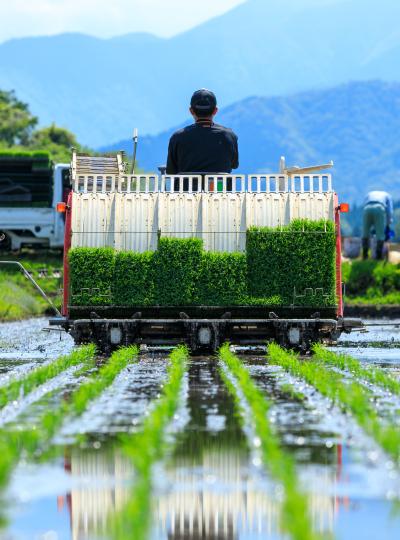
Invest in the production of endemic improved seeds for smallholder farmers. Private operators source drought-resilient foundational seed varieties from research centers and biotechnology labs, produce improved seeds through cultivation, and have them certified by the Direction Nationale de l'Agriculture and Comité National des Semences et Plants. Certified seeds are distributed to farmers via agro-dealers, resellers, and distribution centers. Key crops include food crops (hybrid maize, sorghum, cowpea, groundnut), cash crops (vegetables, potato, rice), and niche crops (cotton, sweet potato). Returns come from 1) B2C seed kit sales to farmers, 2) tripartite contracts with smallholders and wholesalers or agro-processors, and 3) exports to West Africa.
Expected Impact
Increase the affordability and access of smallholder farmers to quality seeds, improving agricultural productivity, income, food security, and nutrition.
How is this information gathered?
Investment opportunities with potential to contribute to sustainable development are based on country-level SDG Investor Maps.
Disclaimer
UNDP, the Private Finance for the SDGs, and their affiliates (collectively “UNDP”) do not seek or solicit investment for programmes, projects, or opportunities described on this site (collectively “Programmes”) or any other Programmes, and nothing on this page should constitute a solicitation for investment. The actors listed on this site are not partners of UNDP, and their inclusion should not be construed as an endorsement or recommendation by UNDP for any relationship or investment.
The descriptions on this page are provided for informational purposes only. Only companies and enterprises that appear under the case study tab have been validated and vetted through UNDP programmes such as the Growth Stage Impact Ventures (GSIV), Business Call to Action (BCtA), or through other UN agencies. Even then, under no circumstances should their appearance on this website be construed as an endorsement for any relationship or investment. UNDP assumes no liability for investment losses directly or indirectly resulting from recommendations made, implied, or inferred by its research. Likewise, UNDP assumes no claim to investment gains directly or indirectly resulting from trading profits, investment management, or advisory fees obtained by following investment recommendations made, implied, or inferred by its research.
Investment involves risk, and all investments should be made with the supervision of a professional investment manager or advisor. The materials on the website are not an offer to sell or a solicitation of an offer to buy any investment, security, or commodity, nor shall any security be offered or sold to any person, in any jurisdiction in which such offer would be unlawful under the securities laws of such jurisdiction.
Country & Regions
- Mali: Sikasso
- Mali: Mopti
- Mali: Ségou
- Mali: Koulikoro
Sector Classification
Food and Beverage
Development need
In 2024, 13.2 million Malians experienced insufficient food consumption, with 1.4 million facing severe food insecurity. By 2025, 2.9 million people, including refugees and internally displaced persons, will require food security assistance. Climate change and a population expected to double by 2045 will further strain food supplies (2, 8, 12).
Policy priority
Politique Nationale de la Sécurité Alimentaire et Nutritionnelle, 2019 targets: 1) sustainable food availability to meet national demand by 2030; 2) enhanced capacity to prevent, mitigate, and reduce climate risks; 3) improved food accessibility; and 4) better nutritional status for the population (14).
Gender inequalities and marginalization issues
The 2025 INFORM Index, a global risk assessment for humanitarian crises and disasters, ranks Mali as the 14th most vulnerable country to humanitarian crises and natural disasters. As of September 2024, 378,500 people were internally displaced—57% women and girls, and 66% children—mainly due to conflict and flooding. These pressures severely impact food security, underscoring the urgent need for agricultural investment to support vulnerable populations (8, 9, 10, 11).
Investment opportunities introduction
Mali's economy relies heavily on small-scale subsistence and family agriculture, which contributes 35.1% to GDP growth. Investing in climate-resilient technologies, modernization, and market integration offers high returns and development impact, boosting food availability, value-added products, and income (18).
Key bottlenecks introduction
Transportation costs, limited road networks, lack of cold storage, and security risks pose major barriers for investors, restricting supply chain development and weakening food system resilience (16).
Food and Agriculture
Development need
Malian farmers face limited access to quality inputs and infrastructure, leading to just 4.5% of arable land being cultivated and agro-food processing contributing only 6.1% of GDP. Climate change is expected to reduce agricultural productivity by over 40% by 2040, threatening the livelihoods of 80% of Malians, or about 15.3 million people (3, 4, 5, 6, 7, 20).
Policy priority
Plan National d’Investissement dans le Secteur Agricole, 2015-2025 aims to position Mali as one of West Africa's top agricultural producers and an agro-industrial powerhouse, leveraging its agricultural raw materials. This will be achieved through modernizing production systems while preserving the environment and natural resources (15).
Gender inequalities and marginalization issues
In Mali, only 3.7% of women own agricultural land, compared to 44.8% of men, despite women making up 60% of the agricultural workforce and contributing to 80% of food production. On average, women own 0.6 hectares of land, 1.1 hectares less than men, limiting their capacity to generate income (1, 19).
Investment opportunities introduction
The shortage in certified seeds stands at 69%. It concerns most crops, including maize, sorghum, millet, groundnut, cowpea, fonio, sesame, and soybean. Consequently, several private operators have been involved in the formal seed sector to strengthen the supply of improved seeds. They currently represent more than 20% of the total formal market (22, 33, 37).
Key bottlenecks introduction
High competition from imported goods and limited technology adoption by smallholder farmers may constrain the development and scaling up of local private sector-led initiatives in Mali's food and agriculture sector, slowing growth and innovation (17).
Agricultural Products
Pipeline Opportunity
Production of Endemic Improved Seeds
Invest in the production of endemic improved seeds for smallholder farmers. Private operators source drought-resilient foundational seed varieties from research centers and biotechnology labs, produce improved seeds through cultivation, and have them certified by the Direction Nationale de l'Agriculture and Comité National des Semences et Plants. Certified seeds are distributed to farmers via agro-dealers, resellers, and distribution centers. Key crops include food crops (hybrid maize, sorghum, cowpea, groundnut), cash crops (vegetables, potato, rice), and niche crops (cotton, sweet potato). Returns come from 1) B2C seed kit sales to farmers, 2) tripartite contracts with smallholders and wholesalers or agro-processors, and 3) exports to West Africa.
Business Case
Market Size and Environment
< USD 50 million
5% - 10%
Estimated demand of 15,000 tons of improved seeds annually.
Integrated Seed Sector Development (ISSD) Africa estimates the effective demand for improved seeds at 15,000 tons per year in Mali. With an average retail price of USD 1.18 per kg of improved seeds, this gives an estimated market size of about USD 17.7 million (21, 22, 32).
The private sector-led formal certified seed sector produces three types of crops in Mali, including food crops (hybrid maize, sorghum, cowpea, groundnut), cash crops (vegetables, potato, rice), and niche crops (cotton, sweet potato). Vegetables and cowpeas present the highest demand growth among smallholder farmers, followed by maize and rice. Niche crops target agroprocessing companies (21, 22).
World Bank estimates that domestic demand for agricultural products could reach around 5% to 6.5% per year in Mali by 2040. This demand would be driven by an urbanization rate of about 70% by 2050, and a demand for animal products that would increase the demand for crops such as corn, millet and sorghum for the production of livestock feed (29).
Indicative Return
15% - 20%
15% - 20%
Consultations with certified seed producers in Mali, in January 2025, indicate a Gross Profit Margin (GPM) of 17% over the period 2010-2023, for an average sale price of USD 1.18 per kg of maize, rice, and cowpea seed (21).
A benchmark USD 3.04 million project that involved the production and commercialization of certified seeds in Sikasso, Segou, Mopti, and Kayes indicates an IRR of 16.1%-27.2% over a period of 20 years, for food crops and cash crops (26).
Investment Timeframe
Medium Term (5–10 years)
Loans to certified seed producers in Mali have a tenor of five years at an interest rate of 6% (21, 34).
Ticket Size
< USD 500,000
Market Risks & Scale Obstacles
Market - Highly Regulated
Impact Case
Sustainable Development Need
There is a shortage of certified seeds in Mali. The deficit was estimated at 69.6% for all crops for the 2020/2021 season, with 85%, 87%, 90%, 99% for sorghum seed, millet seed, corn seed, and groundnut seed, respectively (22, 33, 36, 37).
Agriculture produces 3/4 of the available calories in Mali (67% from cereals and 4% from fruits and vegetables) but its productivity is low. As a result, 19.9% of Malians were food insecure in 2021, and 1.6 million children suffered or are at risk of acute malnutrition in 2024-2025 (28, 39, 41).
Due to prices two to three times higher for improved seeds compared to local seed varieties, Malian smallholder farmers recycle improved seeds for up to 4 years. This leads to losses of varietal purity and uniformity of the crops in the fields, further limiting agricultural productivity (22).
Gender & Marginalisation
In 2024, food prices were around 18.91% above their 2019 average and the price of primary sector goods rose by 9.7% compared to their 2023 level. This is almost twice the overall inflation in the country, limiting poor households' ability to access food (27).
The cost of nutritious food is only USD 1.84 per household per day in Mali, but 1 in 2 households (49% or 13 million people) cannot afford it. This cost is twice higher in conflict-afflicted and semi-arid Menaka, Kidal, and Mopti, where the road network is also limited (41).
1 in 10 people had an average energy consumption lower than the minimum energy consumption estimated at 1812 Kcal per person per day in 2021. The gap to reach the average energy level is 172.5 Kcal/day in rural areas compared to 33.7 Kcal/day in urban areas (28).
Expected Development Outcome
Investment in the production of improved seeds improves the availability, affordability, and access of smallholder farmers, including women, to key climate-resilient species and varieties. This further improves their agricultural productivity, output per unit of labour, income, and poverty status.
An increase in the supply of improved seeds improves food security and nutrition by increasing agricultural yields and plant quality and resilience.
Gender & Marginalisation
Investment in improved seeds lowers inflation and the cost of nutritious food for rural communities and the poor by increasing the supply of quality agricultural products.
The production of improved seeds adapted to local contexts lowers the pressure on food prices in Menaka, Kidal, and Mopti where road networks are limited. It also decreases greenhouse gas emissions by reducing the need for transnational road transportation to supply these regions.
Primary SDGs addressed
2.3.2 Average income of small-scale food producers, by sex and indigenous status
2.3.1 Volume of production per labour unit by classes of farming/pastoral/forestry enterprise size
2.1.1 Prevalence of undernourishment
2.1.2 Prevalence of moderate or severe food insecurity in the population, based on the Food Insecurity Experience Scale (FIES)
Data on the average income of smallholder farmers is not available. However, the harvest value was USD 182,568 on average in 2017-2018 according to Enquête Agricole de Conjoncture Intégrée aux Conditions de Vie des Ménages, with USD 215,527 for men and USD 20,989 for women (38).
Data on the volume of production per labour unit is not available. However, the agricultural output per labour day of small-scale producers was USD 18.54 in 2019; USD 18.54 for males and USD 16.95 for females (46).
9.6% in 2021; 5.8% in urban areas and 8.8% in rural areas (28).
19.9% in 2021; 14.4% in urban areas and 21.5% in rural areas (28).
By 2025, Plan National d’Investissement dans le Secteur Agricole 2015-2025 aims to double the volume of produced tomato (143,827 tons), potato (123,738 tons), voandzou (45,960 tons), cowpea (351,522 tons), wheat (70,050 tons), cotton (1 million tons), and millet (2 million tons); triple the volume of maize (4.7 million tons); and tenfold the volume of sugarcane (2.9 million tons) (15).
Plan National d’Investissement dans le Secteur Agricole, 2015-2025 targets nutritional security for all Malians by 2025 (15).
Plan National d’Investissement dans le Secteur Agricole, 2015-2025 targets food security for all Malians by 2025 (15).
1.2.1 Proportion of population living below the national poverty line, by sex and age
43.9% in 2023; 14.2% in Bamako, 23.4% in other urban centers, and 51.7% in rural areas (43).
Secondary SDGs addressed
Directly impacted stakeholders
People
Gender inequality and/or marginalization
Planet
Corporates
Public sector
Indirectly impacted stakeholders
People
Gender inequality and/or marginalization
Corporates
Outcome Risks
The utilization of improved seeds requires an intensive usage of pesticides to prevent pest infestation. This could lead to water and soil pollution, especially in irrigated areas (26).
Certified seed producers in Mali spend on average USD 248 daily on diesel to run their conditioning and packaging units. This reliance on heavy oil could increase greenhouse gas (GHG) emissions (21).
Increased irrigation needs for large-scale seed cultivation may strain local water resources, if not managed adequately.
Impact Risks
Delays or inconsistencies in foundational seed supply may disrupt production cycles, limiting the efficiency of this business model.
Climate hazards such as extreme droughts and heavy rainfall could disrupt the production of quality seeds, limiting the expected price impacts on smallholder farmers.
Seed conditioning requires cold storage. Frequent power outages and failure to maintain cold storage equipment could reduce the quality of the commercialized seeds (21).
If the improved seeds are not affordable, some smallholder farmers may be excluded from benefiting from this opportunity, as 72.2% of Mali’s low income population are farmers (43).
Impact Classification
What
Local production of improved seeds increases the affordability and access of smallholder farmers to quality seeds, and improves agricultural productivity, income, food security, and nutrition.
Who
Smallholder farmers, consumers, women, youth, unemployed people, internally displaced populations, agro dealers, resellers, wholesalers, and agro processing and irrigation companies are impacted.
Risk
Supply chain disruptions, climatic variations, frequent power outages, and affordability could reduce the expected impacts of improved seed production.
Contribution
The local production of certified seeds increases access to improved seeds, which are otherwise imported or distributed by non-governmental organizations (22).
How Much
The local production of improved seeds could fill the seed deficit, which stood at 69.6% for the 2020/2021 season (22).
Impact Thesis
Increase the affordability and access of smallholder farmers to quality seeds, improving agricultural productivity, income, food security, and nutrition.
Enabling Environment
Policy Environment
Politique Semencière Nationale du Mali, 2020: prioritizes the use of quality seeds in agrarian communities and an increased access and availability of quality seeds for smallholder farmers in production areas (25).
Politique Nationale Genre, 2011: outlines an equitable access to seed resources for women to ensure production throughout the country (26).
Plan National d’Investissement dans le Secteur Agricole, 2015-2025: outlines the priority activities to increase the competitiveness of Malian agricultural products, including the diversification of crop varieties and the access to improved vegetal materials (15).
Financial Environment
Financial incentives: Injaro Investments provides up to USD 330,000 in equity financing with a 49% stake to private certified seed producers in Mali (21).
Financial incentives: Bank of Africa provides up to USD 496,000 in medium term loans with a tenor of 2 to 5 years to private certified seed producers in Mali. The loans cover up to 80% of the required investment for creation or activities scale-up (21, 34).
Fiscal incentives: Scale-up investments with a value lower than USD 500,000 are exempt from import duties and taxes on equipment, IBIC withholding tax, and VAT withholding tax on technical assistance and consultancy services for two years, under regimes A and B of the investment code (35).
Regulatory Environment
Chapter III of Law No. 10-032 on seeds of plant origin, 2010: establishes a national catalogue of species and varieties approved in Mali for the production of certified seeds (23).
Law No. 06-045/AN-RM on agricultural orientation, 2006: promotes the development of local production units for selected seeds (24).
Law No. 10-032 on seeds of plant origin, 2010: authorizes private operators to produce and distribute vegetal seeds from the national catalogue of approved species and varieties, under Article 5 and Article 14. The law also describes the procedure for the certification of the produced seeds (23).
Marketplace Participants
Private Sector
Faso Kaba, Agriplus Mali, Soprosa, Banque Nationale de Développement Agricole, Kafo Jiginew, Baobab, Banque Atlantique, Bank of Africa, Injaro, Coopérative pour la Promotion de la filière Semencière du Mandé, Union Locale des Producteurs de Céréales de Dioïla, Coop Sikolokoloton.
Government
Institut d'Économie Rurale, Direction Nationale de l'Agriculture, Institut Polytechnique Rural de Formation et de Recherche Appliquée, Direction Régionale de l'Agriculture, Laboratoire national des Semences, Comité National des Semences et plants, Service Semencier National.
Multilaterals
International Crops Research Institute for the Semi-Arid Tropics, International Institute of Tropical Agriculture, International Maize and Wheat Improvement Center, WorldVeg, Alliance for a Green Revolution in Africa, International Finance Corporation, Conseil Ouest et Centre African pour la recherche et le Developpement Agricole, Food and Agriculture Organization.
Non-Profit
Union nationale des coopératives de planteurs et maraîchers du Mali, Coordination nationale des organisations paysannes du Mali, Association Semencière du Mali, Integrated Seed Sector Development-Africa, Bill and Melinda Gates Foundation, Rockefeller Foundation, Syngenta Foundation.
Target Locations

Mali: Sikasso
Mali: Mopti
Mali: Ségou
Mali: Koulikoro
References
- (1) United Nations. 2023. Mali : Analyse Commune de Pays 2023. Trajectoire des ODD, défis critiques du développement, de la gouvernance, la paix et principaux enjeux stratégiques actuels et futurs pour le SNU au Mali. https://minio.uninfo.org/uninfo-production-main/9564d9fd-11ad-4294-9918-210839c7d7f0_ACPMali2023RapportPrrovisoireMK19012024.pdf
- (2) International Monetary Fund. 2023. Mali Selected Issues. https://www.imf.org/en/Publications/CR/Issues/2018/05/31/Mali-Selected-Issues-45922
- (3) Ministère pour le Développement Rural. 2014. Programme National d'Investissement dans le Secteur Agricole, 2015-2025 (PNISA). https://faolex.fao.org/docs/pdf/mli198371.pdf
- (4) Gouvernement du Mali. 2023. Contributions du Mali au Sommet des Objectifs de Développement Durable (ODD) du 18 au 19 Septembre 2023 à New York. 2023_MALI-CONTRIBUTION AU SOMMET SUR LES ODD.pdf
- (5) Ortiz-Bobea, A., Ault, T. R., Carrillo, C. M., Chambers, R. G., and Lobell, D. B. 2021. Anthropogenic climate change has slowed global agricultural productivity growth. https://par.nsf.gov/servlets/purl/10342388
- (7) Food and Agriculture Organization. N/A. Programme de Gestion intégrée de la production et des déprédateurs en Afrique. https://www.fao.org/agriculture/ippm/projects/mali/fr/
- (8) United Nations Office for the Coordination of Humanitarian Affairs. 2025. Mali : Besoins humanitaires et plan de réponse 2025 (janvier 2025). https://reliefweb.int/report/mali/mali-besoins-humanitaires-et-plan-de-reponse-2025-janvier-2025
- (9) United Nations High Commission for Refugees. 2025. Refugee Data Finder. https://www.unhcr.org/refugee-statistics/
- (10) European Commission. 2025. DRMKC - INFORM. https://drmkc.jrc.ec.europa.eu/inform-index/INFORM-Risk/Country-Risk-Profile
- (11) REACH Initiative. 2024. Mali : Aperçu des besoins multisectoriels des ménages - Evaluation multisectorielle des besoins (MSNA) 24 Septembre 2024. https://reliefweb.int/report/mali/mali-apercu-des-besoins-multisectoriels-des-menages-evaluation-multisectorielle-des-besoins-msna-24-septembre-2024
- (12) World Food Programme. 2024. HungerMap: Western Africa insights and key trends. https://static.hungermapdata.org/insight-reports/latest/rbd-summary.pdf
- (13) World Intellectual Property Organization. 2025. Mali's innovation system. https://www.wipo.int/gii-ranking/en/mali/section/innovation-trends
- (14) Commissariat à la Sécurité Alimentaire. 2019. Politique Nationale de Sécurité Alimentaire et Nutritionnelle (PolNSAN). https://faolex.fao.org/docs/pdf/mli211854.pdf
- (15) Minsitère du Développement Rural. 2014. Plan National d'Investissement dans le Secteur Agricole (PNISA) 2015-2025. https://faolex.fao.org/docs/pdf/mli198371.pdf
- (16) World Food Programme. 2021. Fill the Nutrient Gap - Mali. https://fscluster.org/sites/default/files/documents/fill_the_nutrient_gap_mali_mai_2021.pdf
- (17) Feed the Future. 2020. Politique et réglementation semencières au Mali : L’accès des petits producteurs aux semences améliorées. https://www.canr.msu.edu/fsg/publications/peer-reviewed-publications-documents/PB_120F.pdf
- (18) World Bank. 2023. Agriculture, forestry, and fishing, value added (% of GDP) - Mali. https://data.worldbank.org/indicator/NV.AGR.TOTL.ZS?locations=ML&view=chart
- (19) Food and Agriculture Organization. 2018. Profil national genre des secteurs de l’agriculture et du développement rural. https://openknowledge.fao.org/server/api/core/bitstreams/694178d5-d5f6-4ac1-ad93-19e1334a0982/content
- (20) Institut National de la Statistique du Mali. 2021. Comptes nationaux définitifs de 2019 selon le système de comptabilité nationale (SN 2008). https://www.instat-mali.org/laravel-filemanager/files/shares/pub/note-analyse-comptnat2019_pub.pdf
- (21) UNDP SDG Financing in Mali project team consultations with seed producers in January 2025.
- (22) Bonnand, J., Huet, E.K., Goïta, M.D., van Mourik, T. and de Boef, W.S. 2022. Guide de référence du secteur semencier du Mali. Projet de Développement Intégéré du Secteur Semencier du Sahel (ISSD/Sahel). https://www.inter-reseaux.org/wp-content/uploads/Guide-de-reference-du-secteur-semencier-au-Mali.pdf
- (23) Présidence de la République. 2010. Loi No. 10-032 du 12 juillet 2010 relative aux semences d'orgine végétale. https://faolex.fao.org/docs/pdf/mli141928.pdf
- (24) Journal Officiel de la République du Mali. 2006. Loi nº 06-045 portant loi d'orientation agricole. https://faolex.fao.org/docs/pdf/mli67609.pdf
- (25) Ministère de l'Agriculture. 2020. Politique Nationale Semencière du Mali (PNS-Mali). https://weseedchange.org/wp-content/uploads/2020/05/Politique-Naitonale-des-Semences-MALI-.pdf
- (26) African Development Bank. 2001. Mali - Project to support the seed sub-sector. https://mapafrica.afdb.org/en/projects/46002-P-ML-AAB-001
- (27) Institut National de la Statistique. 2024. Indice Harmonisé des Prix à la Consommation (IHPC) pour les pays membres de l’UEMOA – National – Décembre 2024. https://www.instat-mali.org/laravel-filemanager/files/shares/pub/ihpc1224_pub.pdf
- (28) Institut National de la Statistique. 2023. Rapport sur l'état de sécurité alimentaire au Mali à partir des données sur la consommation alimentaire de l'enquête harmonisée sur les conditions de vie des ménages (EHCVM-2021). https://www.instat-mali.org/laravel-filemanager/files/shares/eq/rap-ana-securite-alimentaire-ehcvm_eq.pdf
- (29) World Bank Group. 2022. Rapport de Revue du Secteur Agricole. https://documents1.worldbank.org/curated/en/099335012062235999/pdf/P1758520d2574f000837a0ff7ef7c35f5f.pdf
- (30) Agriplus Mali. 2025. Nos produits. https://www.agriplusmali.com/
- (31) Soprosa Mali. 2025. À propos de nous. https://soprosa-mali.com/A-propos/
- (32) Integrated Seed Sector Development (ISSD) Africa. 2017. ISSD Africa Synthesis Paper. Access to foundation seed of varieties in the public domain
- (33) M. Diallo, T.A. van Mourik, E. Huet, W. de Boef, J. Bonnand. 2022. Rapport de la collecte des données primaires pour l'évaluation du secteur des semences ISSD/Sahel: Maïs - Mali. https://www.kit.nl/wp-content/uploads/2022/09/Mali_Mais_Brief.pdf
- (34) Bank of Africa. Financement des investissements. https://www.boamali.com/grande-entreprise/financements/financement-des-investissements/
- (35) Secrétariat Général du Gouvernement du Mali. 2012. Loi No 2012-016 du 27 février 2012 portant code des investissements. https://sgg-mali.ml/codes/mali-code-2012-investissements.pdf
- (36) M. Diallo, T.A. van Mourik, E. Huet, W. de Boef, J. Bonnand. 2022. Rapport de la collecte des données primaires pour l'évaluation du secteur des semences ISSD/Sahel: Sorgho - Mali. https://www.kit.nl/wp-content/uploads/2022/09/Mali_Sorgho_Brief.pdf
- (37) M. Diallo, T.A. van Mourik, E. Huet, W. de Boef, J. Bonnand. 2022. Rapport de la collecte des données primaires pour l'évaluation du secteur des semences ISSD/Sahel: Mil - Mali. https://www.kit.nl/wp-content/uploads/2022/09/Mali_Mil_Brief.pdf
- (38) Babajide Fowowe. 2023. Financial inclusion, gender gaps and agricultural productivity in Mali. https://onlinelibrary.wiley.com/doi/10.1111/rode.13034
- (39) Integrated Food Security Phase Classification. 2024. Mali: Acute Malnutrition Situation for June - October 2024 and Projection for November 2024 - May 2025. https://www.ipcinfo.org/ipc-country-analysis/details-map/en/c/1159023/?iso3=MLI
- (40) Institut National de la Statistique. 2019. Indice Harmonisé des Prix à la Consommation (IHPC) pour les pays membres de l’UEMOA – National – Décembre 2019. https://www.instat-mali.org/laravel-filemanager/files/shares/pub/ihpc1219_pub.pdf
- (41) World Food Programme. 2021. Fill the Nutrient Gap - Mali. https://fscluster.org/sites/default/files/documents/fill_the_nutrient_gap_mali_mai_2021.pdf
- (43) Institut National de la Statistique. 2023. Consommation, pauvreté et bien-être des ménages 2023. https://www.instat-mali.org/laravel-filemanager/files/shares/eq/ranuel23_eq.pdf
- (44) Siaka Dembélé, Jean Baptiste Tignegre, and Ba Germain Diarra. 2021. Development of the Vegetable Seed Sector in Mali and Opportunities for Irrigated Seed Production. https://www.google.com/url?sa=t&source=web&rct=j&opi=89978449&url=https://worldveg.tind.io/record/74195&ved=2ahUKEwj18cvEzruLAxVJBdsEHZ5VHT4QFnoECBMQAQ&usg=AOvVaw1J0VV_vUBM3GM62abZhiXe
- (45) Ministère de l'Économie et des Finances. 2023. Évaluation de la Vision 2023 et de la Stratégie Natioanle de Développement du Mali à Moyen Terme : Diagnostic stratégique et évaluation du CREDD 2019-2023.
- (46) United Nations Department of Economic and Social Affairs. 2025. SDG Indicators Database. https://unstats.un.org/sdgs/dataportal/database