










Poultry Production
Poultry Production
Business Model Description
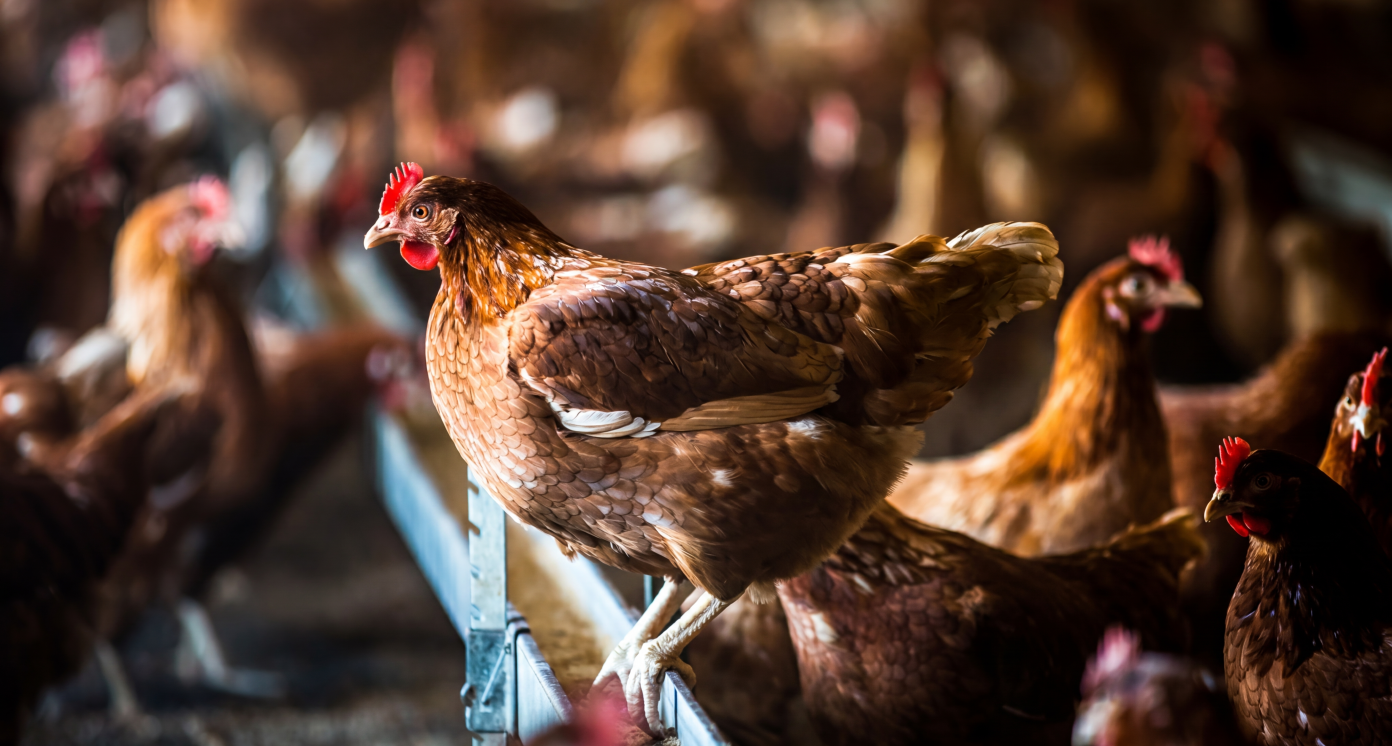
Raise chickens for commercial purposes in buildings divided according to age and function, reproduction, incubation and fattening, to ensure at regular intervals the group sale of chickens on the local market. This business model can benefit from the support of the State provided in the poultry sector through the protection against imports and health surveillance.
Expected Impact
Contribute to food security, poverty reduction and replacement of food imports.
How is this information gathered?
Investment opportunities with potential to contribute to sustainable development are based on country-level SDG Investor Maps.
Disclaimer
UNDP, the Private Finance for the SDGs, and their affiliates (collectively “UNDP”) do not seek or solicit investment for programmes, projects, or opportunities described on this site (collectively “Programmes”) or any other Programmes, and nothing on this page should constitute a solicitation for investment. The actors listed on this site are not partners of UNDP, and their inclusion should not be construed as an endorsement or recommendation by UNDP for any relationship or investment.
The descriptions on this page are provided for informational purposes only. Only companies and enterprises that appear under the case study tab have been validated and vetted through UNDP programmes such as the Growth Stage Impact Ventures (GSIV), Business Call to Action (BCtA), or through other UN agencies. Even then, under no circumstances should their appearance on this website be construed as an endorsement for any relationship or investment. UNDP assumes no liability for investment losses directly or indirectly resulting from recommendations made, implied, or inferred by its research. Likewise, UNDP assumes no claim to investment gains directly or indirectly resulting from trading profits, investment management, or advisory fees obtained by following investment recommendations made, implied, or inferred by its research.
Investment involves risk, and all investments should be made with the supervision of a professional investment manager or advisor. The materials on the website are not an offer to sell or a solicitation of an offer to buy any investment, security, or commodity, nor shall any security be offered or sold to any person, in any jurisdiction in which such offer would be unlawful under the securities laws of such jurisdiction.
Country & Regions
- Togo: Maritime
- Togo: Centrale
- Togo: Plateaux
- Togo: Kara
- Togo: Savanes
Sector Classification
Food and Beverage
Development need
Poverty is slowly decreasing with a rate going from 55.1% to 45.5% between 2015-2019, far from a complete elimination of extreme poverty targeted for 2030. In rural area, the poverty rate is 76.1% (1). Chronic, acute malnutrition and underweight affect respectively 27.5%, 6.5% and 16% of children under five years old particularly in the regions of Savanes, Kara and Plateaux (21).
Policy priority
Making agriculture a real engine of growth and job creation is one of Togo's ten strong ambitions (2). The Agricultural Plan aims to “modern, sustainable and high value-added agriculture serving national and regional food and nutritional security; a strong, inclusive, competitive economy that generates decent jobs and stable by 2030 and reduction of poverty and rural vulnerability (21).
Gender inequalities and marginalization issues
Women are poorly empowered and confined to agricultural activities. Mostly women (53.46% compared to 46.54% of men) carry out agricultural activities, notably in the activities of weeding, sowing, harvesting, storage, processing and marketing of products. The agricultural sector, with its low productivity and low income, plunges agricultural workers, particularly women, in high levels of poverty (1).
Investment opportunities introduction
Investment opportunities are due to both the expansion of local and foreign markets for many agricultural value chains and the land reform Togo initiated, which establishes equal rights of access to land for both women and men. Food crops have significant growth and employment potential, while livestock products and cash crops have additional growth effects (3).
Key bottlenecks introduction
Several constraints affect agricultural value chains like, limited production capacities to satisfy expanding and competitive markets, financing constraints for farmers, lack of long-term credit, and transport costs and constraints. Land issues also exacerbate the situation of farmers, particularly women and young people (3).
Food and Agriculture
Development need
The agricultural sector does not provide sufficient production. Various agricultural subsectors are involved, including crop, livestock, agri-food industries as well as fish production (21). In 2022, Togo imported USD 17.28 million of meat products and meat preparations without exporting any. For dairy products and birds' eggs, the deficit was less pronounced (exports of USD 31.36 million against imports of USD 34.99 million) (4).
Policy priority
In March 2024, Togo launched a new project for the development of the integrated poultry sector aimed at promoting the livestock sub-sector, in particular the poultry industry, through the modernization of the sector with particular emphasis on intensification local production of quality poultry at an affordable price (22).
Gender inequalities and marginalization issues
Women are engaged in individual activities to the point where the majority of them are in the informal sector (54%), commerce and services (53.46%) as well as agricultural activities (5). The new land code allows women to have access to land to be able to carry out agricultural and poultry activities. At least 30% of developed agricultural zones (Zaap) are allocated to women (6).
Investment opportunities introduction
With a view to encouraging exports, Togo has engaged in liberalization characterized by measures to harmonize legislative and regulatory frameworks with treaties and agreements. Making way for the private sector, Togo inaugurated the Adétikopé Industrial Platform dedicated to the transformation of Togo's natural resources and agricultural exports (6).
Key bottlenecks introduction
The factors slowing down the poultry farming in Togo include the high cost of feed; dependence on the outside world for the importation of improved breeds, food and veterinary products at high costs; lack of professional qualification; environmental and poultry quality issues; and the low capacity of local industry (23).
Meat, Poultry and Dairy
Pipeline Opportunity
Poultry Production
Raise chickens for commercial purposes in buildings divided according to age and function, reproduction, incubation and fattening, to ensure at regular intervals the group sale of chickens on the local market. This business model can benefit from the support of the State provided in the poultry sector through the protection against imports and health surveillance.
Business Case
Market Size and Environment
USD 100 million - USD 1 billion
As an example indicating large scale opportunities, the Integrated Poultry Complex in Avétonou will have a site with a poultry slaughterhouse with a capacity of 10,000 chickens per hour and seven breeding farms with a capacity of 50,000,000 chickens per year in phase 1 and 100,000,000 chickens per year in phase 2 with expected sales of USD 125 millions / year (24).
Indicative Return
15% - 20%
An estimate carried out for a poultry farm project estimated an internal rate of return pf 16.5% (26).
Investment Timeframe
Short Term (0–5 years)
For a poultry farm project with an investment of approximately USD 500,000, having conclusive profitability indicators, a recovery time of 4 years 11 months for the invested capital is estimated. This duration could be longer for a project that integrates the production of livestock feed (25, 27).
Ticket Size
> USD 10 million
Market Risks & Scale Obstacles
Business - Supply Chain Constraints
Business - Supply Chain Constraints
Market - Highly Regulated
Impact Case
Sustainable Development Need
According to PNIASAN, the trade balance of agricultural and food products presents an average annual deficit of USD 99.083 millions over the period 2010-2014 (7). Food import included cereals, particularly rice, and meat products reached USD 454.167 million in 2022 (6).
The need for meat products in Togo is significant and growing, but their satisfaction depends in part on imports. The meat deficit was covered by imports of meat and meat preparations amounting to USD 17.28 million with a smaller amount for dairy products and eggs (4).
Enhanced poultry production will require overcoming the constraints facing this activity, including the high cost of livestock feed and the limited quality of species (23).
Gender & Marginalisation
Women working in Togolese agriculture are subjected to poorly paid tasks which plunge them into poverty (1). Women experience difficulties accessing land and financing, forcing them to set up less productive production and processing systems for agricultural products (8).
Around 25.21% of women and even fewer in rural than urban areas compared to 38.3% of men have access to a bank account (8). This situation limits the ability of women to invest and implement more productive processes due to lack of adequate equipment and inputs like improved seeds (8).
The limitation of women's opportunities in rural areas, materialized by their poor access to land and financing, forces them to set up systems of production and processing of agricultural products that are not very productive and poorly remunerative (8).
Expected Development Outcome
Poultry production, based on high productivity and quality standards, will provide abundant and nutritional meat products to meet the growing needs of the population and strengthen food security.
Poultry production will provide better remuneration to workers engaged in the sector and contribute to increased income and foreign exchange savings (22).
Poultry production will create increased opportunities for the valorisation of poultry and eggs, particularly in various processed food products, while limiting imports.
Gender & Marginalisation
Poultry production improves the remuneration of workers in the poultry activity, particularly many women who work there, and allows them to escape precariousness and poverty.
Poultry production improves the technical and financial capacities of women in agricultural activities and allow them to improve their financial assets and capabilities for enterprise and fully seize their opportunities.
Poultry production allows women, including young people, to develop their technical skills on proven processes for processing aquaculture products with increased value added.
Primary SDGs addressed
2.3.1 Volume of production per labour unit by classes of farming/pastoral/forestry enterprise size
N/A
10% productivity gain in livestock farming by 2025 (1).
2.5.1 Number of plant and animal genetic resources for food and agriculture secured in either medium- or long-term conservation facilities
The number of genetic resources intended for food secured in medium or long-term conservation facilities is set at 8 over the period 2018 to 2021 for animal resources (1).
N/A
1.1.1 Proportion of the population living below the international poverty line by sex, age, employment status and geographic location (urban/rural)
26.6% in 2021 (9).
N/A
Secondary SDGs addressed
Directly impacted stakeholders
People
Gender inequality and/or marginalization
Planet
Corporates
Public sector
Indirectly impacted stakeholders
People
Gender inequality and/or marginalization
Planet
Corporates
Outcome Risks
Low compliance with quality standards in poultry production could have a negative impact on the products, potentially impacting the health of consumers.
Poultry production not based on sustainable processes could affect the environment and constitute a harmful factor for ecosystems and climate change.
If poultry waste is not recycled, it can promote the development and proliferation of insects, pests, and pathogenic micro-organisms (36).
Impact Risks
The technical requirements linked to the production of poultry production could attract personnel from elsewhere to the detriment of less qualified young people, particularly women living in the production area.
Faced with very competitive poultry production, women without land or capital and unable to find financing will be confined in unprofitable activities.
Impact Classification
What
An increasing supply of poultry production will improve household supplies of meat while enabling poultry workers, women and youth to contribute to the reduction of imports of meat products.
Who
Businesses, farmers and trade associations involved in poultry production, including the Ministry of Agriculture, help boost food production and meet nutritional needs.
Risk
While the model is proven, technical production requirements and land access for women requires consideration for increased involvement in poultry farming.
Impact Thesis
Contribute to food security, poverty reduction and replacement of food imports.
Enabling Environment
Policy Environment
Poultry farming as the main source of animal protein production is one of the sectors selected to implement objective 2 of the National Plan for Agricultural Investment, Food and Nutritional Security aiming to improve productivity, production and the valorisation of products in the sectors (19).
The construction of poultry value chains should contribute enormously to getting Togo out of its food dependence in terms of meat products. The measures that can be highlighted in the Investment Plan are between facilitating access for value chain actors to inputs and financial services (19).
Togo seeks the development of a integrated poultry sector aimed at promoting poultry industry, through the modernization of the sector with particular emphasis on intensification local production of quality poultry at an affordable price (22).
Financial Environment
PNIASA proposes a smart subsidy aimed at encouraging local insurers to offer an insurance product offering that covers the risks specific to the development of priority value chains. Banks are also encouraged to offer financial services adapted to companies active in priority value chains (19).
PNIASA provides other financial incentives linked to the Guarantee Fund for Shared Cost Subsidies and Credit Lines intended to stimulate relations between value chain actors and financial service providers with subsidized interest rates (single-digit rates) (19).
Regulatory Environment
Public support in the poultry sector concerns: protection by subjecting imports of poultry products to prior authorizations; health surveillance against avian flu and other epidemics affecting poultry and other animals (29, 30).
The State is also implementing, in partnership with the private sector, an integrated poultry sector development project capable of supporting the entire poultry sector and including: a feed mill for the production of livestock feed; day-old chick production units; a poultry slaughtering unit (22).
Poultry production benefits from protective measures, even temporary, against competition from imports of chickens, chicken legs and wings and other poultry products, by making any import of poultry products subject to the issue of prior authorization (25, 30, 35).
Marketplace Participants
Private Sector
Agro Tech Das, ETS God Grace, Kpogan, Mon Elevation Poultry Farm, Nakpagli Farm, Terre des Volailles, Open Poultry Farms, Portea-Graine (as new arrival that announces significant production capacities), (22, 28).
Government
Ministries of Agriculture, Livestock and Rural Development; The Livestock Directorate and its departments: the Livestock Promotion Division; the Animal Health and Laboratories Division; the Hygiene and Control of Foodstuffs of Origin Division, Animal Disease Surveillance Network (34).
Multilaterals
European Union (EU), Food and Agriculture Organization of the United Nations, World Bank, African Development Bank, United Nations Development Programme (UNDP) (29).
Non-Profit
Interprofessional Council of the Poultry Sector of Togo, National Synergy of Poultry Breeders of Togo, National Association of Poultry Producers of Togo, Village Poultry Farming and Local Animal Health in Togo, German Society for International Cooperation (GIZ) (31, 32, 33).
Public-Private Partnership
Partnership between the government and the PORTO-GRAINE group for the financing and construction of the infrastructure of the Integrated Development Project for the Poultry Sector for the creation of a poultry complex on the Avétonou site in the Agou prefecture (25).
Target Locations

Togo: Maritime
Togo: Centrale
Togo: Plateaux
Togo: Kara
Togo: Savanes
References
- (1) Togo, Rapport volontaire nationaux VRN, 2022
- (2) Togo, Feuille de Route Gouvernementale Togo 2025
- (3) La Banque Mondiale, 2023, Togo : Inclusion Économique des Jeunes et des Femmes dans les Chaines de Valeur à Haut Potentiel.
- (4) INSSEED, Bulletin trimestriel des Statistiques du Commerce International des Marchandises 4ème trimestre 2022, https://inseed.tg/echanges-exterieurs/
- (5) République Togolaise, ministère de l’Action Sociale, de la Promotion de la Femme et de l’Alphabétisation, Politique nationale du l’équité, de l’égalité de genre au Togo (2023-2032) Document de politique , Février 2023.
- (6) Atlantic Info Togo : les entreprises des femmes en forte progression, https://atlanticinfos.com/2024/05/14/togo-les-entreprises-des-femmes-en-forte-progression/
- (7) Ministère de la Promotion de l’Investissement, 2022.
- (8) Banque mondiale, 2023, DISPARITÉS DE GENRE ET PAUVRETÉ DOCUMENT D’INFORMATION POUR L’ÉVALUATION DE LA PAUVRETÉ ET DE LA SITUATION DU GENRE AU TOGO 2022, https://documents.banquemondiale.org/en/publication/documents-reports/documentdetail/099110623115537127/p1768720041fe80210aca00c0c3d0e71ba5
- (9) United Nations Department of Economic and Social Affairs Statistics Division Country Profiles, https://unstats.un.org/sdgs/
- (10) Togo Code foncier et domanial Loi n°2018‐005 du 14 juin 2018, https://www.droit-afrique.com/uploads/Togo-Code-2018-foncier.pdf
- (11) Togo, Loi n°2019-005/PR du 25 janvier 2019 portant Code des Investissements en République Togolaise, https://commerce.gouv.tg/wp-content/uploads/2020/09/CODE-DES-INVEST-TOGO-compressed-compressed-compressed.pdf
- (12) Togo, LOI N° 2011- 018 PORTANT STATUT DE ZONE FRANCHE INDUSTRIELLE, https://investirautogo.tg/media/loi%20n%C2%B02011-018%20portant%20statut%20de%20zfi.pdf
- (13) INSSED, ANNUAIRE STATISTIQUE DE LA REGION DE LA REGION MARITIME DE 2020 ET 2021, https://inseed.tg/
- (14) Economic and Social Council Report of the Inter-Agency and Expert Group on Sustainable Development Goal Indicators E/CN.3/2016/2/Rev.1* https://documents.un.org/doc/undoc/gen/n16/045/25/pdf/n1604525.pdf
- (15) INSSED, ANNUAIRE STATISTIQUE DE LA REGION CENTRALE DE 2020 ET 2021, https://inseed.tg/INSSED;ANNUAIRE STATISTIQUE DE LA REGION DE LA KARA DE 2020 ET 2021, https://inseed.tg/
- (16) Présentation de la région des Plateaux, https://togopolitique.org/presentation-de-la-region-des-plateaux/
- (17) INSSED; ANNUAIRE STATISTIQUE 2019 DE LA REGION DES PLATEAUX, https://inseed.tg/annuaires/#
- (18) Présentation de la région des Savanes, https://togopolitique.org/presentation-de-la-region-savanes/
- (19) République Togolaise, ministère de l’Agriculture, de l’Élevage et de l’Hydraulique, Programme National d’Investissement Agricole, de Sécurité Alimentaire et Nutritionnelle. PNIASAN- 2ème génération du PNIA, https://agriculture.gouv.tg/wp-content/uploads/2020/06/PNIASAN-_apres-atelier-de-validation-_-11_01_2018.pdf
- (20) Economic and Social Council Report of the Inter-Agency and Expert Group on Sustainable Development Goa20) 7l Indicators E/CN.3/2016/2/Rev.1* https://documents.un.org/doc/undoc/gen/n16/045/25/pdf/n1604525.pdf
- (21) République Togolaise, ministère de l’Agriculture, de l’Elevage et de l’Hydraulique, La politique agricole assortie du Plan stratégique pour la transformation de l’agriculture au Togo à l’horizon 2030 Document de politique agricole pour la période 2016-2030. https://agriculture.gouv.tg/wp-content/uploads/2020/06/Document-de-politique-agricole-du-Togo-Version-finale-du-30-12-2015.pdf
- (22) Présidence de la République Togolaise. Agro-industrie : lancement d’un nouveau projet de développement de la filière avicole intégrée, https://presidence.gouv.tg/2024/03/29/agro-industrie-lancement-dun-nouveau-projet-de-developpement-de-la-filiere-avicole-integree/
- (23) Agri Digitale. 6 raisons qui freinent l’offre des produits avicoles, https://www.agridigitale.net/article/6_raisons_qui_freinent_l_offre_de_produits_avicoles_
- (24) Ferme de NAKPAGLI https://www.goafricaonline.com/tg/41496-ferme-nakpagli-avicoles-dapaong-togo
- (25) Afriquinfos PORTEO-GRAINE, nouvelle filiale du groupe PORTEO, pour porter l’industrie avicole du Togo à un niveau jamais égalé, https://afriquinfos.com/porteo-graine-nouvelle-filiale-du-groupe-porteo-pour-porter-lindustrie-avicole-du-togo-a-un-niveau-jamais-egale/
- (26) Gédéon Manu Elom, Mise en place d'une ferme avicole au Togo Gel Poultry SARL, http://bibliotheque.cesag.sn/documents_numeriques/P0200MBF18.pdf
- (27) APIZT, Mise en place d'une ferme pour l'élevage de poule pondeuse, https://projets.investirautogo.tg/opportunities/opportunity/mise-en-place-dune-ferme-pour-lelevage-de-poule-pondeuse
- (28) Togo first. Filière avicole: au Togo, la production a franchi la barre des 35 millions de têtes de volailles en 2023, https://www.togofirst.com/fr/agro/0204-13751-filiere-avicole-au-togo-la-production-a-franchi-la-barre-des-35-millions-de-tetes-de-volailles-en-2023
- (29) Organisation des Nations Unies pour l’alimentation et l’agriculture Revues nationales agricoles. Secteur avicole Togo, 2015, https://openknowledge.fao.org/server/api/core/bitstreams/506cb9b3-3e6b-42f4-964a-4b6208d6e46f/content
- (30) Présidence de la République Plus aucune importation de produits avicoles sans autorisation préalable https://www.republiquetogolaise.com/agro/1905-4347-plus-aucune-importation-de-produits-avicoles-sans-autorisation-prealable
- (31) Agence Société Civile et Médias Togo – Secteur avicole : La SYNEAT fait le bilan de ses activités de 2023 et se projette sur les programmes et projets à exécuter en 2024, https://societecivilemedias.com/2024/02/05/togo-secteur-avicole-la-syneat-fait-le-bilan-de-ses-activites-de-2023-et-se-projette-sur-les-programmes-et-projets-a-executer-en-2024/
- (32) Goafrica l’Association Nationale des Producteurs Avicoles du Togo (ANPAT), https://www.goafricaonline.com/tg/863-anpat-agroalimentaire-lome-togo
- (33) Agronomes et Vétérinaires sans Frontières, Aviculture villageoise et santé animale de proximité au Togo, https://www.avsf.org/publications/les-experiences-innovantes-davsf-aviculture-villageoise-et-sante-animale-de-proximite-au-togo/
- (34) FAO, portant organisation du ministère de l'agriculture, de l'élevage et de la pêche ARRETE N° C) 42/1 3, IMAEP/Cab/SG, https://faolex.fao.org/docs/pdf/tog160650.pdf
- (35) Agridigitale, Un poulet local vaut deux poulets importés, https://www.agridigitale.net/article/un_poulet_local_vaut_deux_poulets_imports
- (36) Organisation des Nations Unies pour l'alimentation et l'agriculture, Passerelle sur l’aviculture et les produits avicoles, https://www.fao.org/poultry-production-products/production/gestion-et-logement/gestion-des-dechets/fr/#:~:text=En%20moyenne%2C%20les%20syst%C3%A8mes%20de,du%20secteur%20de%20l%27%C3%A9levage.