









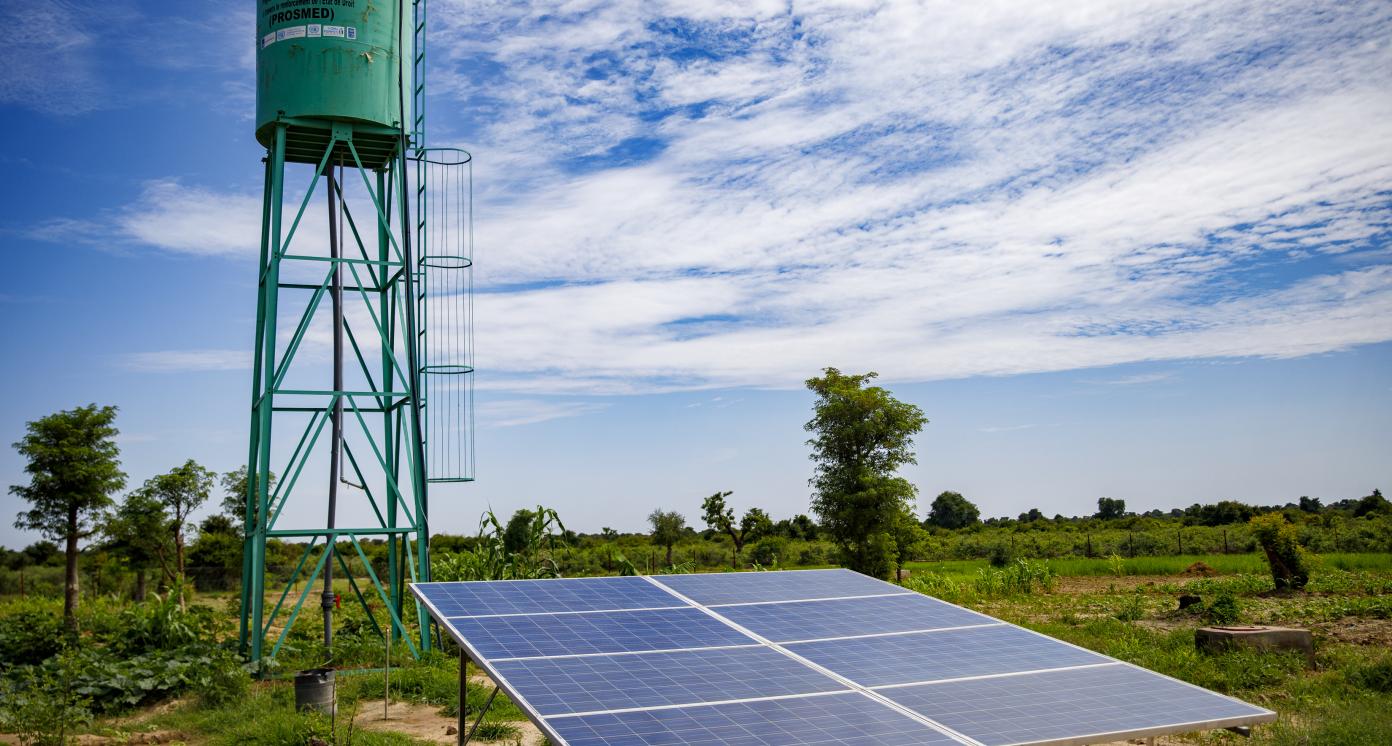
Off-Grid Photovoltaic Systems for Rural Electrification
Off-Grid Photovoltaic Systems for Rural Electrification
Business Model Description
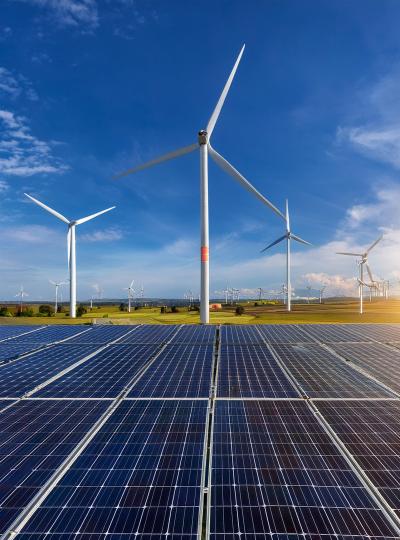
Invest in the commercialization of standalone solar systems and energy efficiency equipment or the construction, operation, and maintenance of solar mini-grids for rural electrification. Private operators secure concession agreements from Agence Malienne pour le Développement de l’Energie Domestique et l’Electrification Rurale (AMADER) and provide partial financing for infrastructure construction.
Expected Impact
Decarbonize electricity generation in rural areas, reducing production costs, and increasing affordability to promote socioeconomic development.
How is this information gathered?
Investment opportunities with potential to contribute to sustainable development are based on country-level SDG Investor Maps.
Disclaimer
UNDP, the Private Finance for the SDGs, and their affiliates (collectively “UNDP”) do not seek or solicit investment for programmes, projects, or opportunities described on this site (collectively “Programmes”) or any other Programmes, and nothing on this page should constitute a solicitation for investment. The actors listed on this site are not partners of UNDP, and their inclusion should not be construed as an endorsement or recommendation by UNDP for any relationship or investment.
The descriptions on this page are provided for informational purposes only. Only companies and enterprises that appear under the case study tab have been validated and vetted through UNDP programmes such as the Growth Stage Impact Ventures (GSIV), Business Call to Action (BCtA), or through other UN agencies. Even then, under no circumstances should their appearance on this website be construed as an endorsement for any relationship or investment. UNDP assumes no liability for investment losses directly or indirectly resulting from recommendations made, implied, or inferred by its research. Likewise, UNDP assumes no claim to investment gains directly or indirectly resulting from trading profits, investment management, or advisory fees obtained by following investment recommendations made, implied, or inferred by its research.
Investment involves risk, and all investments should be made with the supervision of a professional investment manager or advisor. The materials on the website are not an offer to sell or a solicitation of an offer to buy any investment, security, or commodity, nor shall any security be offered or sold to any person, in any jurisdiction in which such offer would be unlawful under the securities laws of such jurisdiction.
Country & Regions
- Mali: Countrywide
- Mali: Mopti
- Mali: Sikasso
- Mali: Koulikoro
- Mali: Ségou
Sector Classification
Renewable Resources and Alternative Energy
Development need
Mali faces a significant electricity deficit, relying on Côte d'Ivoire for 25% of its supply. Over 75% of domestic power plants run on diesel and heavy fuel, contributing to 31% of the energy sector’s greenhouse gas (GHG) emissions. At the same time, only 1.9% of the population has access to clean cooking solutions, placing further pressure on forest resources (1, 2).
Policy priority
The Government of Mali prioritizes renewable energy, aiming to reach 36.9% of renewables (including hydro) in the electricity mix by 2030, according to Plan d'Action National d'Énergies Renouvelables 2015-2020/2030 (2015–2020/2030). The plan also targets universal access to clean cooking technologies. Contribution déterminée au niveau national also supports these goals (8).
Gender inequalities and marginalization issues
There are regional disparities in access to electricity in Mali. The Northern regions of Menaka (0.7%), Tombouctou (41.9%), Gao (51.4%), Taoudeni (57.5%), and Kidal (58.1%) lagged behind the national average, which stood at 79.9% in 2023 (3).
Investment opportunities introduction
Mali has a high renewable energy potential, 6 kWh/m² of solar irradiation, 1150 MW of hydropwer exploited at only 22%, 3 to 7 m/s of wind exposition, and a reserve of more than 670 billion cubic meters of renewable geological hydrogen, composed of 98% hydrogen and 2% methane and helium. These resources present a strong foundation for expanding the share of renewables in the country's final energy consumption and accelerating the transition to a low-carbon energy system (1, 6).
Key bottlenecks introduction
Weak electricity subsidy policies and an inefficient transmission network hinder Mali's transition to renewable energy (5, 7, 9).
Alternative Energy
Development need
In 2021, 62.7% of rural electricity in Mali was generated from thermal sources, increasing greenhouse gas (GHG) emissions as many households depend on wood fuel and kerosene. Generation costs are higher in rural areas (USD 0.27/kWh vs. USD 0.25/kWh in urban areas), resulting in higher tariffs (USD 0.29/kWh vs. a subsidized USD 0.16/kWh in cities), effectively excluding poorer households (7).
Policy priority
Contribution Déterminée Nationale aims to cut energy sector emissions by 31% by 2030, focusing on hybrid and solar electrification in rural areas, among other initiatives. Cadre stratégique pour la relance économique et le développement durable 2019-2023 promotes nationwide supply of electricity in sufficient quantity and quality, including in rural areas (1, 24).
Gender inequalities and marginalization issues
In 2023, 22.3% of rural low-income households had no access to electricity from any source, including power generators. Among those with electricity access, 22.7% still relied on non-viable solutions such as candles and battery-powered torches for lighting in 2024 (4).
Investment opportunities introduction
In rural Mali, only 12.2% of the electrified population is served by the national utility, Energie du Mali (EDM), while standalone solar systems and mini-grids account for 63.7% and 1%, respectively. This underscores strong potential for scaling decentralized solar energy solutions across rural areas (5).
Key bottlenecks introduction
Regulatory gaps on solar energy systems, stringent regulation on rural electricity tariffs, conflict-related insecurity in some rural areas, poor solar panel monitoring, inconsistent import exemptions, limited long-term financing, and a shortage of skilled labor constitute challenges for the development of an effective green energy-based energy sector in Mali (5).
Solar Technology and Project Developers
Pipeline Opportunity
Off-Grid Photovoltaic Systems for Rural Electrification
Invest in the commercialization of standalone solar systems and energy efficiency equipment or the construction, operation, and maintenance of solar mini-grids for rural electrification. Private operators secure concession agreements from Agence Malienne pour le Développement de l’Energie Domestique et l’Electrification Rurale (AMADER) and provide partial financing for infrastructure construction.
Business Case
Market Size and Environment
USD 100 million - USD 1 billion
5% - 10%
3.9 million people could be served by mini-grids and 4.3 million by standalone systems.
Electricity demand in Mali grows at 10% annually between 2012 and 2020 but is projected to slow to 5.69% per year between 2020 and 2030. Frequent outages from transmission inefficiencies and high diesel generator costs drive industrial and commercial operators toward standalone solar systems (7, 11, 13).
African Development Bank estimates that 3.9 million people (21% of the non-electrified population) will be best served by mini-grid solutions in Mali, with the highest potential in Mopti. This represents an annual market of USD 128 million to USD 212 million. The report also indicates that 4.3 million people (27% of the non-electrified population) will be best served by solar home systems (13).
Agence Malienne pour le Développement de l’Energie Domestique et l’Electrification Rurale (AMADER), the national rural electrification agency, expects to develop four solar rural electrification and hybridization projects in collaboration with private sector operators by 2030. These projects are evaluated at USD 119.14 million (1).
Indicative Return
10% - 15%
The economic appraisal of a green rural mini-grid project in Mali, under a concession agreement with Agence Malienne pour le Développement de l’Energie Domestique et l’Electrification Rurale (AMADER), indicates an IRR of 10.5% without greenhouse gas (GHG) effects and 17.8% with GHG effects (7).
The economic appraisal of off-grid standalone solar systems for the use of households, private companies, and public institutions in Mali indicates an IRR of 17.1% without greenhouse gas (GHG) effects and 28.3% with GHG effects (7).
Investment Timeframe
Medium Term (5–10 years)
Due to the high initial investment costs, it is expected that mini-grids and off-grid PV generate positive returns in over five years (11).
Ticket Size
USD 1 million - USD 10 million
Market Risks & Scale Obstacles
Capital - CapEx Intensive
Market - Highly Regulated
Impact Case
Sustainable Development Need
In 2021, 62.7% of the installed electricity generation capacity in isolated rural areas was thermal, against 37.3% solar. This contributes to greenhouse gas (GHG) emissions, as non-electrified populations in Mali rely primarily on direct wood fuel and kerosene lamps for lighting (7).
The cost of electricity generation is higher in isolated rural areas (USD 0.27/kWh) than in urban areas (USD 0.25/kWh) in Mali. This leads to higher final average end-user tariffs in the former at USD 0.29/kWh against a subsidized USD 0.16/kWh in the latter, excluding poorer households (7).
Although the national electricity rate rose from 9.2% in 2001 to 79.9% in 2023 and several donor-funded projects are ongoing or planned for rural electrification, African Development Bank estimates that about 600,000 new households would still require off-grid connection by 2030 (3, 16).
Gender & Marginalisation
The Northern regions of Menaka (0.7%), Tombouctou (41.9%), Gao (51.4%), Taoudeni (57.5%), and Kidal (58.1%) lag behind the national average in terms of access to electricity. In other regions, access reaches up to 97.1%, after accounting for solar panels and self-generating diesel systems (7).
In rural Mali, 1 in 4 electrified households (22.7%) still relies on non-viable solutions like candles and battery-powered torches for lighting (6).
Expected Development Outcome
Solar mini-grid and standalone solutions reduce fossil fuel use, carbon emissions, and the cost of electricity supply. This improves the affordability of electricity services for rural end users and fosters the creation of income generating activities.
Decentralized solar solutions provides electricity access to unelectrified rural populations.
Gender & Marginalisation
Standalone solar solutions reduce energy inequality in less populated and conflict-afflicted Northern areas.
Off-grid solar solutions improve the quality of the electricity generation process in rural areas, improving the health outcomes of the beneficiary populations.
Primary SDGs addressed
7.1.1 Proportion of population with access to electricity
7.2.1 Renewable energy share in the total final energy consumption
79.9% in 2023; 96.7% in Bamako, 77.1% among rural poor, and 79.3% among the poor in other urban centers (3).
71.2% in 2022 (14).
Plan d'Action National d'Énergies Renouvelables 2015-2020/2030 targets a share of 81.46% in rural areas by 2030 (8).7
12.a.1 Installed renewable energy-generating capacity in developing countries (in watts per capita)
2.1 watts per capita in 2022 (22).
Plan d'Action National d'Énergies Renouvelables 2015-2020/2030 indicates a target of 1,416 MW by 2030, including medium- and large-scale hydro (8).
Secondary SDGs addressed
Directly impacted stakeholders
People
Gender inequality and/or marginalization
Planet
Corporates
Public sector
Indirectly impacted stakeholders
People
Gender inequality and/or marginalization
Planet
Corporates
Public sector
Outcome Risks
Effective recycling and disposal measures are crucial in photovoltaic systems usage. Weak enforcement and inadequate policies on disposal can result in significant environmental harm (15).
The manufacturing of solar technologies outside the domestic borders could pose a risk of heightened reliance on imported goods and could increase the quantity of imported greenhouse gas emissions.
Impact Risks
The incomes of rural populations fluctuate widely and are exposed to climatic risks (crop losses). This can interrupt their electricity consumption in the event of financial difficulties (14).
Insecurity in northern regions may exacerbate service disruptions and hinder equipment maintenance, limiting the potential impact on reducing inequalities.
If tariffs are not affordable, parts of the rural population may be excluded from benefiting from this opportunity.
Impact Classification
What
Off-grid solar systems for rural electrification decarbonize electricity generation in rural areas, reduce production costs, and increase affordability to promote socioeconomic development.
Who
Unelectrified rural populations; Northern and conflict-zone populations; women; children; farmers; healthcare centers; education facilities; micro, small, and medium entreprises are impacted.
Risk
Fluctuating incomes of rural populations from climatic risks, conflict-related insecurity, and high end-user tariffs could limit the expected positive impacts.
Contribution
Off-grid solar systems help reduce carbon emissions from rural electricity production, which currently relies 30% on diesel and heavy fuel oil (4, 7).
How Much
In Mali, 1 MW of solar mini-grid can offset 170,145 tCO2, or 1.4 tCO2 per MWh for self-generating diesel systems and 0.8 tCO2 per MWh for diesel-based mini-grids with storage (7, 14).
Impact Thesis
Decarbonize electricity generation in rural areas, reducing production costs, and increasing affordability to promote socioeconomic development.
Enabling Environment
Policy Environment
Plan d'Action National d'Énergies Renouvelables, 2015-2020/2030: aims to raise the share of renewables in the electricity mix to 8.63% (excluding hydro) and 36.88% (including hydro) by 2030, and to build 250 solar or hybrid mini-grids to serve 66.64% of the rural population (8).
Contribution Déterminée au Niveau National Révisée, 2021: outlines Mali's environmental targets, including a 31% reduction in energy sector emissions by 2030, through initiatives such as hybrid and solar electrification in rural areas (1).
Financial Environment
Financial incentives: Fonds d'Électricité Rurale (FER) provides an initial investment subsidy of up to 70-80% CAPEX for new private rural mini-grid operators in Mali. The subsidy aims to make tariffs acceptable for rural end users, ensuring profitability for private operators (17).
Financial incentives: Fonds de Garantie pour le Secteur Privé covers 50% to 70% in guarantees for loans to companies operating in renewable energy for more than a year in Mali. The fund offers regular guarantee for loans up to USD 641,225 and co-guarantee for loans over USD 1.6 million (11, 13).
Financial incentives: Fondation pour l’Énergie propre et l’inclusion énergétique en Afrique provides up to USD 1.8 million in subsidy to mini grid operators in Mali (19).
Other incentives: Under Green Climate Fund's Mali solar rural electrification project 2019-2027, Agence Malienne pour le Développement de l’Energie Domestique et l’Electrification Rurale provides a renewable concession agreement for 15 years to mini-grid firms, provided they supply 20% CAPEX (17).
Other incentives: Under World Bank's Mali Electricity System Reinforcement and Access Expansion Project 2023-2028, Agence Malienne pour le Développement de l’Energie Domestique et l’Electrification Rurale provides concession agreements for 40 hybrid and 70 solar PV mini grids projects (7).
Regulatory Environment
Order No. 2015-0604/P-RM, 2015: allows private operators to build, operate, and maintain rural electrification for up to 30 years under a public service delegation model and establishes the Fonds d'Électricité Rurale fund for partial financing (15).
Decree No. 2015-0604/P-RM on public procurement and public service delegation code, 2015: describes the procedure that private operators must follow to obtain public service delegation for rural electrification (20).
Law No. 2016-061 on public-private partnership, 2016: regulates the procedure for the attribution of concession agreements (31).
Order No. 2020-012/P-RM on exemption of renewable energy equipment from VAT, import duties and taxes, 2020: exempts solar equipment, including photovoltaic panels and solar batteries, from VAT and import duties (10).
Marketplace Participants
Private Sector
Access, Geen Energy Mali, SolarX, Horonya Solar, Sonikara Solar Electro SARL, Kama, Yeleen Kura, Zed SA, Emicom, Artelia, WeLight, FlexGrid, Africa Power 1, Scatec Solar.
Government
Agence Malienne pour le Développement de l’Energie Domestique et l’Electrification Rurale (AMADER), Ministère de l’Environnement, de l’Assainissement et du Développement Durable, Ministère de l'Énergie et des Mines.
Multilaterals
World Bank, Agence Française de Développement, Green Climate Fund, Banque Ouest Africaine de Développement, Fondation pour l’Énergie propre et l’inclusion énergétique en Afrique (CEI Africa).
Non-Profit
Association pour la Formation, la Recherche et le Développement, Fondation Énergies pour le Monde, Foundation Rural Energy Services, Geres, Mali-Folkecenter Nyetaa, Reso Climat Mali, Fédération des ONG du Mali (FECONG).
Public-Private Partnership
Public service delegation contract between Access SA and Agence Malienne pour le Développement de l’Energie Domestique et l’Electrification Rurale (AMADER) in 2008 (11).
Target Locations

Mali: Countrywide
Mali: Mopti
Mali: Sikasso
Mali: Koulikoro
Mali: Ségou
References
- (1) Ministère de l'Environnement, de l'Assainissement et du Développement Durable. 2021. Contribution Déterminée au Niveau National Révisée. https://faolex.fao.org/docs/pdf/mli220117.pdf
- (2) African Development Bank. 2023. Mali Energy Fact Sheet. https://www.afdb.org/en/mission-300-africa-energy-summit/accelerating-africas-energy-transition/mali-energy-fact-sheet
- (3) Institut National de la Statistique du Mali. 2023. Consommation, pauvreté et bien-être des ménages 2023. https://www.instat-mali.org/laravel-filemanager/files/shares/eq/ranuel23_eq.pdf
- (4) Institut National de la Statistique. 2024. Rapport de synthèse des résultats du premier passage de l'enquête modulaire auprès des ménages (EMOP) (Janvier-Mars 2024). https://www.instat-mali.org/laravel-filemanager/files/shares/eq/rana24pas1_eq.pdf
- (5) United Nations Development Programme. 2023. Mali: Atténuation des risques des investissements dans les énergies renouvelables. https://www.undp.org/energy/publications/mali-attenuation-des-risques-des-investissements-dans-les-energies-renouvelables
- (6) Isabelle Moretti, Asma Diallo, Nicolas Pélissier, Yannick Peysson. 2024. Hydrogène Naturel. https://www.academie-technologies.fr/wp-content/uploads/2024/06/hydrogene_naturel_ST24_05_10042024.pdf
- (7) World Bank. 2023. Mali Electricity System Reinforcement and Access Expansion Project (YELEN SIRA). https://documents1.worldbank.org/curated/en/099092923114511777/pdf/BOSIB-89062c81-3273-4409-adf6-d5bc2b2aae7f.pdf
- (8) République du Mali. 2015. Plan d'Action National d'Energies Renouvelables (PANER) du Mali, 2015-2020/2030. https://www.se4all-africa.org/fileadmin/uploads/se4all/Documents/Country_PANER/Mali_Plan_d_Actions_National_pour_les_Energies_Renouvelables_.pdf
- (9) Studio Tamani. 2019. Déforestation au Mali : comment y faire face ?. https://www.studiotamani.org/59445-deforestation-au-mali-comment-y-faire-face
- (10) Journal Officiel de la République du Mali. 2020. Ordonnance n°2020‐012/P‐RM du 23 mars 2020 portant exonération des équipements d’énergies renouvelables de la TVA, des droits et taxes à l’importation. https://www.droit-afrique.com/uploads/Mali-Ordonnance-2020-12-exoneration-tva-equipements-energies.pdf
- (11) UNDP SDG Financing in Mali project team consultations with private companies developing solar-powered smart technologies for agriculture in January 2025.
- (12) Fonds de Garantie pour le Secteur Privé. 2025. Nos produits et services. https://fgsp.ml/nos-produits-et-services/
- (13) African Development Bank. 2019. Mini-Grid Market Opportunity Assessment: Mali. https://greenminigrid.afdb.org/sites/default/files/gmg_mali_final.pdf
- (14) World Bank. 2025. Renewable energy consumption (% of total final energy consumption) - Mali. https://data.worldbank.org/indicator/EG.FEC.RNEW.ZS?locations=ML&view=chart
- (15) Journal Officiel de la République. 2000. Ordonnance No. 00-019/P-RM du 15 mars 2000 portant organisation du secteur de l'électricité. https://faolex.fao.org/docs/pdf/mli49649.pdf
- (16) African Development Bank. 2020. Desert-to-Power Roadmap for Mali. https://www.afdb.org/sites/default/files/2024/08/23/desert-to-power_dtp_roadmap_mali-en_oct2020.pdf
- (17) Green Climate Fund. 2019. Mali solar rural electrification project. https://www.greenclimate.fund/sites/default/files/document/funding-proposal-fp102-boad-mali.pdf
- (18) Sustainability. 2016. Sustainability of off-grid photovoltaic systems for rural electrification in developing countries: A review https://www.mdpi.com/2071-1050/8/12/1326#:~:text=Although%20PV%20technologies%20for%20rural,lead%20to%20negative%20environmental%20co%2D
- (19) WeLight. 2024. MALI : une subvention de la CEI pour l’électrification via les mini-réseaux solaires. https://www.welight-africa.com/fr/mali-une-subvention-de-la-cei-pour-lelectrification-via-les-mini-reseaux-solaires/
- (20) Journal Officiel de la République du Mali. 2015. Décret n° 2015-0604/P-RM du 25 septembre 2015 portant Code des marchés publics et des délégations de service public. https://natlex.ilo.org/dyn/natlex2/natlex2/files/download/103431/MLI-103431.pdf
- (21) Journal Officiel de la République du Mali. 2016. Loi n°2016-061 du 30 décembre 2016 relative aux Partenariats Public-Privé au Mali. https://faolex.fao.org/docs/pdf/Mli180428.pdf
- (22) United Nations Environment Programme. 2025. Mali Scorecard. https://wesr.unep.org/scorecard/
- (23) Emicom Mali. 2025. Nos produits. https://www.emicom-mali.com/web/
- (24) Ministère de l'Économie et des Finances. 2019. Cadre stratégique pour la relance économique et le développement durable 2019-2023. https://www.maliapd.org/wp-content/uploads/2019/07/Version-Finale-CREDD-2019-2023.pdf