








Financing Solutions for MSMEs and Farmers
Financing Solutions for MSMEs and Farmers
Business Model Description
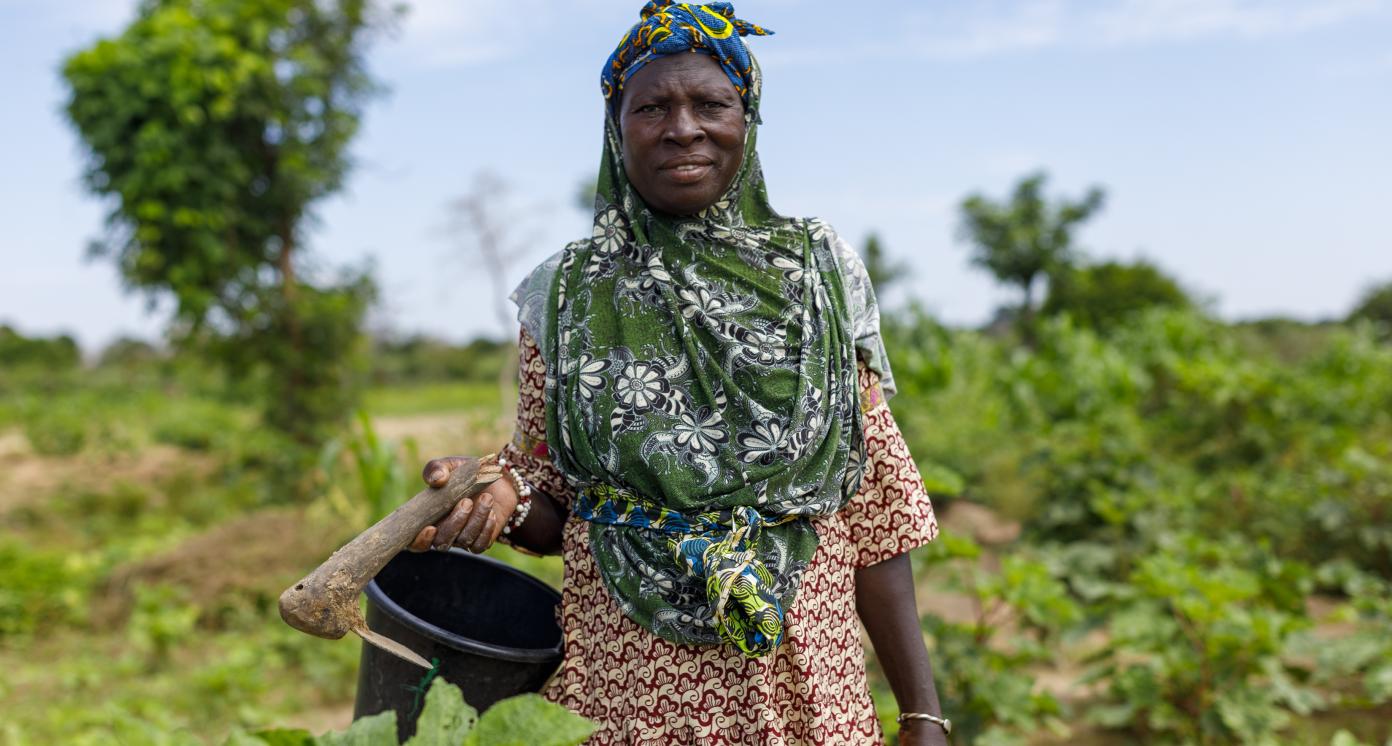
Provide guarantees, loans, or technical assistance to impact investment funds, microfinance institutions, local banks, and digital finance operators in Mali to support Micro, Small, and Medium Enterprises (MSMEs), including smallholder farmers and agribusinesses. Funding could be channeled from the diaspora via investor clubs, especially for rural financing, agribusiness, and agro-processing. The diaspora could utilize the YiriMali project or Ciwara Capital investment channel.
Expected Impact
Strengthen Mali's production capacity, productivity, and market integration, generating multiplier effects on income, poverty, inequality, innovation, and food security.
How is this information gathered?
Investment opportunities with potential to contribute to sustainable development are based on country-level SDG Investor Maps.
Disclaimer
UNDP, the Private Finance for the SDGs, and their affiliates (collectively “UNDP”) do not seek or solicit investment for programmes, projects, or opportunities described on this site (collectively “Programmes”) or any other Programmes, and nothing on this page should constitute a solicitation for investment. The actors listed on this site are not partners of UNDP, and their inclusion should not be construed as an endorsement or recommendation by UNDP for any relationship or investment.
The descriptions on this page are provided for informational purposes only. Only companies and enterprises that appear under the case study tab have been validated and vetted through UNDP programmes such as the Growth Stage Impact Ventures (GSIV), Business Call to Action (BCtA), or through other UN agencies. Even then, under no circumstances should their appearance on this website be construed as an endorsement for any relationship or investment. UNDP assumes no liability for investment losses directly or indirectly resulting from recommendations made, implied, or inferred by its research. Likewise, UNDP assumes no claim to investment gains directly or indirectly resulting from trading profits, investment management, or advisory fees obtained by following investment recommendations made, implied, or inferred by its research.
Investment involves risk, and all investments should be made with the supervision of a professional investment manager or advisor. The materials on the website are not an offer to sell or a solicitation of an offer to buy any investment, security, or commodity, nor shall any security be offered or sold to any person, in any jurisdiction in which such offer would be unlawful under the securities laws of such jurisdiction.
Country & Regions
- Mali: Countrywide
- Mali: Bamako
- Mali: Koulikoro
- Mali: Sikasso
- Mali: Ségou
Sector Classification
Financials
Development need
In 2021, only 44% of Malians had access to financial services, with bank penetration at 20.1% and microfinance at 14.4%. In 2022, Mali had just 195 points of financial services (POFS) per 1,000 km², significantly lower than the ECOWAS average of 402 POFS per 1,000 km² (2, 5).
Policy priority
Stratégie nationale d'inclusion financière 2022-2026 targets an increase in the access and use of a diversified and innovative range of adapted and affordable financial products and services to 75% of the adult population by 2026 (4, 5).
Gender inequalities and marginalization issues
Women in Mali face limited access to financial services. In 2021, only 28.3% of those aged 15 and older had an account with a financial institution or mobile money service, 16% borrowed from savings clubs, and just 11% accessed credit through formal financial institutions (3).
Investment opportunities introduction
Mali's financial sector attracts significant investment from multilateral institutions, private investors, and the diaspora, offering loans, grants, guarantees, and equity to support local micro, small, and medium enterprises (MSMEs), with ticket sizes up to USD 10 million. This highlights strong potential for investment (12, 15, 28).
vKey bottlenecks introduction
Limited internet coverage, low financial literacy, credit defaults, high collateral needs, and high interest rates limit the performance of the sector. (25)
Corporate and Retail Banking
Development need
In Mali, 98% of companies are informal micro, small, and medium enterprises (MSMEs), with only 5% applying for credit and 4.1% accessing formal credit. In 2022, the cost of bank credit (7.48%) was higher than the ECOWAS average (6.48%), further limiting MSMEs’ ability to secure financing for growth (1, 5, 6).
Policy priority
Stratégie nationale d'inclusion financière 2022-2026 targets an increase in innovative financial solutions through (i) the strengthening of financial institutions and (ii) the promotion of digital finance, by 2036 (5).
Gender inequalities and marginalization issues
Women own only 12.3% of micro, small and medium-sized enterprises in Mali, but 68% of women-owned businesses are subject to credit restrictions (1, 6).
Investment opportunities introduction
Mali’s startups, small and medium enterprises (SMEs), and moderate-growth companies face a financing gap of USD 11 000 to USD 1.1 million. The sector attract various institutional and private investors, with ticket sizes ranging from USD 55,440 to USD 10 million (11, 14, 15).
Key bottlenecks introduction
Conflicts, along with low financial literacy and limited repayment capacity among smallholder farmers and micro, small, and medium enterprises (MSMEs), present significant barriers to the growth of corporate banking in Mali. (25)
Commercial Banks
Pipeline Opportunity
Financing Solutions for MSMEs and Farmers
Provide guarantees, loans, or technical assistance to impact investment funds, microfinance institutions, local banks, and digital finance operators in Mali to support Micro, Small, and Medium Enterprises (MSMEs), including smallholder farmers and agribusinesses. Funding could be channeled from the diaspora via investor clubs, especially for rural financing, agribusiness, and agro-processing. The diaspora could utilize the YiriMali project or Ciwara Capital investment channel.
Business Case
Market Size and Environment
> USD 1 billion
Only 0.54% of the total formal credit supplied by banks and microfinance institutions.
In 2023, the Malian diaspora transferred USD 1.2 billion in remittances. This corresponds to 5.8% of the GDP. However, a 2022 International Fund for Agricultural Development report indicates that the effective investment potential from this source is around USD 9.71 million per year, since only 20% of the potential stakeholders directed their funds toward investment (21, 29).
The amount of credit granted to private firms and rural organizations in Mali reached over USD 2.03 billion in 2022, with productive companies, individual companies, and rural organizations receiving 92.66%, 6.82%, and 0.51% of the funds each. Banks and microfinance institutions provided only 0.54% of the total credit supply (30).
There were 14 licensed banks in Mali in 2022. They provide USD 105,000 to USD 263,000 in loans to moderate growth entrepreneurs, high growth entrepreneurs, and unicorns. The microfinance sector accounts for about 1.8 million deposit accounts and provides financing to underserved or unbanked segments such as microenterprises and farmers. It provides less than USD 10,000 in capital (10, 14, 30).
Indicative Return
5% - 10%
An evaluation of the financial sector in Mali indicates that high performing microfinance institutions have a return on equity of 8.9% while banks have a return on equity of 14.1%. An ROI of 5%-10% is therefore a conservative range of the indicative return (16).
Investment Timeframe
Short Term (0–5 years)
Loans to microfinance institutions to support Micro, Small and Medium Enterprises (MSMEs) growth in Mali have a tenor of 5 years (8).
Consultations with microfinance institutions in Mali, in January 2025, indicate that investments generate positive returns within three years (15).
Ticket Size
The financing gap for startups, small and medium enterprises (SMEs), and moderate-growth enterprises ranges from USD 11,000 to USD 1.1 million, while banks and major microfinance institutions receive support of up to USD 10 million (11, 14).
Market Risks & Scale Obstacles
Impact Case
Sustainable Development Need
98% of Malian enterprises are informal micro, small and medium enterprises (MSMEs). Only 5% of them applied for formal credit from banks and microfinance institutions between 2019 and 2021, of which 9.8% got declined due to high interest rates and absence of guarantees (6, 7).
Lending to agro-SMEs accounted for only 12.2% of overall credit in 2022. Banks reject 60% of SME loan applications, perceiving that risks outweigh benefits. They require up to 150% of the loan amount in collateral, typically in the form of land, and with a short-term tenor (23, 24).
Microfinance institutions provide only 5% of the overall credit to the economy and manufacturing companies receive only 4.6% of the overall credits. Since most banks exclude small companies and Mali needs to strengthen its productive capacity, this highlights a need for support (24).
Gender & Marginalisation
Women own only 12.3% of micro, small and medium-sized enterprises, but 68% of women-owned businesses are subject to credit restrictions as they lack ownership of typical collaterals such as land and livestock (1, 6).
Only 2.6% of smallholder farmers have access to credit in Mali, but women face more barriers (99.7%) compared to men (97.7%) (36).
40.4% of the poor population in Mali declared working in informal companies in 2023, further limiting their access to formal credit channels and banking system (22).
Expected Development Outcome
Financing guarantees decrease the perceived risk of lending, lower interest rates, and ensure access to critical capital to increase the companies' resilience to averse income shocks. This improves innovation, diversification, and competitiveness.
Agricultural finance increases access to critical inputs such as seeds, irrigation equipment, and processing machineries. This subsequently improves agricultural productivity, output per ha and per unit of labour, food security, and nutrition.
Credit lines and guarantees diversify and secure the sources of financing for productive private units, while technical assistance improves spending efficiency. This in turn improves the global value added generated in the economy.
Gender & Marginalisation
Financing targeted toward women-owned businesses alleviates the financial constraints they face and improves gender equality.
Financing mechanisms tailored to informal companies improve the income and poverty status of their workers by enhancing their production capacity.
Primary SDGs addressed
9.3.2 Proportion of small-scale industries with a loan or line of credit
0.4% in 2017 (6).
5.a.1 (a) Proportion of total agricultural population with ownership or secure rights over agricultural land, by sex; and (b) share of women among owners or rights-bearers of agricultural land, by type of tenure
22.8% of the agricultural population owned or had secured rights over agricultural land in 2019; 3.7% among women and 44.8% among men. Women represented 8.6% of agricultural land right-bearers (35).
8.5.2 Unemployment rate, by sex, age and persons with disabilities
8.3.1 Proportion of informal employment in total employment, by sector and sex
5.4% in 2023; 4.2% among men, 7.1% among women, 14.4% among youth aged 15-24, 6.1% among youth aged 25-34, 2.3 among those aged 35-44, and 4% in rural areas (22).
95.4% in 2022, with 94.2% among men and 97.4% among women (34).
Matrix of Agenda 2063 results at the national level targets 1) a national unemployment rate lower than 6%, 2) a reduction of youth unemployment (aged 15-35) to less than 6%, 3) and a total elimination of unemployment in rural areas by 2063 (37).
Secondary SDGs addressed
Directly impacted stakeholders
People
Gender inequality and/or marginalization
Corporates
Indirectly impacted stakeholders
Gender inequality and/or marginalization
Planet
Corporates
Public sector
Outcome Risks
Failure to effectively audit expenditures realized by the beneficiaries micro, small, and medium enterprises (MSMEs) can lead to loans being misused or diverted from intended purposes (25).
If financing is granted to farmers without any requirement for sustainable agricultural practices, this could increase deforestation, erosion, and pollution during the expansion of their activities.
Impact Risks
Failure to attract, structure, and de-risk the diaspora investment could limit their participation in this IOA, depriving companies from an efficient supply and use of up to USD 9.71 million (35, 46).
If the funding mechanisms fail to integrate effective technical assistance on business management, sales strategy, and manufacturing processes, the expected impacts on productivity could be limited.
Conflict affected areas may face private sector challenges due to increased business costs and disrupted infrastructure, limiting effectiveness of the financing (25).
If the companies operating in conflict-affected areas are not clearly integrated in investment plans, the expected impacts on inequality may be reduced.
Impact Classification
What
Financing for MSMEs and farmers improves firm productivity and market integration, generating multiplier effects on income, poverty, inequality, innovation, and food security.
Who
Smallholder farmers, women-owned companies, and micro, small, and medium enterprises benefit from this opportunity.
Risk
Failure to attract, structure, and de-risk diaspora capital; absent or inadequate technical assistance to end-user beneficiaries; and conflict-related insecurity could limit this IOA's impacts.
Contribution
MSME financing solutions provide guaranteed access to critical capital for MSMEs and farmers, which is otherwise limited, increasing their output compared to business-as-usual situations.
How Much
Agricultural microfinance could increase farm output and profits by up to 12% and 13%, respectively, in Mali (7).
Impact Thesis
Strengthen Mali's production capacity, productivity, and market integration, generating multiplier effects on income, poverty, inequality, innovation, and food security.
Enabling Environment
Policy Environment
Stratégie nationale d'inclusion financière, 2022-2026: prioritizes an increase in innovative financial solutions through (i) the strengthening of financial institutions and (ii) the promotion of digital finance by 2036 (5).
Plan National d’Investissement dans le Secteur Agricole, 2015-2025: indicates an annual financing gap of over USD 583 million to strengthen agricultural capacities, finance investment, boost productivity, advance research, and support food security and nutrition efforts (37).
Financial Environment
Financial incentives: Ciwara Capital provides USD 55,440 to USD 337,000 in equity financing to small and medium enterprises in Mali. The company also mobilizes new investors, including institutional investors, banks, and Malian diaspora (15).
Financial incentives: The YiriMali project developed by International Fund for Agricultural Development constitutes diaspora investors into investment clubs to finance agro companies in Mali. Investors receive dividends and up to 60% of their investment are guaranteed (28).
Financial incentives: Dutch Good Growth Fund, Proparco, Financial Inclusion Fund, Fondation Grameen, and ABC Fund offer up to USD 4.64 million in loans to Malian microfinance institutions, while the European Investment Bank provides up to USD 10 million (8, 11, 12, 13, 26, 27).
Financial incentives: International Finance corporation offers up to USD 25 million in guarantees to Malian banks, covering 50% of SME loan portfolio losses under the IDA-IFC Risk Sharing Facility. Proparco provides additional guarantees of up to USD 822,000 (9, 18, 19).
Regulatory Environment
Law No. 10-013 on the regulation of decentralized financial systems, 2010: regulates decentralized financial systems in Mali, including microfinance institutions, under the supervision of Ministère des Finances (33).
Law No. 2019-032 modifying Law No. 10-013 on the regulation of decentralized financial systems, 2019: extends the regulations of Law No. 10-013 on the regulation of decentralized financial systems to institutions that are in adequation with islamic finance (48).
Loi-cadre portant reglémentation bancaire, 2018: regulates the banks in the ECOWAS area, under the supervision of Banque Centrale des États de l'Afrique de l'Ouest (50).
Marketplace Participants
Private Sector
Zira Capital, Ciwara Capital, Microcred Mali, Kafo Jiginew, Baobab Mali, Cofina, Nyeta Finance, Sama Money, Ecobank, Bank of Africa, Banque Atlantique, Banque Malienne de Solidarité, Coris Bank, AfricInvest, ABC Fund, Investisseurs et Partenaires, Financial Inclusion Fund.
Government
Fonds de Garantie du Secteur Privé, Ministère des Maliens de l’Extérieur et de l’Intégration Africaine, Ministère de l'Industrie et du Commerce, Ministère de l'Économie et des Finances.
Multilaterals
International Finance Corporation, Proparco, European Investment Bank, Dutch Good Growth Fund, Fondation Grameen Crédit-Agricole, International Fund for Agricultural Development, European Union, Government of Canada, Government of Danemark, Coopération Luxembourgeoise.
Non-Profit
Feaso, Africa-Europe Diaspora Development Platform (ADEPT), Association Professionnelle des Systèmes Financiers Décentralisés.
Target Locations

Mali: Countrywide
Mali: Bamako
Mali: Koulikoro
Mali: Sikasso
Mali: Ségou
References
- (1) United Nations. 2023. Mali : Analyse Commune de Pays 2023. Trajectoire des ODD, défis critiques du développement, de la gouvernance, la paix et principaux enjeux stratégiques actuels et futurs pour le SNU au Mali. https://minio.uninfo.org/uninfo-production-main/9564d9fd-11ad-4294-9918-210839c7d7f0_ACPMali2023RapportPrrovisoireMK19012024.pdf
- (2) World Bank. 2023. Le potentiel des services financiers numériques pour favoriser l'inclusion et la croissance au Mali. https://blogs.worldbank.org/fr/africacan/potentiel-des-services-financiers-numeriques-pour-favoriser-inclusion-et-croissance-au-Mali
- (3) International Fund for Agricultural Development. 2024. Engaging women in microfinance - a qualitative study of the Programme de Microfinance Rural in Mali. https://www.ifad.org/en/w/publications/research-series-94
- (4) Ministère de l'Économie et des Finances. 2023. Cérémonie de présentation de la stratégie nationale d'inclusion financière (SNIF) du Mali et son plan d'action pour 2022-2026. https://microfinance.ml/ceremonie-de-presentation-de-la-strategie-nationale-dinclusion-financiere-snif-du-mali-et-son-plan-daction-2022-2026/
- (5) Banque Centrale des États de l'Afrique de L'Ouest. 2023. Rapport sur la situation de l'inclusion financière dans l'UEMOA au cours de l'année 2022. https://www.bceao.int/sites/default/files/2024-05/Rapport%20Annuel%20Inclusion%20Financiere_2022.pdf
- (6) Institut National de la Statistique. 2023. Recensement général des unités économiques (RGUE). https://www.instat-mali.org/laravel-filemanager/files/shares/rgue/rap-ana-denombrement-rgue_rgue.pdf
- (7) Innovations for Poverty Action. Agricultural microfinance in Mali. https://poverty-action.org/sites/default/files/publications/Agricultural%20Microfinance%20in%20Mali.pdf
- (8) Proparco. 2017. Prêt à Microcred Mali : soutenir la microfinance au profit des petits entrepreneurs. https://www.proparco.fr/fr/carte-des-projets/microcred-mali
- (9) Poparco. 2021. Avec Banque Atlantique, Proparco finance l'entrepreneuriat féminin au Mali. https://www.proparco.fr/fr/carte-des-projets/gpp-euriz-baml
- (10) World Bank. 2022. Creating Markets for Smallholder Farmers in Mali. https://www.worldbank.org/en/results/2022/05/17/afw-creating-markets-for-smallholder-farmers-in-mali
- (11) European Investment Bank. 2025. Financial Inclusion Fund. https://www.eib.org/en/products/mandates-partnerships/donor-partnerships/trust-funds/financial-inclusion-fund
- (12) European Investment Bank. 2023. The Financial Inclusion Fund | Story of Avi Mali. https://www.eib.org/en/videos/fif-avi-mali
- (13) Dutch Good Growth Fund. 2025. Mali. https://english.dggf.nl/documents?keyword=mali
- (14) Dutch Good Growth Fund. 2017. Closing the Gap - Évaluation de l'écosystème entrepreneurial au Mali.
- (15) UNDP SDG Financing in Mali project team consultations with financial sector operators in August 2024 and January 2025.
- (16) World Bank. 2015. Programme d'évaluation du secteur financier au Mali. https://documents1.worldbank.org/curated/ar/188841468194052200/pdf/105298-FRENCH-REPF-FSAP-P153363-PUBLIC-Mali-FSAPDM-TN-Microfinance.pdf
- (17) International Finance Corporation. 2024. SAMA Money Mali. https://disclosures.ifc.org/project-detail/AS/608818/sama-money-mali
- (18) International Finance Corporation. 2019. BAML AGRI AS. https://disclosures.ifc.org/project-detail/AS/603229/baml-agri-as
- (19) International Finance Corporation. 2008. Bank of Africa, Mali RSF. https://disclosures.ifc.org/project-detail/SPI/25857/bank-of-africa-mali-rsf
- (20) Investisseurs et Partenaires. 2024. Mobilisation de la diaspora via le capital investissement : le cas de Ciwara Capital. https://www.ietp.com/sites/default/files/Livre-Blanc-Diaspora-VF.pdf
- (21) International Fund for Agriculture Development. 2022. Investissement de la diaspora dans les PME au Mali. https://gfrid.org/wp-content/uploads/2022/10/8pager_Mali_e-2-2.pdf
- (22) Institut National de la Statistique du Mali. 2023. Consommation, pauvreté et bien-être des ménages 2023. https://www.instat-mali.org/laravel-filemanager/files/shares/eq/ranuel23_eq.pdf
- (23) International Trade Administration. 2024. Agricultural Sectors in Mali. https://www.trade.gov/country-commercial-guides/mali-agricultural-sectors
- (24) Ministère de l'Économie et des Finances. 2023. Évaluation de la Vision 2023 et de la Stratégie Natioanle de Développement du Mali à Moyen Terme : Diagnostic stratégique et évaluation du CREDD 2019-2023.
- (25) The World Bank. 2021. Promote Access to Finance, Entrepreneurship and Employment in Mali. https://documents1.worldbank.org/curated/en/342681614653755518/pdf/Mali-Promote-Access-to-Finance-Entrepreneurship-and-Employment-in-Mali-Project.pdf
- (26) Financial Afrik. 2020. Secteur des Micro-finances au Mali : Signature d’une convention de prêt à hauteur de 6,5 milliards FCFA entre « Kafo Jiginew » et la Banque Européenne d’Investissement. https://www.financialafrik.com/2020/02/26/secteur-des-micro-finances-au-mali-signature-dune-convention-de-pret-a-hauteur-de-65-milliards-fcfa-entre-kafo-jiginew-et-la-banque-europeenne-dinvestissement/
- (27) Fondation Grameen Crédit Agricole. 2025. Organisations soutenues - Mali. https://www.gca-foundation.org/organisations-soutenues/
- (28) International Fund for Agricultural Development. 2025. YiriMali : Investir au Mali autrement. https://fadev.fr/yirimali/
- (29) World Bank and KNOMAD. 2024. Remittances Slowed in 2023, Expected to Grow Faster in 2024. https://documents1.worldbank.org/curated/en/099714008132436612/pdf/IDU-a9cf73b5-fcad-425a-a0dd-cc8f2f3331ce.pdf
- (30) Banque Centrale des États de l'Afrique de L'Ouest. 2023. Rapport sur les conditions de banque dans l'UEMOA 2022. https://www.bceao.int/sites/default/files/2023-07/Rapport%20sur%20les%20conditions%20de%20banque%20dans%20l%27UEMOA%20en%202022.pdf
- (31) Secrétariat Général de la République du Mali. 2019. Loi modifiée portant reglémentation des SFD au Mali. https://microfinance.ml/pdfviewer/loi-portant-reglementation-des-sfd-au-mali-2/
- (32) Secrétariat Général de la République du Mali. 2019. Loi portant reglémentation des SFD au Mali. https://microfinance.ml/pdfviewer/loi-portant-reglementation-des-sfd-au-mali-3/
- (33) Banque Centrale des États de l'Afrique de L'Ouest. 2018. Loi-cadre portant reglémentation bancaire. https://www.bceao.int/sites/default/files/2018-03/loi.pdf
- (34) International Labor Organization. 2025. ILOSTAT data explorer - Mali. https://rshiny.ilo.org/dataexplorer30/?lang=en&id=SDG_0111_SEX_AGE_RT_A
- (35) FAOSTAT. 2025. Mali. https://www.fao.org/faostat/en/#data/SDGB
- (36) Food and Agriculture Organization. 2018. Profil national genre des secteurs de l’agriculture et du développement rural. https://openknowledge.fao.org/server/api/core/bitstreams/694178d5-d5f6-4ac1-ad93-19e1334a0982/content
- (37) Minsitère du Développement Rural. 2014. Plan National d'Investissement dans le Secteur Agricole (PNISA) 2015-2025. https://faolex.fao.org/docs/pdf/mli198371.pdf