









Digital Agriculture Solutions
Digital Agriculture Solutions
Business Model Description
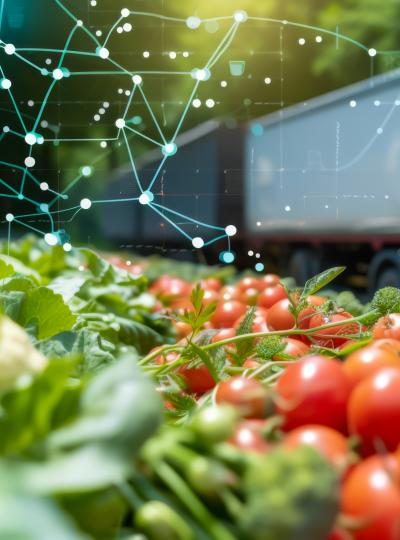
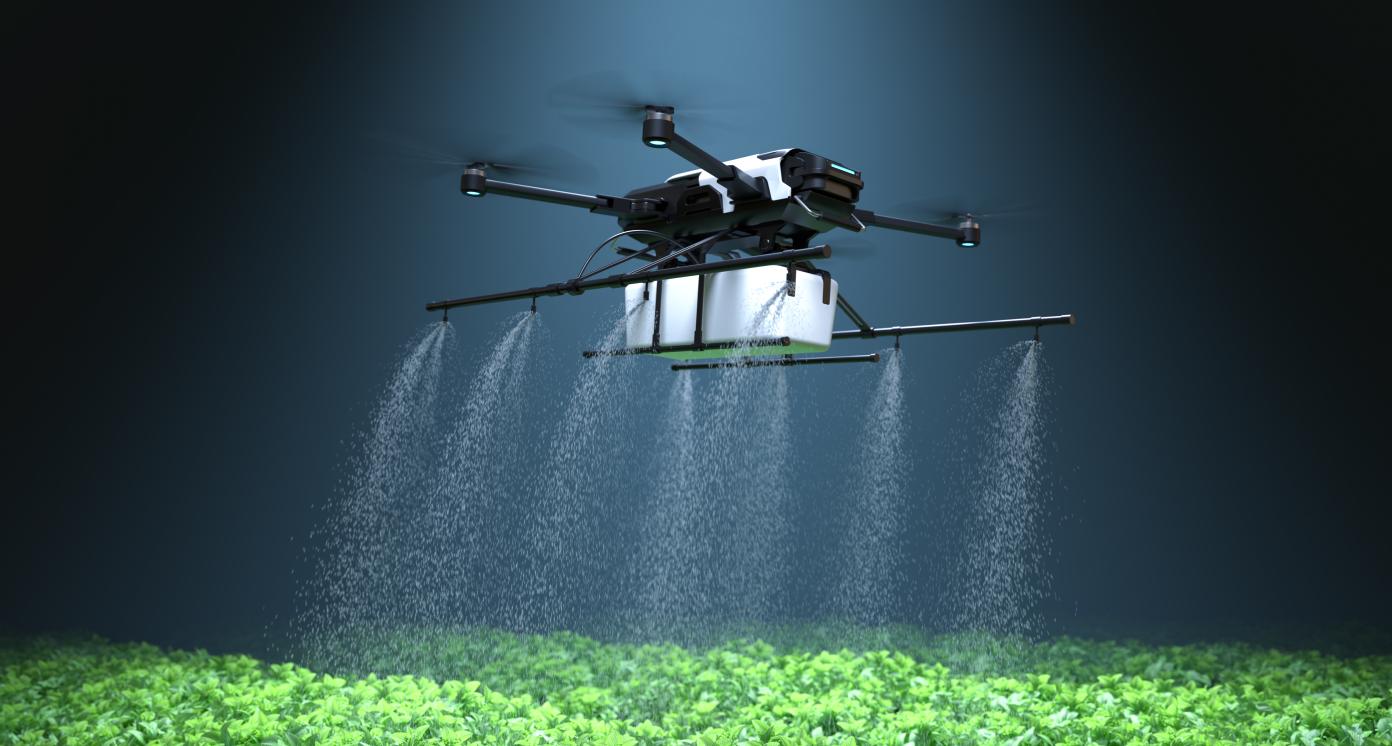
Invest in digital platforms and services that leverage satellite data, drones, geospatial analytics, and mobile applications to modernize Moldovan agriculture, improve farm productivity, optimize input use, reduce climate-related risks, and support export-oriented, traceable production generating revenues through subscription fees, service contracts with agribusinesses, and partnerships with financial institutions for data-driven credit products.
Expected Impact
Digital agri-tools boost smallholder productivity, resilience, and market access while fostering inclusive rural growth.
How is this information gathered?
Investment opportunities with potential to contribute to sustainable development are based on country-level SDG Investor Maps.
Disclaimer
UNDP, the Private Finance for the SDGs, and their affiliates (collectively “UNDP”) do not seek or solicit investment for programmes, projects, or opportunities described on this site (collectively “Programmes”) or any other Programmes, and nothing on this page should constitute a solicitation for investment. The actors listed on this site are not partners of UNDP, and their inclusion should not be construed as an endorsement or recommendation by UNDP for any relationship or investment.
The descriptions on this page are provided for informational purposes only. Only companies and enterprises that appear under the case study tab have been validated and vetted through UNDP programmes such as the Growth Stage Impact Ventures (GSIV), Business Call to Action (BCtA), or through other UN agencies. Even then, under no circumstances should their appearance on this website be construed as an endorsement for any relationship or investment. UNDP assumes no liability for investment losses directly or indirectly resulting from recommendations made, implied, or inferred by its research. Likewise, UNDP assumes no claim to investment gains directly or indirectly resulting from trading profits, investment management, or advisory fees obtained by following investment recommendations made, implied, or inferred by its research.
Investment involves risk, and all investments should be made with the supervision of a professional investment manager or advisor. The materials on the website are not an offer to sell or a solicitation of an offer to buy any investment, security, or commodity, nor shall any security be offered or sold to any person, in any jurisdiction in which such offer would be unlawful under the securities laws of such jurisdiction.
Country & Regions
- Republic of Moldova: Central Development Region
- Republic of Moldova: Northern Development Region
- Republic of Moldova: Southern Development Region
Sector Classification
Food and Beverage
Development need
Moldova’s agriculture needs stronger food processing to cut post-harvest losses and boost value-added exports, agrifintech to expand credit access for smallholders and women farmers, and digital solutions for climate-smart farming, traceability, and market access, driving resilience and EU-aligned competitiveness. (5)
Policy priority
The National Strategy for Agriculture and Rural Development of the Republic of Moldova (NSARD 2023-2030) aims to build a competitive agri-food sector; develop environmentally friendly and climate resilient value chains; strengthen food security & safety; improve rural livelihoods; implement EU acquis progressively. (1)
Gender inequalities and marginalization issues
In Moldova’s agriculture sector, women have limited access to finance hold relatively small land and face barriers to credit, training, and technology. (7)
Investment opportunities introduction
Since 2023, seven categories of Moldovan agricultural products have enjoyed unrestricted access to the European market, resulting in grape and prune exports doubling and apple and cherry exports to the EU increasing tenfold. (2)
Key bottlenecks introduction
Fragmented land holdings, climate vulnerability with low irrigation coverage , limited finance access for smallholders. (6)
Food and Agriculture
Development need
There is a need to enhance productivity and modernize Moldova’s agricultural sector by supporting its integration into the country’s broader digital economy shift led by the fast-growing ICT sector. (8,9)
Policy priority
The National Strategy “European Moldova 2030” / National Economic Development Strategy 2030 sets overall socio-economic development goals, including modernizing agriculture, increasing productivity, sustainable use of natural resources, rural development. (3)
Gender inequalities and marginalization issues
Women in the rural areas and youth are most excluded from value chains, while outmigration and aging populations deepen inequalities, limiting inclusive growth and resilience.(10,11)
Investment opportunities introduction
Under the Moldova Growth Plan 2025–2027, one objective is to support agri-SMEs by improving access to finance through the National Fund for Agriculture and Rural Development, implemented by AIPA. (4)
Key bottlenecks introduction
Outdated technologies and weak processing, storage, and logistics infrastructure cause significant inefficiencies in Moldova’s agriculture, with lack of post-harvest facilities leading to losses of 10–15% by volume. (6)
Agricultural Products
Pipeline Opportunity
Digital Agriculture Solutions
Invest in digital platforms and services that leverage satellite data, drones, geospatial analytics, and mobile applications to modernize Moldovan agriculture, improve farm productivity, optimize input use, reduce climate-related risks, and support export-oriented, traceable production generating revenues through subscription fees, service contracts with agribusinesses, and partnerships with financial institutions for data-driven credit products.
Business Case
Market Size and Environment
> USD 1 billion
The ICT sector contributes roughly 6% of Moldova’s GDP, or revenues close to MDL 21.8 billion (USD 1.15 billion) annually.(12)
In 2024, Moldova’s agriculture contributed 7.1% of GDP and employs around 18% of the workforce. (28, 29)
Indicative Return
5% - 10%
Based on regional CAGR benchmarks, Moldova’s structural constraints, and cautious adoption scenarios, a sustainable return range of 5–10%, aligning more with impact-oriented investments than with high-growth venture plays.(14)
Investment Timeframe
Short Term (0–5 years)
Digital agriculture solutions typically achieve payback in under five years because platforms are asset-light, scalable, and generate recurring revenues through subscriptions, data services, and contracts.
Ticket Size
USD 500,000 - USD 1 million
Market Risks & Scale Obstacles
Business - Supply Chain Constraints
Market - Highly Regulated
Impact Case
Sustainable Development Need
Moldova’s agriculture is vulnerable to climate risks. Low productivity, outdated practices, and limited traceability hinder competitiveness. (22)
A major skills gap in digital literacy, agri-tech use, and data-driven farming limits adoption, requiring targeted training for farmers, youth, and extension services.(24)
Gender & Marginalisation
Women in the rural areas often lack access to digital skills and financing, limiting participation in modernized agriculture.
Expected Development Outcome
Digital agriculture adoption enhances productivity, reduces input costs by 15–20%, mitigates climate risks, and supports EU-aligned traceability standards—strengthening Moldova’s export competitiveness and rural resilience.
Gender & Marginalisation
By integrating women and smallholders into digital platforms, the IOA can expand equitable access to data, finance, and markets, reducing structural gaps and boosting inclusive rural incomes.
Primary SDGs addressed
2.3.1 Volume of production per labour unit by classes of farming/pastoral/forestry enterprise size
12.3.1 (a) Food loss index and (b) food waste index
Estimated 10–15% losses due to weak storage/logistics (22)
Secondary SDGs addressed
Directly impacted stakeholders
People
Gender inequality and/or marginalization
Corporates
Indirectly impacted stakeholders
People
Planet
Outcome Risks
Limited connectivity in rural areas could exclude small farmers.
Farmers’ data may be misused by third parties or sold without consent.
Increased input efficiency could lead to overproduction pressures.
Farmers may become dependent on external service providers.
Gender inequality and/or marginalization risk: High costs of digital tools may deter adoption by low-income farmers.
Impact Risks
Limited long-term data on yield impact of digital solutions in Moldova.
Climate shocks may still undermine productivity despite digital tools.
Weak extension services could hinder effective adoption of solutions.
Platforms may fail if donor/project funding ends prematurely.
Gender inequality and/or marginalization risk: Focus may shift to commercial farms, omitting smallholder inclusion.
Impact Classification
What
Digital tools increase efficiency, climate resilience, and export readiness in farming.
Who
Primarily smallholder farmers, youth, and rural women currently underserved in agri-tech.
Risk
Risk of unequal adoption, affordability issues, and data security concerns.
Contribution
Provides additionality by filling finance, knowledge, and access gaps in agriculture.
How Much
Expands adoption across thousands of farms, scaling over time toward SDG 2.3.
Impact Thesis
Digital agri-tools boost smallholder productivity, resilience, and market access while fostering inclusive rural growth.
Enabling Environment
Policy Environment
National Strategy for Agriculture and Rural Development (NSARD) 2023-2030 aims to develop agri-food value chains, rural livelihoods, and competitiveness.(15)
Digital Transformation Strategy of the Republic of Moldova for 2023–2030 (16)
Financial Environment
Financial incentives: EBRD Small Business Initiative: Offers risk-sharing loans with Moldovan banks, promoting agri-SMEs’ adoption of digital and fintech services. EBRD Moldova. (20)
Other incentives: The Agency for Intervention and Payments in Agriculture (AIPA) is providing targeted subventions for entrepreneurs that would like to purchase new equipment, take a loan, buy an insurance policy and others. (21)
Regulatory Environment
Law No. 114/2012 on Payment Services & Electronic Money regulates payment services, e-money, includes PSD2 alignment.(17)
Law on Personal Data Protection No. 133/2011 + related acts Regulates personal data, privacy—essential for fintech platforms handling user data. (19)
Marketplace Participants
Private Sector
Local agri-tech startups (AgroPilot, AgriDigital), telecom providers (Moldcell, Orange), cooperatives adopting digital platforms, logistics and input suppliers.
Government
Ministry of Agriculture and Food Industry (MAIA), e-Government Agency, National Agency for Regulation in Electronic Communications and IT (ANRCETI), Agency for Interventions and Payments in Agriculture (AIPA).
Multilaterals
IFAD, World Bank, EU Delegation, EBRD, FAO – all financing digital agriculture pilots.
Target Locations

Republic of Moldova: Central Development Region
Republic of Moldova: Northern Development Region
Republic of Moldova: Southern Development Region
References
- (1) Government of the Republic of Moldova. 2014. National Strategy on Agriculture and Rural Development for the Period 2014-2020. https://www.fao.org/faolex/results/details/en/c/LEX-FAOC159051
- (2) Invest Moldova. 2025. The European Union expands access for Moldovan products to the EU market. https://invest.gov.md/en/the-european-union-expands-access-for-moldovan-products-to-the-eu-market/
- (3) Government of the Republic of Moldova. 2018. Draft of National Development Strategy Moldova 2030 https://www.imf.md/press/SND_MD2030_25_Jun_eng.pdf
- (4) European Commission. 2024. Commission adopts €1.8 billion support package to underpin Moldova's economic growth plan on its path to the EU. https://ec.europa.eu/commission/presscorner/detail/it/ip_24_5124
- (5) OECD. 2020. Policy Insights: Promoting Exports and Supply-Chain Linkages in the Food Industry in the Republic of Moldova. https://www.oecd.org/content/dam/oecd/en/publications/reports/2020/07/promoting-exports-and-supply-chain-linkages-in-the-food-industry-in-the-republic-of-moldova_c58c3ff9/72bf4a9f-en.pdf
- (6) World Bank. 2024. Moldova Country Climate and Development Report. https://openknowledge.worldbank.org/server/api/core/bitstreams/268abc8d-8e0e-437b-9615-3fe8aa395693/content
- (7)World Bank Group (2018). Supporting Women’s Entrepreneurship in Moldova.https://documents1.worldbank.org/curated/en/411391516856355553/pdf/122962-REVISED-PUBLIC-MoldovaSupportingWomenEntrepreneurshipFINALPRINT.pdf
- (8) Helvetas (2023). Transforming Moldova’s Agriculture by Leveraging Digital Solutions.https://www.helvetas.org/en/switzerland/how-you-can-help/follow-us/blog/agriculture-and-nutrition/Transforming-Moldovas-Agriculture-by-Leveraging-Digital-Solutions
- (9) UNECE (2021). Exploring Sources of Technological Upgrading in Moldova’s Agrifood Sector.https://unece.org/sites/default/files/2021-12/Case%20study%20Moldova%20agrifood_Elena%20Ilie_final.pdf
- (10) FAO (2020). National Gender Profile of Agriculture and Rural Livelihoods – Republic of Moldova.https://openknowledge.fao.org/server/api/core/bitstreams/7688c353-c840-4d28-8d22-21fd1b77fd8d/content
- (11) AGRUMIG (2023). Outmigration, Agrarian Change, and Rural Resilience in the Republic of Moldova – Policy Brief No. 19.https://agrumig.iwmi.org/wp-content/uploads/sites/41/2023/09/AGRUMIG-Policy-Brief-Series-No.-19.pdf
- (12) Government of the Republic of Moldova. 2014. National Strategy on Agriculture and Rural Development for the Period 2014-2020. https://www.fao.org/faolex/results/details/en/c/LEX-FAOC159051
- (13) European Commission. 2024. Commission adopts €1.8 billion support package to underpin Moldova's economic growth plan on its path to the EU. https://ec.europa.eu/commission/presscorner/detail/it/ip_24_5124
- (14) OECD. 2020. Policy Insights: Promoting Exports and Supply-Chain Linkages in the Food Industry in the Republic of Moldova. https://www.oecd.org/content/dam/oecd/en/publications/reports/2020/07/promoting-exports-and-supply-chain-linkages-in-the-food-industry-in-the-republic-of-moldova_c58c3ff9/72bf4a9f-en.pdf
- (15) Government of the Republic of Moldova. 2023. National Strategy for Agriculture and Rural Development (NSARD) of the Republic of Moldova 2023-2030 https://www.apd-moldova.de/backgroundinfo/nsard/
- (16) The Ministry of Economic Development and Digitalization (MDED) of the Republic of Moldova. 2023. The Digital Transformation Strategy of the Republic of Moldova for 2023-2030. https://mded.gov.md/transparency/digital-transformation-strategy-2023-2030/
- (17) Chambers and Partners. 2023. Uncharted Waters: Moldova’s Foray into Digital Finance. https://chambers.com/legal-trends/the-future-of-digital-finance-and-currency-in-moldova
- (18) EU4Digital. 2024. Moldova progresses rules for eKYC remote identification of banking customers. https://eufordigital.eu/moldova-progresses-rules-for-ekyc-remote-identification-of-banking-customers/
- (19) DLA Piper. 2025. Data protection laws in Moldova. https://www.dlapiperdataprotection.com/?c=MD&t=law
- (20) EBRD. 2024. EBRD launches EU-backed guarantees to support Moldovan businesses. https://www.ebrd.com/home/news-and-events/news/2024/ebrd-launches-eubacked-guarantees-to-support-moldovan-businesses.html
- (21) UNDP. 2022. Mapping of financing instruments and practice for MSMEs in the Republic of Moldova Final Report. https://www.undp.org/sites/g/files/zskgke326/files/2023-08/undp_-_mapping_of_financing_instruments_and_practice_for_msmes_in_the_republic_of_moldova.pdf
- (22) World Bank. 2024. Moldova Country Climate and Development Report. https://openknowledge.worldbank.org/server/api/core/bitstreams/268abc8d-8e0e-437b-9615-3fe8aa395693/content
- (23) World Bank. 2025. Agriculture, forestry and fishing, value added (% of GDP). https://databank.worldbank.org/reports.aspx?source=2&series=NV.AGR.TOTL.ZS&country=MDA
- (24) OECD. 2023. Promoting Digital Business Skills in the Republic of Moldova. https://www.oecd.org/en/publications/2023/06/promoting-digital-business-skills-in-the-republic-of-moldova_dc179cd2.html
- (25) Invest Moldova. 2024. Food Processing and Livestock. https://invest.gov.md/wp-content/uploads/2024/07/11-06-Agriculture-2024.pdf
- (26) UNDP Moldova (2023). Digital Transformation in Moldova.https://www.undp.org/moldova/our-focus/digitaltransformation
- (27) International Telecommunication Union (ITU) (2021). Digital Development Country Profile: Republic of Moldova.https://www.itu.int/en/ITU-D/Regional-Presence/Europe/Documents/Publications/Digital%20Development%20Country%20Profiles/Digital%20Development%20Country%20Profile_Moldova_06.12.21.pdf
- (28) Statistica Moldovei (2025). Gross Domestic Product in the fourth quarter and 2024. https://statistica.gov.md/ro/produsul-intern-brut-in-trimestrul-iv-si-anul-2024-9497_61702.html
- (29) Statistica Moldovei (2025). Labor force: employment and unemployment in 2024. https://statistica.gov.md/ro/forta-de-munca-ocuparea-si-somajul-in-anul-2024-9430_61728.html