

Sub-Saharan Africa
Senegal
Located in the westernmost part of the African continent, Senegal is bordered by Mauritania, Mali, Guinea, The Gambia, and Guinea-Bissau. With a tropical and dry climate, the country has a population of 18,032,473 million people.
Senegal’s economy grew 6.1% in 2024, driven by new hydrocarbon production. Non-oil growth slowed to 3.5% dampened by election turmoil, while agriculture production was affected by floods. Inflation fell sharply from 5.9% in 2023 to 0.8% in 2024, led by lower food prices and stable fuel costs.
However, emerging macro fiscal challenges and rising global uncertainties undermine the outlook. The external position strengthened, with the current account deficit narrowing to 12% of GDP, driven by rising oil exports and moderated imports. hydrocarbon production is expected to boost economic growth in 2025. As hydrocarbon revenues gradually increase, Senegal has an opportunity to channel these resources into human capital development, infrastructure, and the energy transition.
Sustained progress will depend on efforts to improve productivity, enhance competitiveness, and create jobs, particularly for youth and underserved populations. Senegal’s recent fiscal transparency review efforts - covering 2019–2023 and revealing substantially higher deficits and public debt than previously disclosed - has materially worsened its macro-fiscal outlook, elevating debt sustainability concerns, pushing up borrowing costs, and contributing to credit rating downgrades.
0.530
How is this information gathered?
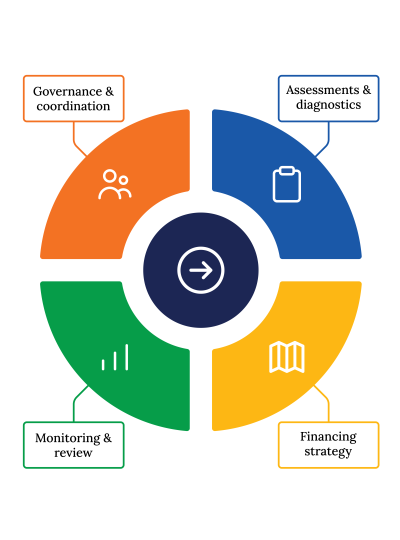
SDG Investor Maps employ an 8-step methodology, combining data research and stakeholder consultations to identify Investment Opportunity Areas (IOAs) and potential business models with significant financial and impact potential.
Disclaimer
UNDP, the Private Finance for the SDGs, and their affiliates (collectively “UNDP”) do not seek or solicit investment for programmes, projects, or opportunities described on this site (collectively “Programmes”) or any other Programmes, and nothing on this page should constitute a solicitation for investment. The actors listed on this site are not partners of UNDP, and their inclusion should not be construed as an endorsement or recommendation by UNDP for any relationship or investment.
The descriptions on this page are provided for informational purposes only. Only companies and enterprises that appear under the case study tab have been validated and vetted through UNDP programmes such as the Growth Stage Impact Ventures (GSIV), Business Call to Action (BCtA), or through other UN agencies. Even then, under no circumstances should their appearance on this website be construed as an endorsement for any relationship or investment. UNDP assumes no liability for investment losses directly or indirectly resulting from recommendations made, implied, or inferred by its research. Likewise, UNDP assumes no claim to investment gains directly or indirectly resulting from trading profits, investment management, or advisory fees obtained by following investment recommendations made, implied, or inferred by its research.
Investment involves risk, and all investments should be made with the supervision of a professional investment manager or advisor. The materials on the website are not an offer to sell or a solicitation of an offer to buy any investment, security, or commodity, nor shall any security be offered or sold to any person, in any jurisdiction in which such offer would be unlawful under the securities laws of such jurisdiction.
There are no results to display
Try adjusting your search filters to be less restrictive or view and browse all results.