








Sub-Saharan Africa
West Pokot (Kenya); Karamoja (Uganda)
Borderlands in Africa, home to 270 million inhabitants, are the territorial margins of nation-states-regions where border contact is a central feature of economic and political life. While these regions have historically facilitated cultural exchange, cross-border trade and innovation, they have often been left behind due to marginalization, poverty, conflicts, environmental changes, and weak governance. Despite their socio-economic potential, insecurity and lack of investment hinder development in these areas. One of the main challenges is the lack of public and private sector investment in African borderlands, which limits opportunities to achieve the SDGs. To bridge this gap, the private sector needs to be engaged more actively in developing sustainable, inclusive economies in these regions.
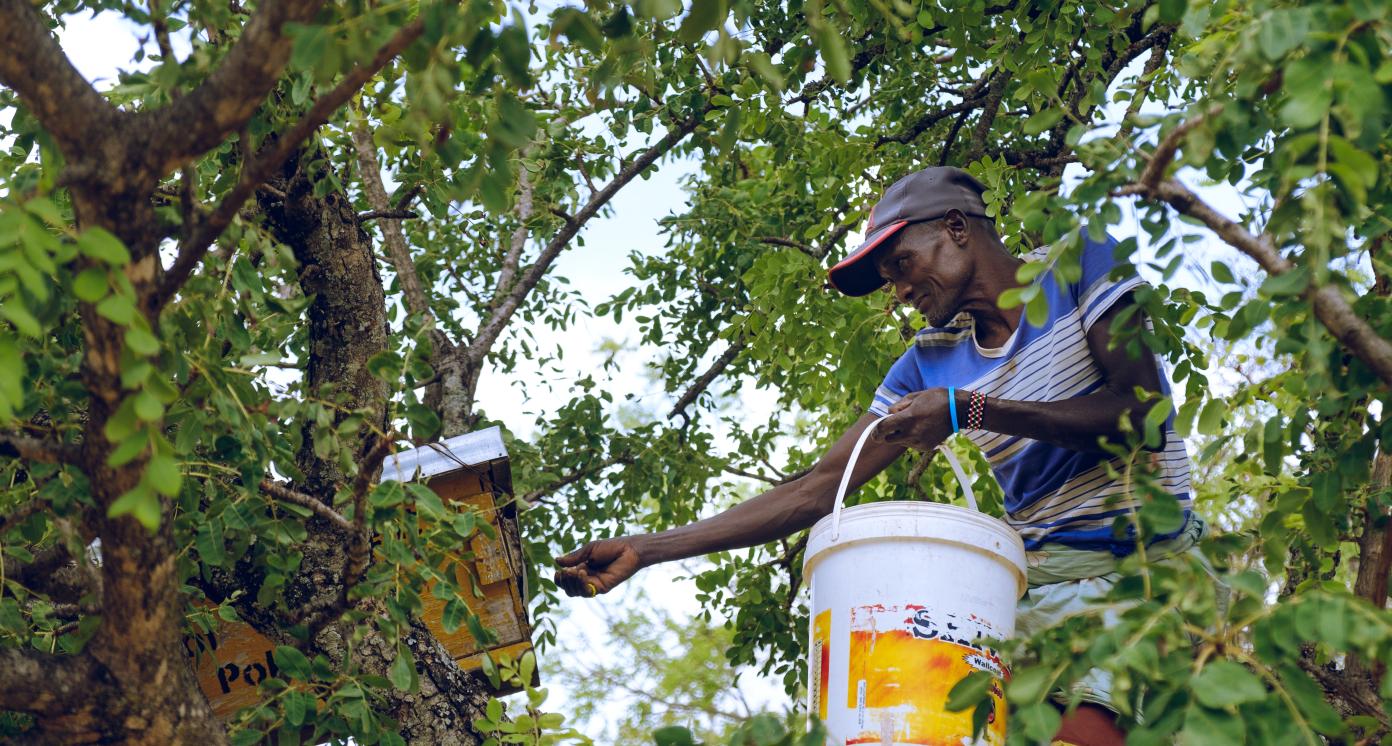
West Pokot and Karamoja are neighbouring cross-border regions in Kenya and Uganda, where livelihoods depend primarily on livestock and small-scale farming. West Pokot County, located in Kenya’s Rift Valley, spans 9,123 km² and is home to over 660,000 people, 95% of whom live in rural areas. The county's diverse topography influences land use, with high-altitude areas favouring crop farming due to increased rainfall, while low-altitude regions rely on pastoralism due to drier conditions. Karamoja, a semi-arid region in northeastern Uganda, faces greater marginalization but also shares similar agro-pastoral systems. Covering approximately 27,000 km² and home to 1.5 million people across eleven ethnic groups, Karamoja is characterized by low and erratic rainfall and fragile ecological systems.
Social and economic structures in the borderland are shaped by strong ethnic ties, but modern pressures are transforming traditional ways of life. The border area has low population density outside the main urban hubs and infrastructure is limited (only one major cross-border road exists). The Pokot and the Karamojong practice agro-pastoralism, with extended families and clan systems playing a central role in local governance and conflict resolution. However, growing environmental stress, resource scarcity, and climate variability are challenging these traditional systems
Cross-border trade, especially in livestock, crops, and general merchandise, is a major economic activity but is highly climate-sensitive. Livestock trade (particularly cattle) is the region’s most important commercial activity, with around 250,000 cattle present at the border at any given time. Seasonal migration is common, with Kenyan herders crossing into Uganda during droughts. Kenya also exports manufactured goods like clothing and food items to Uganda, while Uganda supplies crops and livestock. Trade volumes fluctuate depending on rainfall and climate shocks.
The region is highly exposed to environmental risks that disrupt mobility, trade, and food systems. Droughts, floods, livestock disease, and crop pests are prevalent across both regions. Vulnerable zones, including the Central Sorghum and Livestock Zone and Southeastern Cattle and Maize Zone, are particularly affected by climate extremes and inter-community conflict over grazing land and water access. Despite these challenges, both regions hold untapped potential for development through improved infrastructure, cross-border cooperation, and market integration.
Typology Identification
Type 3: Borderland with fragile context and underdeveloped regional integration infrastructure.
Medium intensity conflict: while security has improved thanks to Kenya-Uganda coordination and cross-border dialogues, sporadic violence involving pastoralist groups persists, especially in remote areas. (3, 4, 8, 9, 10)
Underdeveloped Regional Integration Infrastructure: despite recent investments in roads and trade facilitation initiatives under regional economic frameworks (e.g. EAC, COMESA), poor rural connectivity, weak enforcement of trade policies, and logistical barriers continue to hinder market access, formal trade, and cross-border economic integration, forcing many traders into the informal sector. (5, 6, 7)
13
How is this information gathered?
Borderlands SDG Investor Maps employ a tailor 6-step methodology for cross-border areas, combining data research and stakeholder consultations to identify Investment Opportunity Areas (IOAs) and Emerging Investment Opportunity Areas (EIOAs) and potential business models with significant financial and impact potential.
Disclaimer
UNDP, the Private Finance for the SDGs, and their affiliates (collectively “UNDP”) do not seek or solicit investment for programmes, projects, or opportunities described on this site (collectively “Programmes”) or any other Programmes, and nothing on this page should constitute a solicitation for investment. The actors listed on this site are not partners of UNDP, and their inclusion should not be construed as an endorsement or recommendation by UNDP for any relationship or investment.
The descriptions on this page are provided for informational purposes only. Only companies and enterprises that appear under the case study tab have been validated and vetted through UNDP programmes such as the Growth Stage Impact Ventures (GSIV), Business Call to Action (BCtA), or through other UN agencies. Even then, under no circumstances should their appearance on this website be construed as an endorsement for any relationship or investment. UNDP assumes no liability for investment losses directly or indirectly resulting from recommendations made, implied, or inferred by its research. Likewise, UNDP assumes no claim to investment gains directly or indirectly resulting from trading profits, investment management, or advisory fees obtained by following investment recommendations made, implied, or inferred by its research.
Investment involves risk, and all investments should be made with the supervision of a professional investment manager or advisor. The materials on the website are not an offer to sell or a solicitation of an offer to buy any investment, security, or commodity, nor shall any security be offered or sold to any person, in any jurisdiction in which such offer would be unlawful under the securities laws of such jurisdiction.